

As quantum technologies move from research laboratories toward real-world applications, Michigan State University is helping prepare the next generation of students to take part.
The Quantum Motor City summer camp returned to MSU July 29-31, giving high school students three days of hands-on experience with quantum computing, college life and potential careers in an emerging technology sector.
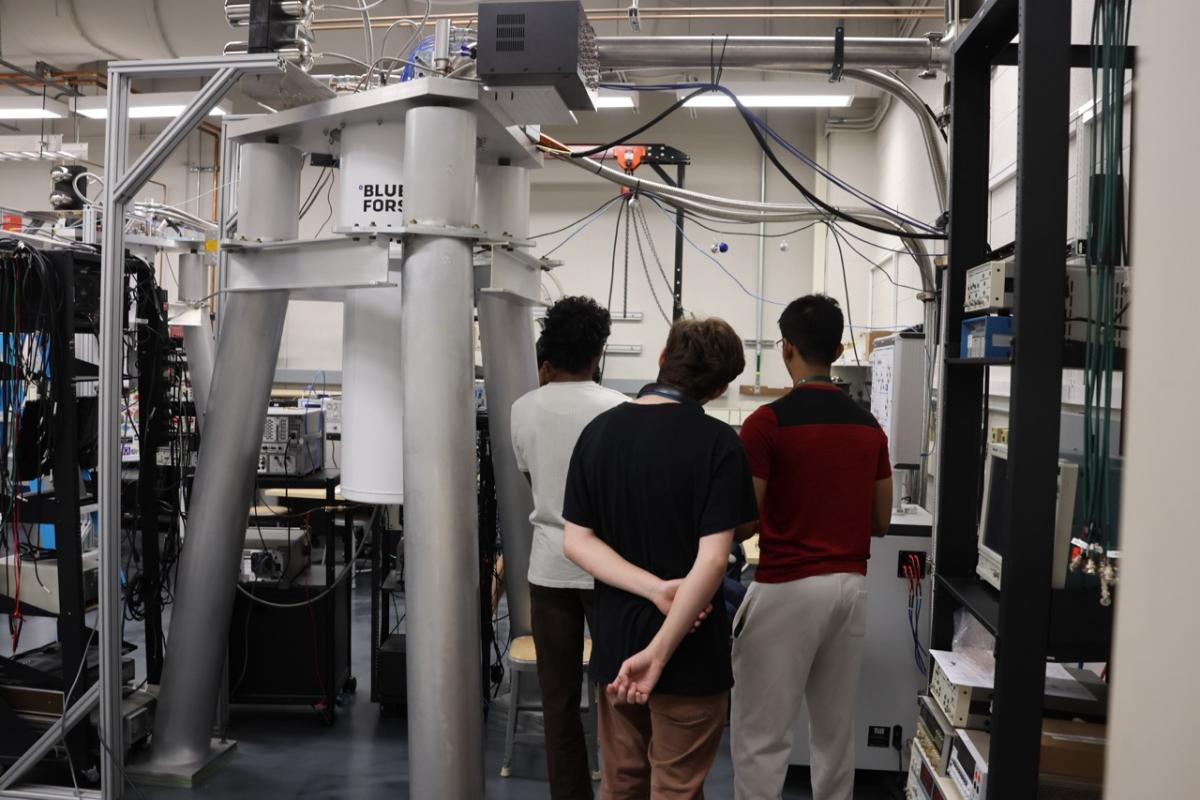
The free residential program included on-campus housing and meals. Participants learned the fundamentals of quantum computing, programmed a real quantum computer, toured a quantum computing laboratory and received college and career guidance from MSU faculty and industry professionals.
Now in its third year, Quantum Motor City has also entered a new phase with support from the National Science Foundation.
From pilot program to NSF support
Quantum Motor City began as a pilot program in 2024, initially designed to introduce high school students from Detroit to quantum computing.
The camp is led by Ryan LaRose, assistant professor in MSU’s departments of Computational Mathematics, Science and Engineering and Electrical and Computer Engineering.
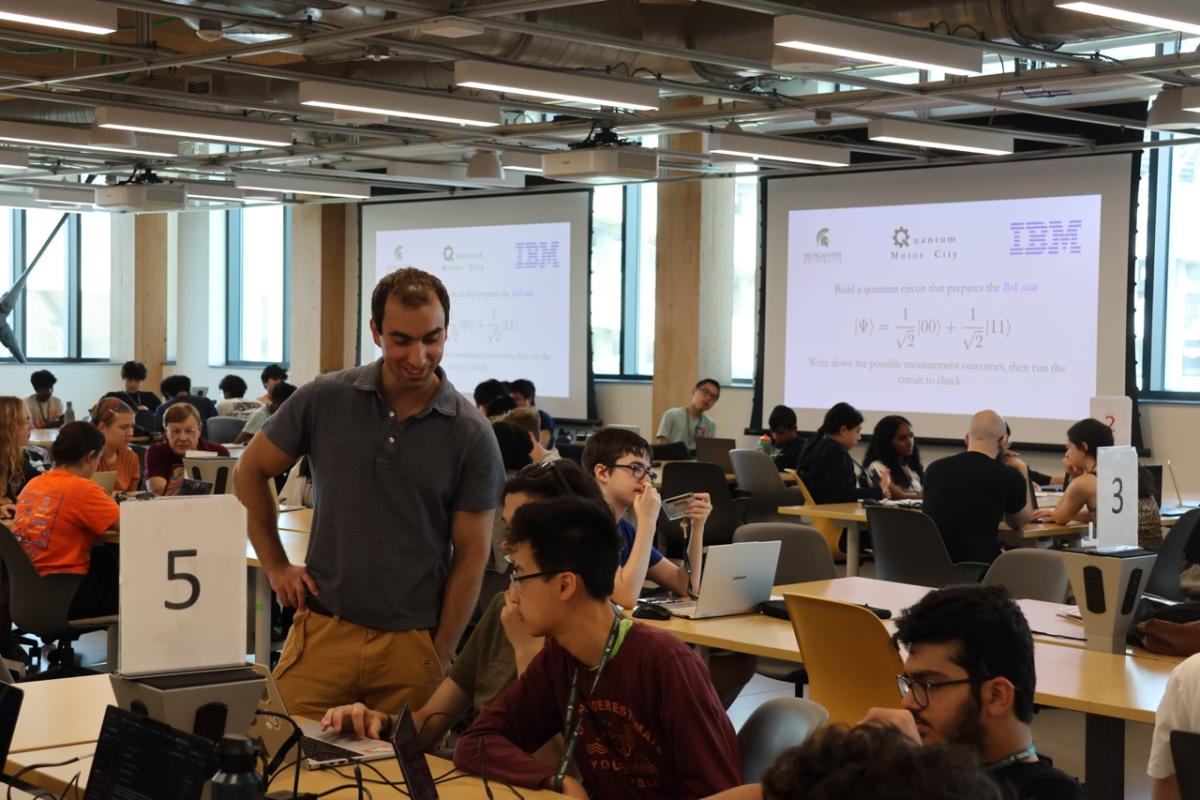
During the inaugural camp, students lived on campus, learned the fundamentals of quantum computing by programming IBM quantum computers and toured MSU’s Laboratory for Hybrid Quantum Systems.
“Students learned a lot of the key math and science for all STEM fields,” LaRose said when the program launched in 2024. “Helping the students understand quantum computing gives them a base understanding of pretty much anything else in these fields and could help them narrow down what they want to pursue later in life.”
The program has since expanded its reach. For 2026, any high school student could apply, including students from outside Michigan. Previous experience in quantum computing was not required, with basic algebra and trigonometry serving as the academic prerequisites.
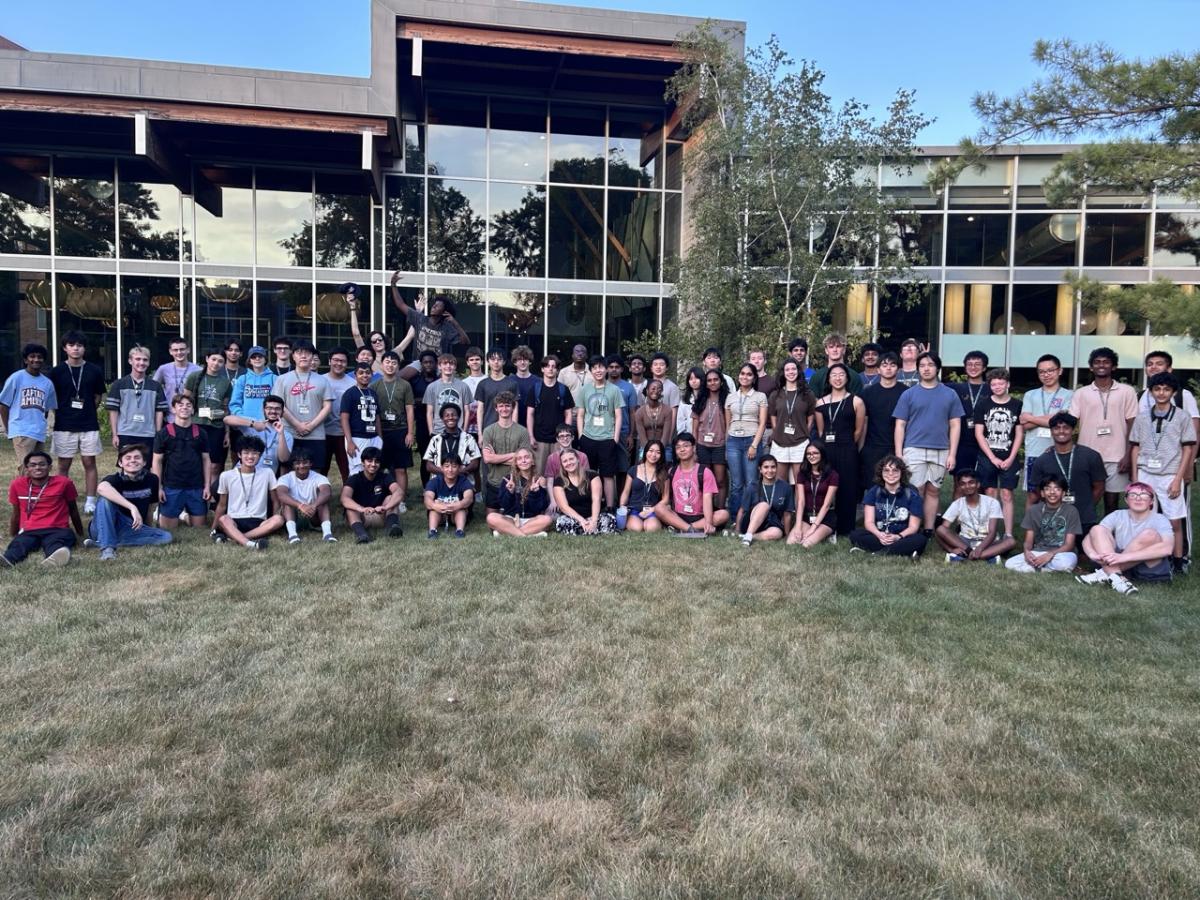
This year, Quantum Motor City received nearly 100 applications from 10 states and admitted 78 students to attend the camp. The program has grown from about 24 students in 2024 and about 32 students in 2025.
Quantum Motor City is now supported through a three-year National Science Foundation project focused on engaging the future quantum workforce through experiential learning.
LaRose is principal investigator on the project, with Johannes Pollanen, associate professor in the Department of Physics and Astronomy and Cowen Distinguished Chair in Experimental Physics, and Aman Yadav, professor in the Department of Computational Mathematics, Science and Engineering and Lappan-Phillips Professor of Computing Education, serving as co-principal investigators.
The NSF project supports a three-day summer camp where students learn quantum concepts through hands-on activities, operate quantum computing technology and interact with researchers and industry professionals. The project also examines what students learn and whether the experience increases their interest in quantum computing and related career pathways. The award runs through September 2028.
With NSF support, Quantum Motor City also has an advisory board with members from the MiSTEM Network, Detroit Public Schools and quantum computing companies IBM and EeroQ.
Learning quantum by doing
Quantum computing sits at the intersection of physics, mathematics and computer science.
Rather than requiring students to arrive with advanced knowledge of those subjects, Quantum Motor City introduces quantum concepts through activities that build from familiar ideas.
Students begin by exploring information and classical computing before learning about quantum bits, or qubits. They then apply those concepts through quantum computing exercises and ultimately program a real quantum computer.
The experience extends beyond technical instruction.
Students tour MSU research facilities, explore campus, learn about applying to college and hear from people working in quantum science and industry about possible career pathways.
Those experiences are intended to make a highly technical field more approachable while giving students an opportunity to see themselves participating in it.
MSU graduate and undergraduate students also played an important role in delivering the camp.
“We could not run Quantum Motor City without the extraordinary help from our graduate student lecturers and chaperones,” LaRose said.
Graduate student lecturers included:
- Jeremiah Rowland, doctoral candidate in the Department of Physics and Astronomy
- Nikolaos (Nikos) Korakis, doctoral student in theoretical and computational chemistry in the Department of Chemistry
- Camryn Undershute, doctoral candidate in physics in the Department of Physics and Astronomy
- Logan Crooks, doctoral candidate pursuing degrees in physics and electrical and computer engineering
- Mahmoud T. Elewa, doctoral candidate in physics in the Department of Physics and Astronomy
Undergraduate chaperones included:
- Tywanna Magee, fourth-year student in electrical engineering in the College of Engineering
- Oliseloka Aroh, third-year student in data science in the College of Natural Science
- Badri Aiman Khan bin Badrul Zeman Khan, third-year student in data science in the College of Natural Science
- Samantha Cissne, fourth-year student in Games and Interactive Media in the College of Communication Arts and Sciences
Building a quantum talent pipeline
The camp comes as universities, companies and government agencies are placing increasing emphasis on developing a workforce prepared for emerging quantum technologies.
Potential applications of quantum technology include computing, secure communications, navigation and scientific discovery. Reaching those possibilities will require expertise spanning engineering, computer science, physics, mathematics and other disciplines.
Quantum Motor City introduces students to those fields before they enter college.
At MSU, the program is part of a broader effort to develop expertise and educational opportunities in quantum science and technology through the MSU Center for Quantum Computing, Science and Engineering, or MSU-Q.
“We’re excited to see the growth of Quantum Motor City in Michigan and nationally, thanks to NSF support,” LaRose said. “The National Quantum Initiative continues to identify workforce training as key for quantum technology, and early hands-on experience is crucial for any emerging technologies. By the end of Quantum Motor City, every student programs a real quantum computer and tours a quantum computing lab, and comes out with the background and experience to continue their education in quantum, computer science, physics, mathematics, and related STEM fields.”
MSU leaders also see quantum education as an important workforce development opportunity as companies and other organizations seek employees prepared to work with rapidly developing technologies.
For high school students, that workforce challenge starts with something much more immediate: the opportunity to spend three days on a university campus, encounter quantum computing firsthand and begin considering where an emerging field might take them.
Learn more about Quantum Motor City, the MSU Center for Quantum Computing, Science and Engineering and MSU College of Engineering summer programs.
Written by Austin Witt
MSU College of Engineering Media and Public Relations page