
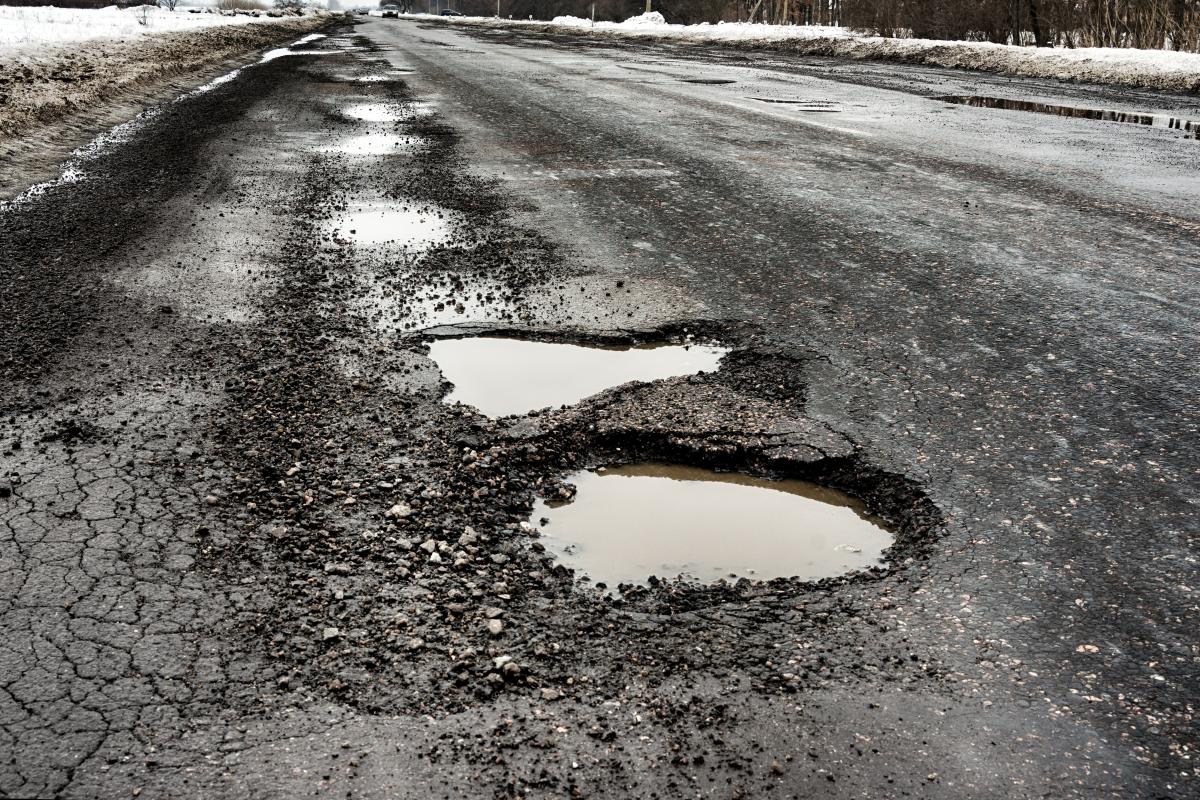
Did you know that seasonal freeze-thaw damage costs the United States more than $10 billion each year, or that its effects extend far beyond potholes?
Bora Cetin, Red Cedar Distinguished Professor in the Department of Civil and Environmental Engineering at Michigan State University, is leading a multidisciplinary effort to mitigate the damage. His team has engineered a microscopic silicon-based treatment that helps soil repel water rather than draw it in.
They’ve tested this approach across paved and unpaved roads, building foundations, utility corridors, and permafrost-affected regions in Alaska, Michigan, Minnesota, and Iowa.

By developing this cost-effective treatment, Cetin’s research provides a scalable tool for improving infrastructure performance in the face of shifting climate and ground conditions. Even slopes vulnerable to erosion and mudslides could be stabilized.
Cetin’s work shows that making the soil ‘hydrophobic’ (water repellent) can dramatically reduce the cracking, heaving, settlement, and surface instability that plague cold-region infrastructure. Communities in the Arctic, for example, are experiencing foundation failures, tilting homes, and damaged water and sewer lines as once-stable permafrost loses its year-round freeze. Traditional fixes often require costly rebuilds or relocation.
Cetin’s soil-based treatment can be applied during construction or retrofitted onto existing infrastructure and offers a practical path to longer-lasting roads, safer foundations, and more resilient communities.
To explore Cetin’s research further, visit:
- Investigation of the compressive strength of engineered water repellency in natural soils under varying environmental conditions [Article]
- Optimization of water repellency in soils for geotechnical applications [Article]
- Role of temperature gradient and soil thermal properties on frost heave [Article]
- Ask the expert: Helping people in the Arctic Circle with energy insecurity [Article]
- Google Scholar page [Website]
- Sustainable Geotechnical Infrastructure Group – MSU Innovation Center [Website]
MSU College of Engineering Media and Public Relations page