
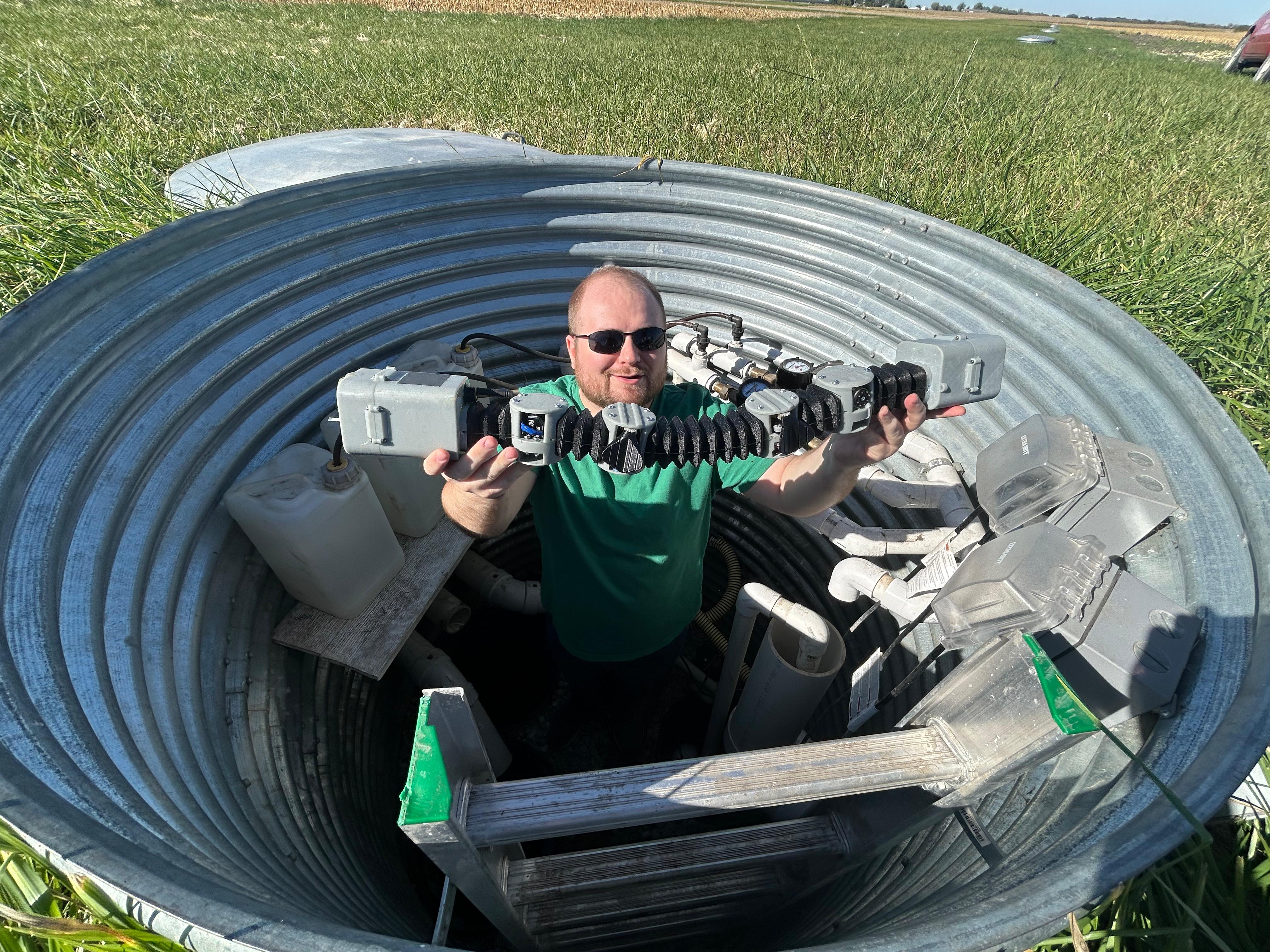
Corrugated drainage pipes are vital for agricultural operations, but they pose a challenge: it’s difficult to identify problems because they’re underground.
To address this, Xiaobo Tan, professor in the Department of Electrical and Computer Engineering at Michigan State University, and his team took inspiration from worms to create robots that easily maneuver through the pipes.

Instead of treating ridges as obstacles, the robot exploits them to enable locomotion, stretching and contracting like a worm.
As the machine traverses pipes it performs diagnosis and prognosis of the pipe’s physical conditions. Early detection of problems keeps farmers’ repair costs down, and in turn contributes to keeping food prices as low as possible for consumers.
The robot can also measure nutrient concentrations in water inside the pipes. Access to this data allows farmers to precisely apply fertilizer, enhancing their conservation management practices that protect land, water and biodiversity.
To learn more about Tan’s research, visit:
MSU College of Engineering Media and Public Relations page