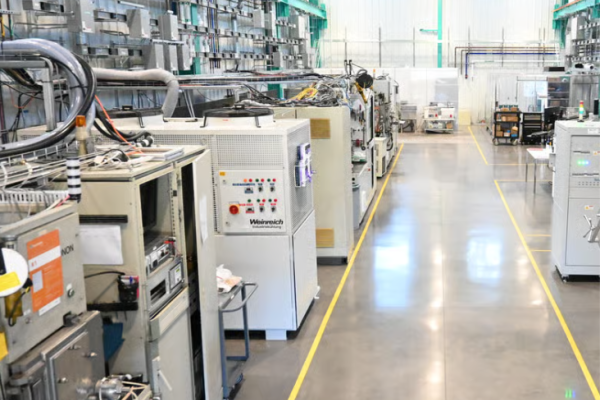
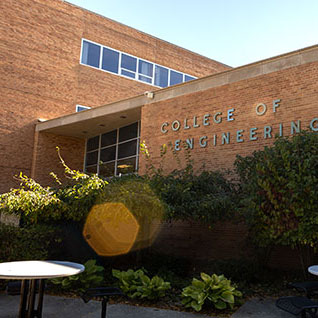
Michigan State University is the nation’s premier land-grant university and one of the top research universities in the world. The College of Engineering is among the university’s founding disciplines and one of the largest academic units. Degrees granted by the college are sought-after and valued in the marketplace, with more than 6,800 students, 341 faculty, and collaborative partners in industry and government working together to deliver the technology talent and innovation needed to drive the economy of Michigan and beyond.
Card Section

Spartan Engineers by the Numbers
Featured News

Building for the future of space and semiconductors
Space is a tough place for electronics. High-energy radiation can damage the semiconductor devices that spacecraft rely on, creating a major challenge as missions venture farther from Earth
Read Full ArticleLatest News

A Spartan Engineer's journey to finding community through sports
For Aryan Patel, a fourth-year environmental engineering student, finding a place to call home meant more than settling into a new university. It meant discovering a community through his love of sports.
A recent feature by WKAR explores Patel's journey from growing up across several countries and pursuing competitive soccer to finding friendship, belonging and renewed purpose through MSU's intramural sports programs. After health challenges interrupted his soccer ambitions, Patel rediscovered his passion for the game at MSU. What began as an opportunity to return to sports became a way to build lasting relationships and find a sense of home in East Lansing.

MSU, Michigan Tech partner to advance dual-use technologies that improve everyday life
Michigan State University and Michigan Technological University have entered into a new agreement to advance research in dual-use technologies — innovations developed to address national security challenges that also create broad benefits for society. Both universities are members of Research Universities for Michigan, or RU4M, an alliance of Michigan’s four R1 public research universities that also includes the University of Michigan and Wayne State University.

New spaces, new opportunities at MSU
Michigan State University’s campus is always evolving. As MSU expands its academic and research landscape with new buildings and renovated spaces, these facilities will accommodate a growing student population and research enterprise while providing spaces that put collaboration and future-thinking first.