





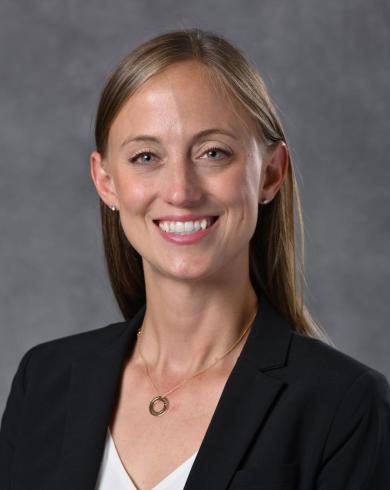
Maggie Williams
Contact Information
Phone:
Email:
Assistant Professor
Biography
Dr. Maggie Williams is an Assistant Professor in the Department of Civil and Environmental Engineering. She leads research on quantifying and harnessing the role of microorganisms in global sustainable development to protect human health, clean waste, and produce useful end products. Specifically, the Williams Lab focuses on 1) developing tools and assays relevant to surveillance of microbial functional genes and interactions in soil, water, and waste including antimicrobial resistant bacteria and mobile genetic elements, and viral and bacterial pathogens, 2) treating waste and removing of pathogens and emerging contaminants of concern in anaerobic biotechnologies and developing optimized process and operational conditions, and 3) integrating research, education, and community-engagement by developing experiential service-based learning courses and activities. Above all, Dr. Williams strives to create a supportive learning environment for students in both research and course-based activities.
Education
- Ph.D., Environmental Engineering, Michigan State University, 2017
- M.S., Environmental Engineering, Michigan State University, 2013
- B.S., Civil Engineering, Michigan State University, 2010
Selected Publications
- Mortezaei, Y., Gaballah, M. S., Demirer, G. N, Lammers, R. W., Williams, M. R. “The role of microplastics in shaping anaerobic digestion performance and antimicrobial resistance gene dynamics,” Journal of Hazardous Materials, 489, 137413, 2025. doi.org/10.1016/j.jhazmat.2025.137413.
- Mortezaei, Y., Demirer, G. N., Williams, M. R. “Different combinations of operating temperature and solids retention time during two-phase anaerobic digestion impacts the removal of antibiotic resistance genes,” Bioresource Technology, 418, 313944, 2025. doi.org/10.1016/j.biortech.2024.131944.
- Mortezaei, Y., Demirer, G. N., Williams, M. R. “Fate of intracellular and extracellular antibiotic resistance genes in sewage sludge by full-scale anaerobic digestion,” Science of the Total Environment, 951, 175760, 2024. doi.org/10.1016/j.scitotenv.2024.175760.
- Islam, D. T.*, Williams, M. R.*, Teppen, B. J., Johnston, C. T., Li, H., Boyd, S. A., Zylstra, G. J., Fennell, D. E., Cupples, A. M., Hashsham, S. A. “Comprehensive model for predicting toxic equivalents (TEQ) reduction due to dechlorination of polychlorinated dibenzo-p-dioxin and dibenzofurans (PCDD/F congeners),” Journal of Hazardous Materials, 480, 135749, 2024. doi.org/10.1016/j.jhazmat.2024.135749
- Conway, M. J., Yang, H., Revord, L. A., Novay, M. P., Lee, R. J., Ward, A. S., Abel, J. D., Williams, M. R., Uzarski, R. L., Alm, E. W. “Chronic shedding of a SARS-CoV-2 Alpha variant in wastewater,” BMC Genomics. 25, 59, 2024. doi.org/10.1186/s12864-024-09977-7.
Google Scholar
Awards
- Engaged Scholars Initiative 2025-2026 Cohort, Campus Compact, 2025
- EU FARIA ERASMUS+ Scholarship, European Union FARIA, 2024
- 1st Place Fitch Beach Award, Michigan State University College of Engineering, 2017
- Dissertation Completion Fellowship, Michigan State University, 2017
- Most Outstanding Masters Student Award, Michigan State University, 2013
- McCowan Fellowship, Michigan State University, 2012
- Recruitment Fellowship, Michigan State University, 2012
- Undergraduate Research Fellowship, Michigan State University, 2010
News

Maggie Williams selected for Campus Compact Engaged Scholars Initiative
Maggie Williams, an assistant professor in the Department of Civil and Environmental Engineering at Michigan State University, is one of 18 faculty and staff chosen nationally for the Campus Compact Engaged Scholars Initiative for 2025-26. The program is designed to strengthen the community-engaged scholarship of early career faculty and staff by offering a year of cohort-based leadership and professional development.
Welcoming 14 new faculty
Michigan State University’s College of Engineering welcomed 14 faculty members to its world-class academic team in Fall 2025. Interim Dean of Engineering John Papapolymerou said these additions will help the college successfully support a growing student body and expand research and innovation that matters to Michigan communities and beyond.