
Glaucoma is called the silent thief of sight because it damages the optic nerve before there’s any noticeable vision loss. It affects 80 million people globally and is the second-leading cause of blindness.
Traditionally, clinicians rely on in-office testing during annual exams using a puff of air to detect the disease. However, a new contact lens-based monitoring system promises to improve glaucoma diagnosis and treatment.
One of the symptoms of glaucoma is increased pressure within the eye caused by fluid buildup. “For some types of glaucoma, the pressure usually spikes when people are sleeping,” said Wen Li, professor in the Department of Electrical and Computer Engineering. “This makes detection during daytime exams difficult.”

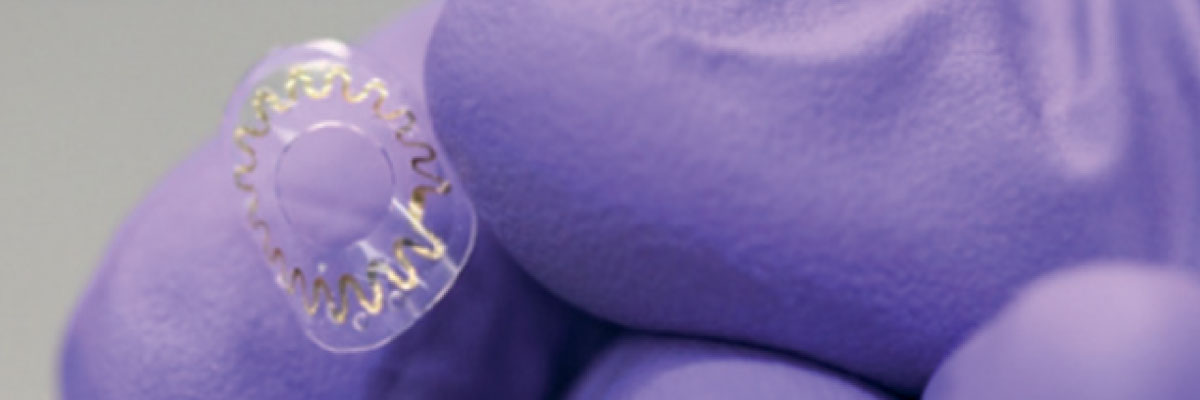
Li is part of the team that pioneered a doughnut-shaped contact lens equipped with a sensor that measures intraocular pressure.
“We created non-invasive, wearable technology for 24-hour tracking of glaucoma symptoms,” she said. “It allows continuous intraocular pressure tracking using a stretchable antenna attached to a soft contact lens. When the cornea tissue deforms in response to pressure fluctuation, the change in geometry changes the electrical characteristics of the antennae. This data is wirelessly captured by a reader attached to goggles or glasses worn by the patient. Then the data is made available on a smartphone app.”
The patient-friendly system will help clinicians provide time- and cost-effective treatment and lead to better patient outcomes due to reductions in disease progression and the need for expensive surgery.
To learn more about Li’s research and the Spartan Innovations start-up behind the contact lens sensor, visit:
MSU College of Engineering Media and Public Relations page