Research Spotlight: Quantum-powered drug discovery and disease research leads to faster, cheaper advances
Read ArticleThe most important chemical reaction in human biology happens on a cellular level to release energy so your body can move, repair and sustain itself. On average, this process happens 1,021 times every second. It’s called hydrolysis of adenosine triphosphate (ATP) and, despite its common occurrence, scientists don’t fully understand how it works.
Janet Brelin-Fornari named 2026 SAE Fellow
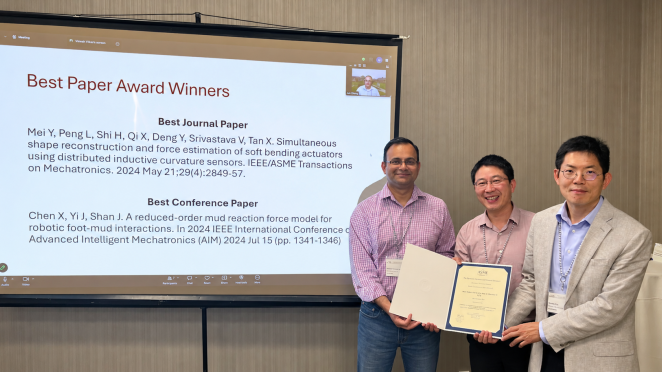
Read ArticleFor exceptional achievement, technical skills, innovation, and leadership, Janet Brelin-Fornari has been named a 2026 Society of Automotive Engineers (SAE) Fellow. She is one of 12 distinguished professionals in this year’s class. Fellow is SAE’s highest grade of membership.
Awards, recognition and engagement showcase faculty accomplishments
Read ArticleAt Michigan State University, excellence is measured not only by recognition, but by the impact our work has on people, communities and the future. That commitment to discovery, service and connection is central to MSU’s land-grant mission and the spirit of Spartans Will.
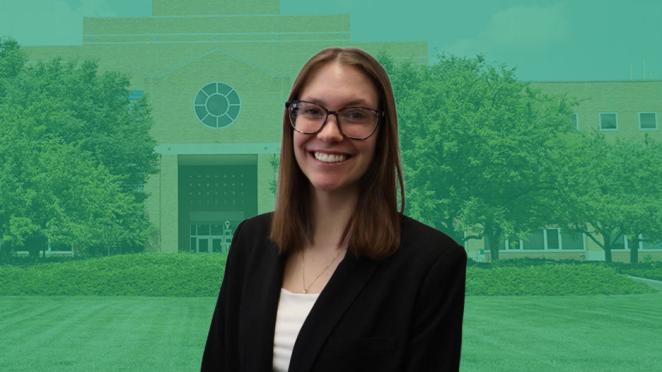
Biosystems engineering student Grace Gramza named Voyager Scholarship awardee
Read ArticleMichigan State University students Grace Gramza and Anabelle Sanchez have become the institution’s second and third Voyager Scholarship recipients, each securing up to $50,000 in financial aid and a 10-year travel stipend.
13 Engineering faculty honored at 2026 MSU Investiture
Read ArticleThirteen Michigan State University College of Engineering faculty members were among those honored Sept. 29 during MSU’s 2026 Faculty Investiture and State of the University at the Wharton Center for Performing Arts.
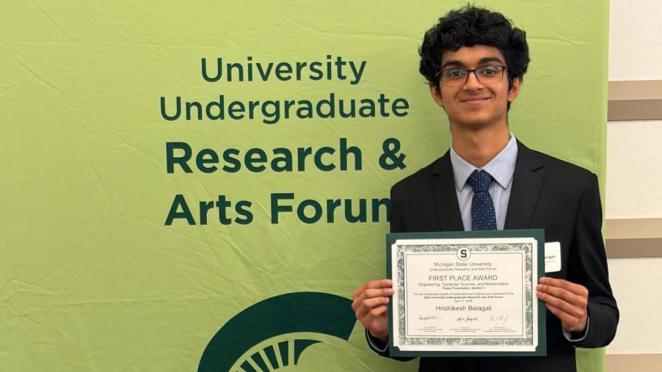
Student View: Challenging the quantum advantage boundary
Read ArticleMy interest in quantum computing started for a pretty simple reason: The mathematical symbols looked really cool and complicated.
At the time, I did not know what most of them meant. But I wanted to.
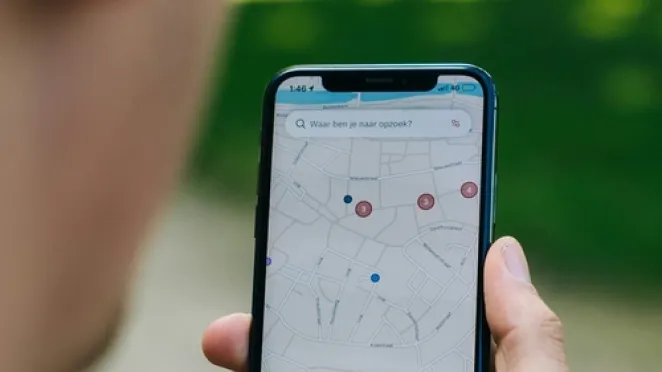
Helping wireless devices find their location without GPS
Read ArticleWe expect our phones, cars and other connected technologies to know where they are and to communicate wherever we go. The Global Positioning System, or GPS, helps make that possible, but the satellite signals GPS uses can’t reach everywhere. Inside buildings, underground and among tall buildings, those signals can be blocked or disrupted. Now, Michigan State University researchers have demonstrated how wireless systems can work together without relying on GPS.
MSU AI innovation supports 2.2M US workers exposed to toxic dust
Read ArticleFrom coal miners and construction crews to engineered stone countertop fabricators and foundry workers, more than 2.2 million U.S. workers inhale fine particles of rock, sand or coal every day on the job. After years of exposure, trapped dust can cause thick scar tissue to build up inside the lungs leading to long-term lung damage commonly known as black lung or silicosis.
NIH awards multi-university team over $4M to improve women’s health
Read ArticleBacked by a new $4.6 million award from the National Institutes of Health, or NIH, Michigan State University researchers are launching a novel project to transform how medications are developed and prescribed for women. This is the first installment of an award worth up to $12.8 million over three years. Researchers from Rutgers, Emory, Tulane, University of Colorado Anschutz, University of Michigan and University of Utah are collaborating with the MSU team to accomplish this goal, which the lead scientist describes as a moon shot.
Ask the expert: Could precision nutrition change the way we eat?
Read ArticleWhat if the food on your plate could be tailored to your body — taking into consideration your individual nutritional needs, how your body processes different foods and even what you like to eat? That is the idea behind precision nutrition, an emerging field that brings together nutrition, agriculture, engineering, food science and technology to better understand how food affects individuals and how the food system can deliver healthier, safer and more sustainable food.

-
-

Our world-class academic team spans eight departments and two interdisciplinary programs
-

Learn about admissions and application processes for our world-class degree programs
-

Our world-class faculty and students engineer a healthier, safer and more sustainable world
-

MSU engineering students maximize early opportunities in the workplace and obtain competitive placements upon graduation
-
-

Sign up to receive the quarterly Spartan Engineering E-News packed with updates within the college