

For decades, algae have been seen as a promising source of sustainable food, animal feed, biofuels and carbon-neutral materials. Compared with traditional crops and livestock, algae grow faster, require less land and freshwater and can directly convert sunlight and carbon dioxide into useful products. However, a major challenge has limited the widespread adoption of algae technologies for large-scale applications: light cannot penetrate deeply into the dense cultures used to grow algae resulting in slowed growth and increased production costs.
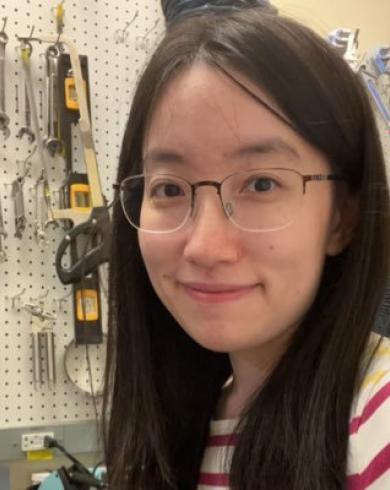
Xinyue Liu, assistant professor in the Department of Chemical Engineering and Materials Science at Michigan State, is part of a team developing new light-scattering hydrogel optical fibers as a way to grow algae and other photosynthetic microorganisms at an industrial scale.
The light-scattering fibers distribute sunlight more evenly throughout the dense culture, allowing microalgae to grow more efficiently, improving yield productivity by six-fold without requiring additional energy input, making algae-based production more practical and scalable.
By improving the efficiency of photosynthesis, this technology could enable more sustainable production of food, fuels and materials while also supporting carbon capture and reducing environmental impact. In the long term, this work could contribute to building more sustainable and resilient energy and food systems.
Liu anticipates the optical fibers will solve the light-limitation bottleneck for microalgal production faced by biomass manufacturers, as well as agriculture and aquaculture industries and carbon capture and climate technology companies. They may also attract interest from photobioreactor and bioprocess equipment manufacturers seeking higher efficiency, as well as specialty photonics companies developing light-distribution technologies.
To learn more about Liu's work, visit:
- Improving Photosynthesis by Scattering Hydrogel Fibers-Enabled Volumetric Illumination [Article]
- Fatigue-Resistant Hydrogel Optical Fibers Enable Peripheral Nerve Optogenetics During Locomotion [Article]
- Engineered Living Hydrogels [Article]
- Liu Research Group [Website]
- Xinyue Liu MSU Scholars page [Website]
- Xinyue Liu Google Scholar page [Website]
MSU College of Engineering Media and Public Relations page