
Nicholas Houghton can’t remember a time when he wasn’t fascinated by astronauts and human space flight. “Throughout my entire life there was one focus,” he says. “I’m going to work for NASA.”
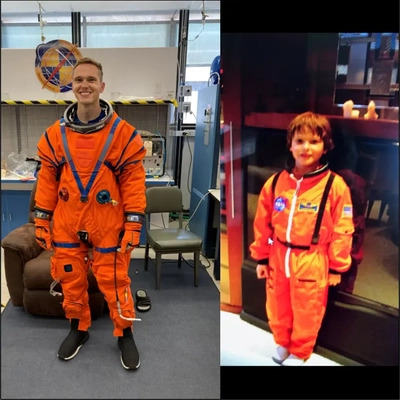
What he hadn't imagined was that one day he’d help design the systems that could keep astronauts safe on a mission around the moon. Houghton, who grew up in Rochester, Michigan, graduated from Michigan State University in 2019 with a mechanical engineering degree and an aerospace engineering concentration.
As a child, Houghton attended space camp at NASA’s Kennedy Space Center with his older brother and twin sister. He toured the facilities, learning about science, technology, engineering and mathematics, or STEM, and heard firsthand what it’s like to work at NASA.
Over the past seven years at NASA’s Johnson Space Center in Houston, Texas, he has helped design and engineer the Orion Crew Survival System, or OCSS, suits — the space suits and equipment that protected the crew during its 10-day Artemis II mission on the Orion spacecraft, which splashed down safely in the Pacific Ocean on April 10.
He vividly remembers spotting the space shuttle Discovery from a tour bus at camp, around the time of the spacecraft’s Return to Flight mission two years after the tragic loss of the space shuttle Columbia.
“A lot of the safety features introduced in the Orion suits were a direct result of lessons learned from Columbia,” Houghton says. “Working on Artemis II feels like a full- circle moment I didn’t expect.”
Turning a childhood dream into a career
Even though Houghton visited several universities with his twin sister, Michigan State was the only school he applied to. His older brother was already a Spartan and, inevitably, all three siblings ended up attending MSU.
“I loved the people there,” he says. “The tour was very much about the student. The faculty and facilities seemed strong. And I liked the way they were committed to not just teaching engineering, but also the people skills you need to be successful in the workplace.”
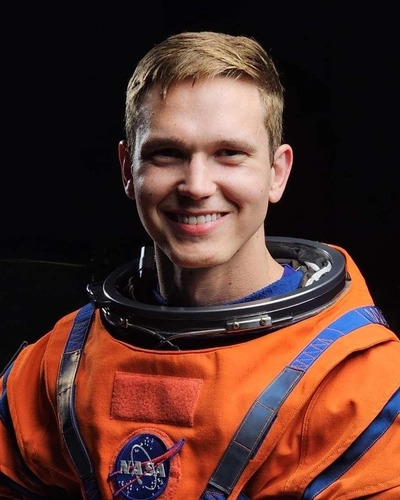
Multiple experiences and encounters at MSU’s College of Engineering helped shape his path.
Houghton attended the first few classes of what would become the aerospace engineering concentration at the college. “It was very inspiring. We had this young exuberant professor, Patton Allison, who was just so excited about the opportunity to teach this new discipline,” he says about this time when MSU gave him the fundamentals required for his current role at NASA.
Internships also played a key role. At the automotive manufacturer HIROTEC America and Cooper Standard, a fluid handling systems company, Houghton learned the day-to-day realities of a corporate engineer: managing deadlines, coordinating projects and working in teams. Going into his senior year, Houghton reassessed his goals.
“What do I really love? What inspired me as a kid?” he recalls thinking. The answer brought back his original dream of working at NASA.
As a member of the Delta Sigma Phi chapter at MSU, Houghton was proactive about building relationships. At the fraternity’s national convention, Houghton met its president and later asked him for contacts at NASA.
He shared a list of good schools and programs, and suggested people to reach out to. “They helped me understand what was needed to apply to Langley,” says Houghton.
His efforts paid off. Before his senior year, Houghton accepted an internship at NASA’s Langley Research Center in Hampton, Virginia.
“It was this massive decision,” he says. “I didn’t go to school for a semester and moved my graduation date to work at NASA. I thought: ‘Maybe this isn’t impossible. It’s only impossible if I don’t try.’”
"We watched our piece of the puzzle come together with the rest of NASA to launch this beautiful rocket with these four amazing individuals around the moon."
- Nicholas Houghton
Working at the center of human spaceflight
Ever since that first NASA internship — with grad school in between — Houghton has remained a part of the team at Johnson Space Center in Houston that designs, engineers and builds space suits and other protective equipment for crewed space missions.
“We’re a very integrated team that does everything related to life support,” he says. “We supply the suits but also the umbilicals that provide air, cooling, communication capability and more to the suit.”
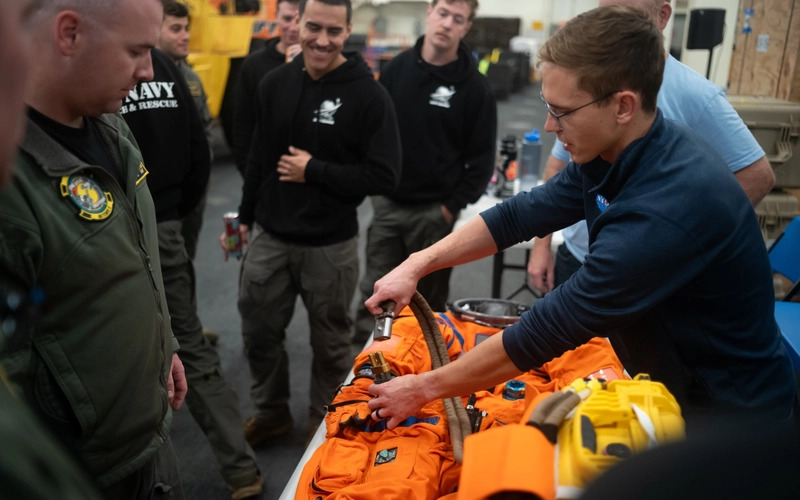
Beyond design, Houghton’s team provides an end-to-end suited service to the astronauts, from training them to use and work in their spacesuits to suiting them up on launch day at Kennedy Space Center and partnering with the Navy to support recovery operations as the astronauts return to Earth.
“People may think they recognize these orange suits from the Space Shuttle era,” Houghton says, but they were specifically designed for the Orion capsule and for the Artemis missions around the moon.
At NASA, it’s all about factoring in the worst-case scenarios, Houghton explains. “If something were to happen with the spacecraft on the way to the moon, the question is,: ‘How do we protect the crew?’” he says. “The suits are the answer.”
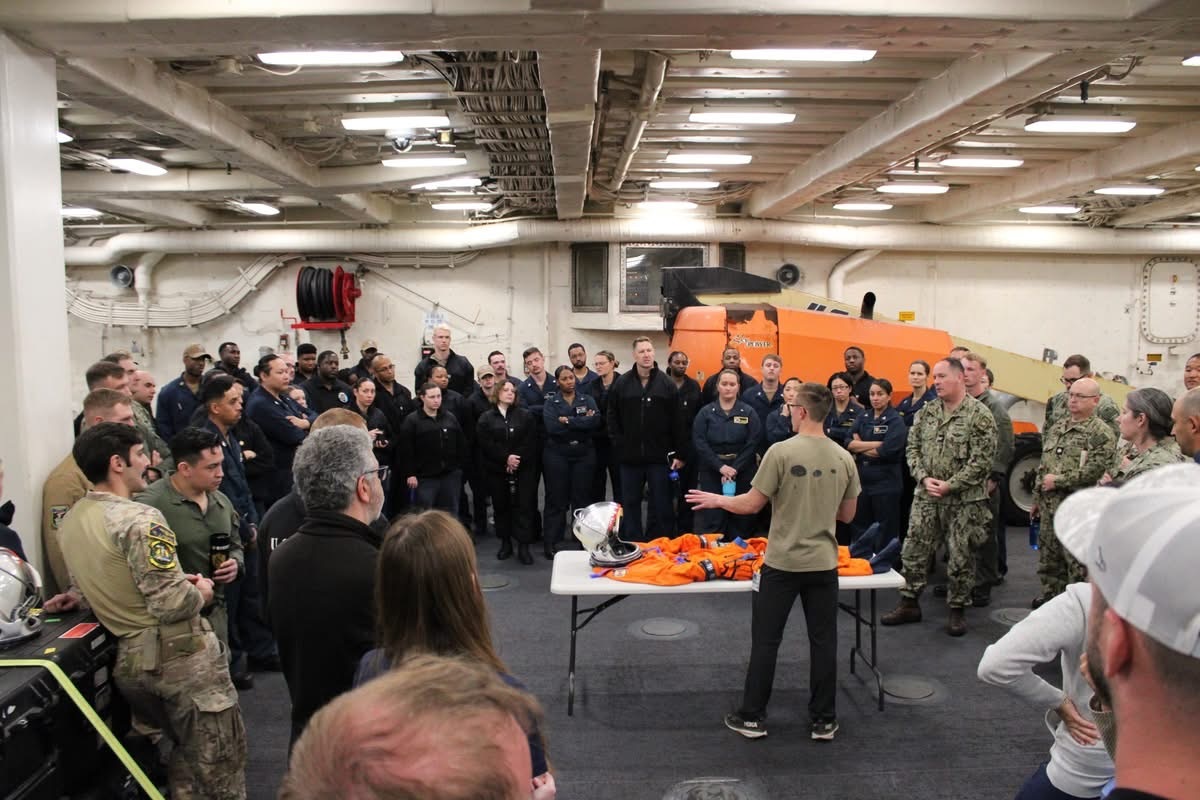
As a result, the system Houghton helped develop allows the astronauts to live, breathe and operate the spacecraft as needed for multiple days in the suit while remaining protected from injury in the event of emergency scenarios — an immense technical challenge.
Making history with an eye on the future
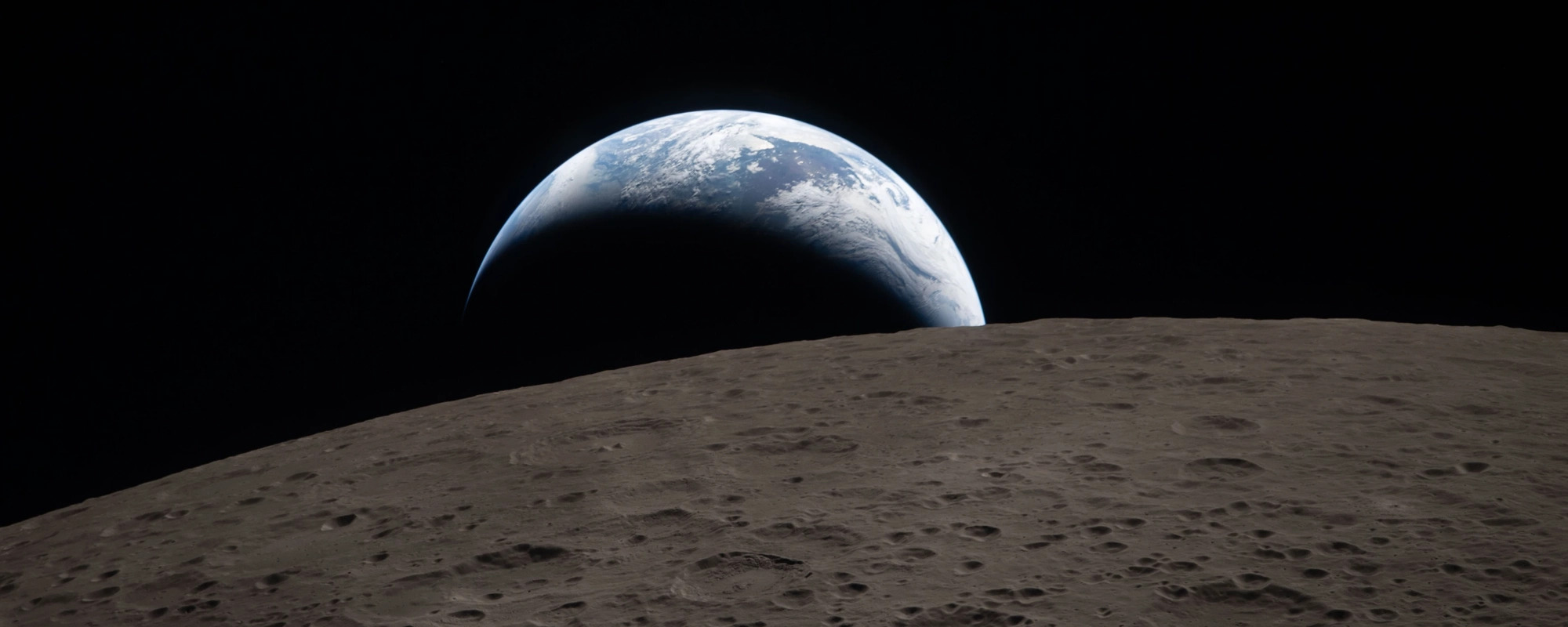
Artemis II returned to Earth safely after achieving the mission’s goals of manually piloting the Orion spacecraft and conducting a lunar flyby, all while testing the life-support systems with four humans on board — the core focus of Houghton’s work.
The space suits and equipment performed excellently, a collective feat that — unsurprisingly — has proved to be exceptionally rewarding.
“We watched our piece of the puzzle come together with the rest of NASA to launch this beautiful rocket with these four amazing individuals around the moon,” he says.
Emotions on the ground ran high during the Artemis II mission. “On flight day six, they did this lunar flyby, and we saw the solar eclipse from behind the moon with the Earth in the background — everyone in the office teared up.”
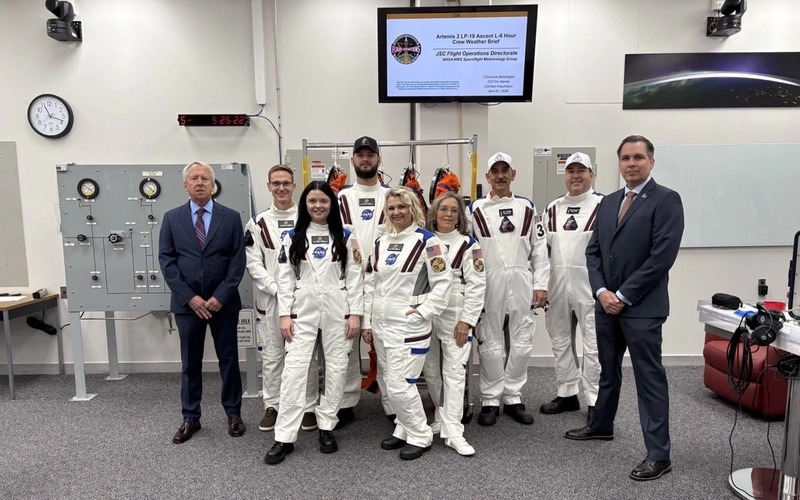
Getting those astronauts back to Earth, knowing the risks and lessons learned from the Columbia disaster, was an intense moment. “We suited them up on launch day and then we got to see them when they landed, hug them and congratulate them. At the end of the day, we sent people around the moon and brought them back.”
Houghton credits his father, a General Motors engineer, with teaching him the value of hard work. At MSU, that work ethic merged with dedication to his craft.
“It’s not about being the smartest person in the room. It’s about giving your best effort,” Houghton recalls his father saying. “I’m definitely not the smartest person at NASA, but I’ll work hard.”
It’s a mindset he recognizes in Spartans: a down-to-earth yet proud community with successful alums across fields.
For now, Houghton plans to stay in Houston, set on continuing the current U.S. space program.
“I’'m really hoping to use the lessons learned and start on the next mission,” he says. “Build hardware, train crews and kick-start Artemis III, IV and V, all in the next two years.”
A tall order, but well suited to this Spartan.
Story courtesy of MSUToday.
MSU College of Engineering Media and Public Relations page