






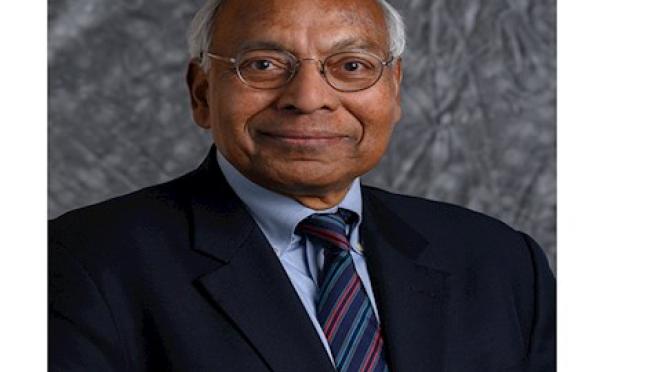
John Verboncoeur
Contact Information
Phone:
Email:
Professor
Biography
Computational plasma physics, electromagnetics, beam physics, high field effects including sheath formation, field emission, multipactor, and breakdown, laser-plasma interactions, plasma edge effects, transport, numerical methods, object-oriented techniques applied to scientific computing, visualization, plasma waves and boundary phenomena. Applications include microwave-beam devices, charged particle beam optics, fusion and other energy applications, accelerators, plasma thrusters, low pressure discharges for plasma processing, and high pressure discharges including plasma display panels and fluorescent lamps.
Education
- Ph.D., Nuclear Engineering, University of California - Berkeley 1992
Research Interests
- Computational Plasma Physics
- Electromagnetics
- Beam Physics
- High Field Effects Including Sheath Formation
- Field Emission
- Multipactor
- Breakdown
- Laser-Plasma Interactions
- Plasma Edge Effects
- Transport
- Numerical Methods
ResearchGate
Selected Publications
- J.-M. jeong, J.-H. Kim, H. Wang, D.-J. Jiu, J.-H. Koo, E.-H. Choi, J. P. Verboucoeur, H.S. Uhm, and G. Cho, "Propagation of a Light-Emitting Wave-front in a Fine Tube Positive Column Discharge", Japan. J. appl. Phys. 49, 026001 (2010).
- S. K. Nam and J. P. Verboucoeur, "Global Model for High Power Microwave Breakdown at High Pressure in Air", Comp. Phys. Comm. 180, 628-635 (2009).
- B. Ragan-Kelley, J. Verboncoeur, and Y. Feng, "Two-Dimensional Axisymmetric Child Langmuir Scaling Law", Phys. Plasmas 16, 103102 (2009).
- S.K. Nam and J. P. Verboucoeur, "Theory of Filamentary Plasma Array Formation in Microwave Breakdown at Near-Atmospheric Pressure", Phys. Rev. Ettt. 103, 055004 (2009).
MSU Scholar
Google Scholar
Awards
- Senior Member, IEEE (2008)
News

Ask the expert: Could precision nutrition change the way we eat?
What if the food on your plate could be tailored to your body — taking into consideration your individual nutritional needs, how your body processes different foods and even what you like to eat? That is the idea behind precision nutrition, an emerging field that brings together nutrition, agriculture, engineering, food science and technology to better understand how food affects individuals and how the food system can deliver healthier, safer and more sustainable food.

Spartan Engineers help shape Michigan’s next mobility economy
More than 200 researchers, industry leaders, entrepreneurs, investors, policymakers and government partners gathered in East Lansing on Aug. 11 for the 2026 Mobility Summit, themed “Michigan Moves: Building the Next Mobility Economy.”

AI and engineering: Pioneering positive change
A wide range of disciplines are adopting artificial intelligence, or AI, at a rapid pace. From science and medicine to the humanities and education, AI is influencing the landscape of how information is accessed and processed. At Michigan State University, the College of Engineering is exploring new ways for AI to improve lives through railway safety, AI security, learning and health outcomes.

2025 Mobility Summit explores what moves Michigan
The first annual Mobility Summit, co-hosted by MSU Mobility and the MSU Research Foundation, and sponsored by Consumers Energy and the Michigan Economic Development Corporation (MEDC) Office of Future Mobility and Electrification (OFME), took place on Aug. 14, 2025, at the Graduate East Lansing Hotel, located across from Michigan State University (MSU), in East Lansing, Michigan.

Engineering Michigan’s future
Engineering research at Michigan State University prioritizes areas bolstering Michigan’s economy and advancing the state’s engineering and digital innovation professions.

How MSU's research powers Michigan's economy and future
For Peter Savolainen, Michigan’s roadways demand earnest, ongoing attention. The chair of Michigan State University’s Department of Civil and Environmental Engineering and an MSU Research Foundation Professor, Savolainen has been a prominent figure in the state’s efforts to reduce traffic-related crashes, injuries and fatalities.

For the Green and White
Michigan State University Dean Leo C. Kempel’s last day as dean in the College of Engineering will be Sept. 30, 2024, after more than a decade.

Senior associate dean weighs in on top 2024 tech predictions
John Verboncoeur, MSU College of Engineering senior associate dean for research and graduate studies, is part of an elite group invited to offer insights on this year’s technological trends.

Judd Herzer hired as the new director of MSU Mobility
Michigan State University has named Judd Herzer as the director of MSU Mobility to help amplify and focus the university’s vast research activities in the smart-vehicle landscape. Satish Udpa, University Distinguished Professor in the College of Engineering at MSU and co-founder of MSU Mobility, has been fulfilling the duties of this newly created role in an interim capacity while the university looked for the ideal candidate.

Local teachers complete specialized stem experiences
Teachers were the students when the Michigan State University College of Engineering again hosted a Research Experiences for Teachers (RET) program that supports authentic summer research experiences for middle and high school educators.

MSU leads an interconnected mobility ecosystem
Sparked by the Curved Dash Oldsmobile in 1901 and accelerated by Ford’s pioneering assembly lines, automotive production in Michigan has been at the forefront of the mobility industry for more than a century. Still today, there are more than two dozen original equipment manufacturers in our state supplying automakers worldwide.

MSU Mobility is electrifying the future of mobility
Michigan State University Mobility took center stage at the North American International Auto Show Thursday during a panel discussion with its peer institutions from the University Research Corridor, or URC, to highlight how the institution is leading the nation in preparing students who will take their talents into the ever-changing mobility industry.


John Verboncoeur to serve as IEEE VP-elect
A Spartan Engineer from Michigan State University has been elected to a leadership role in directing the Technical Activities (TA) unit for the world's largest technical professional society, the Institute of Electrical and Electronics Engineers (IEEE).

Engineering Research Visioning Alliance
John Verboncoeur is representing Michigan State University on the Standing Council of the National Science Foundation's new Engineering Research Visioning Alliance. He is the associate dean for research and graduate studies in the College of Engineering, and he is a professor of electrical and computer engineering as well as computational mathematics, science and engineering.

Visioning engineering research
America's economic competitiveness is tied directly to the pace of scientific and technological discovery, which requires sustained, long-term support as well as agility.

A statement on the events of 1/6/21
After this week's events in Washington, D.C., the leadership of the College of Engineering wanted to reach out to our community to remind everyone about the culture and climate necessary in our College to ensure we accomplish our goal of engineering a healthier, safer, and more sustainable world.

Autumn 2020 Media Report
Compostable dog poop bags aren't panning out. "Biodegradability is the most used and abused term," said Ramani Narayan. The word carries little regulatory oversight and leaves customers thinking their purchase has a smaller impact on the environment than it does. Story featured in Discover Magazine.

Video celebrates graduating Spartan Engineers
While in-person celebrations are cancelled in December 2020, the College of Engineering is recognizing the accomplishments of its 350 undergraduate, master's and PhD graduates and sharing special words and messages at the Engineering Virtual Commencement Celebration.

The First/Last Mile of Mobility
America's economic competitiveness is tied directly to the pace of scientific and technological discovery, which requires sustained, long-term support as well as agility.

Accelerating the First/Last Mile
Michigan State University will assemble mobility experts from industry, government and its academic colleges and units to host an automotive industry virtual forum, "Accelerating the first/last mile for autonomous mobility," at 1 p.m. ET on Thursday, Nov. 19.

Introducing Alex Delavan
Alex Delavan has been named the new director of the Division of Engineering Research (DER) at Michigan State University.

DER interim leader
Jacque Shoppell will serve as interim director for the Division of Engineering Research (DER) in the MSU College of Engineering, starting Aug. 24.
Spring 2020 Media Report
University Distinguished Professor Anil Jain is ranked #1 in the world in the 2020 edition of Top Scientists Ranking for Computer Science & Electronics, according to Guide2Research, one of the leading portals for computer science research.

Irene Xagoraraki leads study
The secret to predicting viral outbreaks like COVID-19 might be in our sewers. A Michigan State University researcher is spearheading a study to determine if viral outbreaks can be identified and forecasted through wastewater sampling.

January 2020 Media Report
Bryan Smith, associate professor of biomedical engineering, and a team of scientists have created a "Trojan Horse" nanoparticle that can be directed to eat debris, reducing and stabilizing plaque. The discovery could be a potential treatment for atherosclerosis, a leading cause of death in the United States.

Shaping the future of transportation
Imagine a sprawling, 5,200-acre mix of rural, developed and industrial property. Now plop down 550 buildings. Add 30 miles of roads and 120 miles of sidewalks. Sprinkle in 70,000 people, and pack the lanes with cars, buses, delivery trucks, bicycles and mopeds.

September 2019 Media Report
Bryan Smith, associate professor in the Department of Biomedical Engineering, has created a noninvasive process to deliver chemotherapy treatments that could help doctors see how much of the drug is going directly to the tumor.

Assessing emerging mobility solutions
A multidisciplinary research team from Michigan State University will use a $2.49 million grant from the National Science Foundation to conduct a four-year study examining the impacts of autonomous vehicles on the future workforce.

Excellence in graduate education
The 2019 Engineering Graduate Research Symposium at Michigan State University showcased 300 poster presentations and celebrated both the Outstanding Graduate Student Awards and the Fitch H. Beach Award nominees during ceremonies March 21 at the Breslin Center.

2019 Distinguished Scholar Awards
For demonstrated excellence in scholarship, Alex Liu and Yadu Pokhrel were recognized March 15 during the 2019 Engineering Awards Luncheon at Michigan State University.

Bio - John P Verboncoeur
John P. Verboncoeur received a B.S. (1986) in Engineering Science from the University of Florida, M.S. (1987) and Ph.D. (1992) in Nuclear Engineering from the University of California-Berkeley (UCB), holding the DOE Magnetic Fusion Energy Technology Fellowship.

September 2018 Media Report
The College of Engineering is well represented in a paid promotion in the New York Times, created by MSU's Communications and Brand Strategy.

August 2018 Media Report
A two-story news package on research by Assaf Gilad, professor of biomedical engineering and radiology, and Galit Pelled, professor of biomedical engineering, radiology and neuroscience, is telling readers about ongoing work in the Department of Biomedical Engineering.

Autonomous vehicle workforce study
Despite concerns that a rise in automated vehicles, or AVs, will displace significant numbers of truck drivers in the United States, only a modest number of truck driver jobs, if any, will be affected, according to a new report commissioned by the American Center for Mobility (ACM), led by Michigan State University and supported by Texas A&M Transportation Institute.

2018 SmartAg Workshop
As the world population continues to increase against the sustainability challenges on water and nutrients around the globe, the need to expand the innovation of agricultural technology is becoming an urgent issue.

New assistant dean
Katy Luchini Colbry has been selected as the assistant dean for Graduate Student Services in the MSU College of Engineering. She has been involved for the past eight years in every major aspect of the graduate studies program in collaboration with Associate Dean for Graduate Studies and Faculty Development Manooch Koochesfahani. In her new role, she will work on graduate student recruiting, mentoring, and fostering an environment to grow graduate student resources and fellowship opportunities, along with other day-to-day aspects of growing the graduate program of the college.

April 2018 Media Report
MSU's Innovation Center hosted the annual Innovation Celebration April 19, highlighting ground-breaking technology from MSU labs and startup companies from across campus. The MSU Innovation of the Year Award was presented to Donald Morelli, chair and professor of chemical engineering and materials science, for his work in thermoelectric technology.

John Verboncoeur
ohn Verboncoeur of Michigan State University will receive the Richard F. Shea Distinguished Member Award from the Nuclear and Plasma Sciences Society (NPSS) of the Institute of Electrical and Electronic Engineers (IEEE) during ceremonies in June. Only one award is presented internationally each year.

February 2018 Media Report
Jiayu Zhou, assistant professor of computer science and engineering, will use a $551,600 NSF CAREER Award to research large-scale machine learning on big data. He is the 14th Spartan Engineer to be awarded the prestigious recognition since 2010.

January 2018 Media Report
AutoMobili-D at the 2018 North American International Auto Show in Detroit again provided a substantial media platform to showcase MSU Engineering research, technology, faculty experts, and talented students.

Impacting transportation jobs
The American Center for Mobility (ACM) has commissioned a workforce study being undertaken by Michigan State University (MSU) and Texas A&M Transportation Institute (TTI) to begin to understand and quantify impacts on today's transportation jobs.

Smarter. Safer. Autonomous.
Autonomous, or self-driving, vehicles have captured the imagination of the public, but many drivers are apprehensive about the prospect of letting go of the wheel.

Driving our future
John Verboncoeur is the associate dean for research in the College of Engineering. He is a professor of electrical and computer engineering as well as computational mathematics, science and engineering.

December 2017 Media Report
A monthly look at what is being written about the MSU Engineering community

November 2017 Media Report
The SmartAg International Symposium, being held at Michigan State University Dec. 3-6, will connect researchers, practitioners and policymakers who are tackling the global agro-food problem of producing more with less. John Verboncoeur, associate dean for research,is chair of the SmartAg Initiative executive committee. MSUToday

SmartAg initiative
By 2050, the global population may exceed nine billion people - almost three-quarters of them living in urban areas. How will the world feed so many? The SmartAg International Symposium, being held at Michigan State University on Dec. 3-6, is aimed at connecting the researchers, practitioners and policy makers who will tackle the global agro-food problem of producing more with less.

AS&E program
Michigan State University is establishing an Accelerator Science and Engineering Traineeship (AS&E) program to address a national shortage in accelerator scientists and engineers.

June 2017 Media Report
Xiaobo Tan, an MSU Foundation Professor of electrical and computer engineering, was featured at AAAS during a lecture and presentation on GRACE, MSU's robotic fish that uses a flexible mechanized muscle to move through water and sense hydrodynamics.