

Applied Engineering Sciences
Applied Engineering Sciences represents an interdisciplinary approach to engineering that includes a mixture of technical, scientific, and analytical skills to solve business challenges. Sometimes this major is referred to as “industrial engineering,” which most closely aligns with operations and supply chain. The concentration a student chooses helps narrow the focus within the major and can influence job titles and career paths.
Students select one of six concentrations: Business Law, Computer Science, Media and Information, Packaging, Supply Chain Management or Technical Sales. Students have a strong understanding of the interplay between engineering and business.
Applied Engineering Sciences graduates work in a wide variety of industries. Some common tasks include:
- Creating efficiencies for manufacturing and organizational operations
- Maintaining systems and machinery within a factory or plant
- Analyzing data and methods to predict and create solutions to improve a company's delivery of products and services
- Ensuring adherence to quality standards; implement methods to inspect, test, and evaluate reliability and efficiency
- Researching and developing ideas for new products and systems
- Negotiating and purchasing materials, supplies and equipment
- Selling complex scientific and technological products or services
Top Industries
- Energy
- Pharmaceuticals
- Automotive
- Manufacturing
- Food Industry
- Computer
- Consulting
- Patent Law
Common Careers
- Data Scientist/Data Analyst
- Application Engineer
- Commodity Manager
- Distribution Specialist
- District Sales Engineer
- Expediter/Facilities Engineer
- Financial Analyst/Forecaster
- Industrial Market Analyst
- Logistics Engineer
- Manufacturing Control Engineer
- Materials Control Engineer
- Operations Manager
- Product Engineer
- Project Manager
- Quality Assurance Engineer
- Systems Application Engineer
- Technical Sales Engineer
Visit Applied Engineering Sciences - Careers Center for more information.
Applied Engineering Sciences
Michigan State University
Engineering Building
428 S. Shaw Lane, Room 1428
East Lansing, MI 48824
Phone: (517) 353-9844

Biosystems Engineering
Biosystems Engineering is an integration of engineering with biological, environmental and agricultural sciences. Biosystems engineers develop the techniques and processes to work with living systems, including microbes, plants and animals. They provide engineering input to produce and process food, fiber, energy, and pharmaceuticals.
Biosystems Engineers work in a wide variety of industries. Some common tasks include:
- Creating solutions for systems used in distribution of goods and services and broader operations
- Improving agricultural machinery design
- Developing chemical products, sensors, and life-saving medical equipment
- Creating environmental protection solutions to improve water quality and control air pollution
- Designing and creating equipment and devices to detect and treat illnesses and conditions
- Improving sustainability of production systems to decrease environmental hazards and preserve natural resources
- Developing systems that convert biological waste into energy
- Designing manufacturing processes to improve safe and sanitary food production
Top Industries
- Food Processing
- Pharmaceuticals and Health Products
- Medicine
- Environmental Consulting
- Bioenergy and Energy Conservation
- Sustainability
- Government
- Agriculture
Common Careers
- Food Engineer
- Process Engineer
- Environmental Engineer
- Biotechnology Engineer
- Agricultural Engineer
- Research Laboratory Engineer
Visit Biosystems Engineering - Careers Center for more information.
Biosystems and Agricultural Engineering Department
Michigan State University
Farrall Hall
524 S. Shaw Lane, Room 216
East Lansing, MI 48824
Phone: (517) 355-4720

Chemical Engineering
Chemical Engineering uses a foundation in chemistry, biology, physics, and math to focus primarily on chemical production and the manufacture of products through chemical processes. This includes designing equipment, systems and processes for refining raw materials and for mixing, compounding and processing chemicals to make valuable, environmentally friendly, and economically viable products.
Chemical Engineers work in a wide variety of industries, with most jobs falling into one of two categories,
- the design, manufacture, and operation of plants and equipment; and
- the development of new or adapted substances and materials. Some common tasks include:
- Improving existing and developing new manufacturing processes and equipment
- Performing tests to monitor production processes
- Ensuring safety and environmental compliance for people, chemicals, equipment, and processes
- Creating procedures using chemical processes in order to separate liquid and gas components or to produce electrical currents
- Identifying and correcting issues within manufacturing operations
Top Industries
- Energy
- Environmental Remediation
- Transportation Batteries and Fuels
- Biotechnology
- Healthcare and Medicine
- Pharmaceuticals, Coatings and Chemicals
- Chemical, Polymer, and Consumer Products Food
- Business
- Intellectual Property and Patent Law
Common Careers
- Academia
- Government and National Labs
- Development, Design, or Sales of Chemical Products
- Integration of Chemical Processes into Products
- Creation and Management of Chemical Process Plants
- Environmental Engineering
- Quality Assurance
- Chemical Safety
- Chemical Engineering Research
Visit Chemical Engineering - Careers Center for more information.
Chemical Engineering and Materials Science Department
Michigan State University
Engineering Building
428 S. Shaw Lane, Room 2100
East Lansing, MI 48824
Phone: (517) 355-5135
Civil Engineering
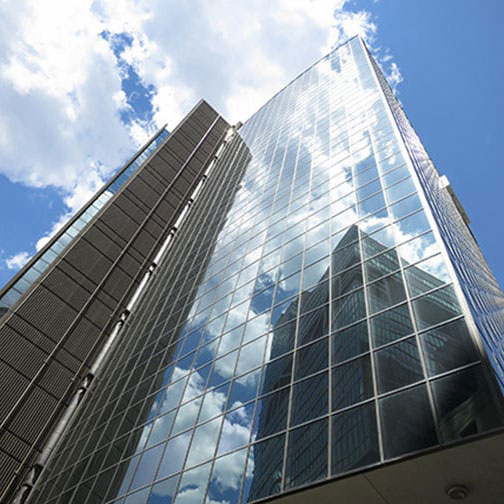
Civil Engineering is focused on the design, construction, and maintenance of structures and infrastructures such as dams, bridges, aqueducts, canals, highways, power plants, sewerage systems, and airports. Civil Engineers consider the current and future needs of an expanding population while considering environmental protection and natural phenomena.
Civil Engineers work in a wide variety of industries. Civil Engineering functions can be divided into three categories: functions performed before construction (feasibility studies, site investigations, and design), those performed during construction (client interaction, consulting engineers, and contractors) and those functions performed after construction (maintenance and research). Some common tasks include:
- Using technology to design, construct, and maintain structures and infrastructure within the public and private sector
- Designing and overseeing the construction of public works such as roads, bridges, dams, tunnels, buildings, airports, water and sewerage systems
- Using a Geographic Information System (GIS) to create, manage, analyze, and map all types of location data; solving problems that involve spatial factors
- Designing and/or overseeing projects involving the production and safety of drinking water.
- Calculating load capacity to improve structural designs
- Using advanced materials to design and build environmentally friendly structures
Top Industries
- Government
- Construction
- Environmental
- Research
- Transportation
- Water
Common Careers
- Project Engineer
- Civil Engineer
- Staff Engineer
- Field Engineer
- Transportation Engineer
- Design Engineer
- Structural Engineer
Visit Civil Engineering - Careers Center for more information.
Civil and Environmental Engineering Department
Michigan State University
Engineering Building
428 S. Shaw Lane, Room 3546
East Lansing, MI 48824
Phone: (517) 355-5107
Fax: (517) 432-1827
Email: cee@egr.msu.edu

Computational Data Science
Computational Data Science combines aspects of statistics, computer science, mathematics and machine learning to identify trends, make predictions, and solve problems. Computational data science uses algorithms and data structures to store, manipulate, visualize and learn from large data sets.
Computational Data Scientists work in a wide variety of industries. Some common tasks include:
- Collecting and categorizing large datasets
- Cleaning and validating data to ensure accuracy, completeness and uniformity
- Identifying patterns and trends in data sets
- Devising models and algorithms to uncover hidden meaning
- Forecasting future trends and results
- Training intelligent systems
- Producing summarizations and visualizations of datasets and communicate results to stakeholders
- Discovering solutions and opportunities through an understanding of data sets
Top Industries
- Aerospace
- Commercial Banking and Credit
- Defense
- Government
- Healthcare
- Internet and Software
- Manufacturing
- Telecommunications
- Transportation and Logistics
Common Careers
- Computational Engineer
- Data Mining Engineer
- Data Modeler
- Data Scientist
- Data Warehouse Architect
- Machine Learning Data Scientist
Visit Computational Data Science - Careers Center for more information.
Computer Science and Engineering Department
Michigan State University
Engineering Building
428 S. Shaw Lane, Room 3115
East Lansing, MI 48824
Phone: (517) 353-3148
Computer Engineering
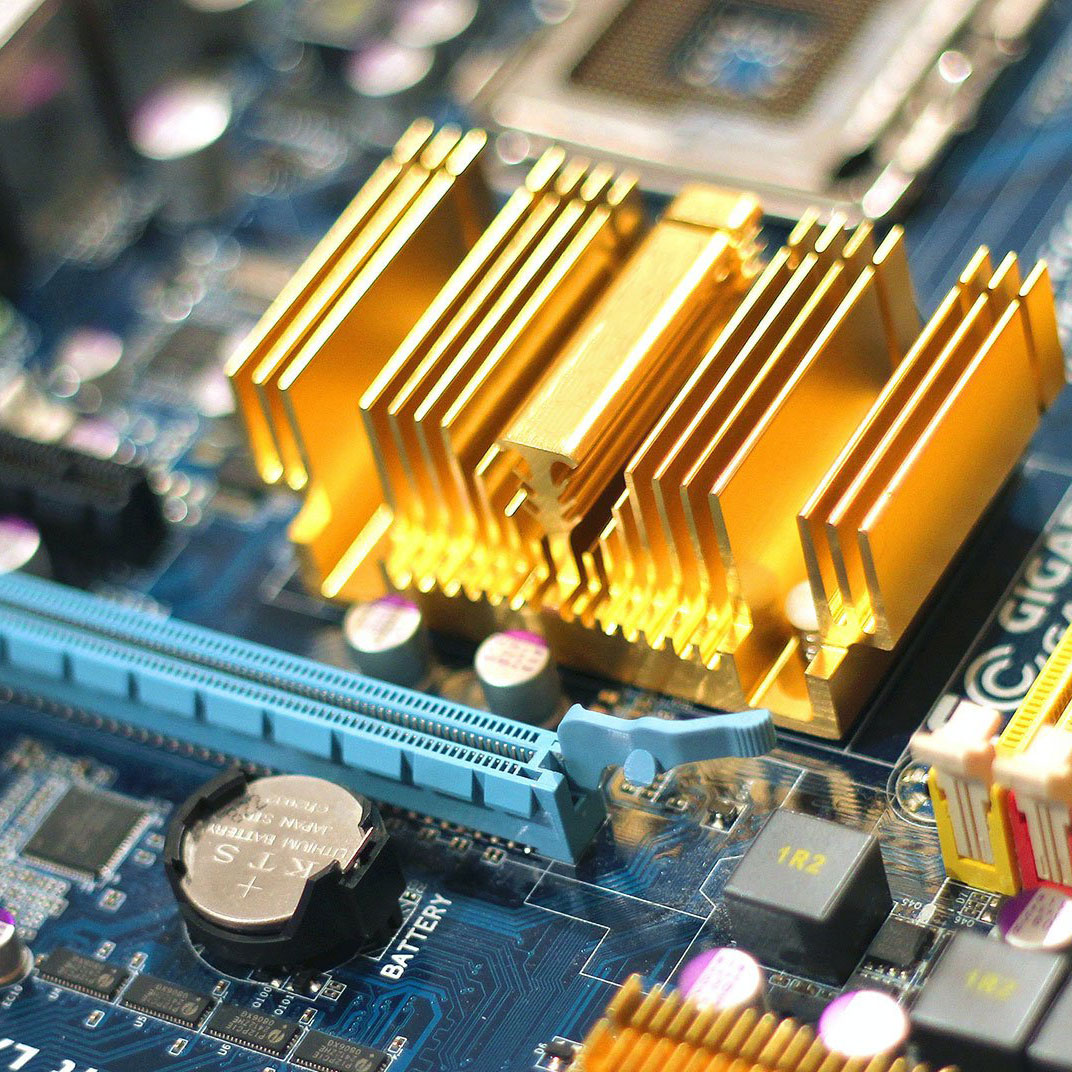
Computer Engineering uses principles from computer science and electrical engineering to create hardware (physical components) and firmware (software that allows operating systems and applications to optimize hardware), used in a wide variety of products and industries. Computer Engineers research, design, develop, construct and test computer systems and components such as processors, circuit boards, microchips, memory devices, networks and routers.
Computer Engineers work in a wide variety of industries. Some common tasks include:
Designing devices used in manufactured products that incorporate processors and other computer components (cars, home appliances, medical devices)
Working closely with developers to ensure computer hardware works together with software
Optimizing hardware for different applications with an understanding of how software interacts with the hardware (smartphones, electric vehicles, other related hardware/devices)
Increasing the reliability and security of computers
Supervising manufacturing and installation of computer or computer related equipment and components
Building controllers for robots to move, recognize objects, and draw conclusions of surroundings
Designing software that interacts with hardware for integration and optimization
Top Industries
- Technology
- Automotive
- Higher Education
- Insurance
- Manufacturing
- Commercial Banking
- Retail
- Investment Banking
- Accounting
Common Careers
- Computer Architect
- Real-time System Design Engineer
- Applications Engineer
- Data Communication Engineer
- Project Engineer
- Production Engineer
- Telecommunications Engineer
- Solid State Engineer
Visit Computer Engineering - Careers Center for more information.
Electrical and Computer Engineering Department
Michigan State University
Engineering Building
428 S. Shaw Lane, Room 2120
East Lansing, MI 48824
Phone: (517) 355-5066

Computer Science
Computer Science is the study of computation, automation, and information applying principles of mathematics, engineering and logic. Computer Science spans theoretical disciplines (algorithms, computational theory and information theory) and practical application (design and implementation).
Science incorporates techniques from areas such as queuing theory, statistics, and circuit design. Computer Science also makes use of hypothesis testing and experimentation during conceptualization, design, measurement and refinement of algorithms, information structures, and computer architectures.
Computer Scientists work in a wide variety of industries. Some common tasks include:
- Designing software that interacts with hardware for integration and optimization
- Writing program software, creating applications, developing websites
- Developing, designing, and analyzing methods, architectures, data structures, and algorithms to solve problems
- Developing applications to operate within future frameworks (i.e. Metaverse)
- Assessing and improving computer processes and performance, and information storage and retrieval
- Building software enabling autonomous drones, devices, robots, and vehicles to do assigned tasks
Top Industries
- Internet and Software
- Automotive
- Higher Education
- Insurance
- Manufacturing
- Commercial Banking and Credit
- Management Consulting
- Retail
Common Careers
- Software Engineer
- Software Developer
- Application/Web Developer
- Programmer
- Implementation Consultant
- Cybersecurity Engineer
Visit Computer Science - Careers Center for more information.
Computer Science and Engineering Department
Michigan State University
Engineering Building
428 S. Shaw Lane, Room 3115
East Lansing, MI 48824
Phone: (517) 353-3148
Electrical Engineering
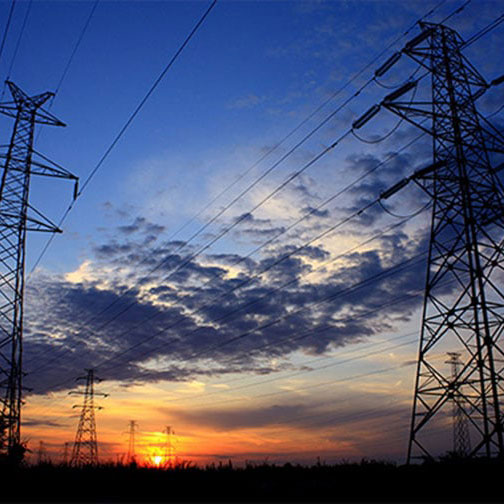
Electrical Engineering focuses on creating, designing, and managing electricity in many forms to help power the world. Electrical Engineering applies the physics and mathematics of electricity, electromagnetism, and electronics to both large and small scale systems to process information and transmit energy. Electrical Engineers work with devices, circuits, power, continuous time signals (analog) and discrete time signals (digital), controls, electronics, digital and analog electronics, electromagnetism, microprocessors, digital design, radio frequency - wireless communications, and satellite communications.
Electrical Engineers work in a wide variety of industries. Popular sub disciplines include electronic engineering, microelectronics engineering, signal processing engineering, power engineering, control engineering, telecommunications engineering, instrumentation engineering and computer engineering. Common tasks include:
- Inventing, designing and building hardware and computer devices (some too small to see)
- Using CAD systems for creation of schematics and to lay out circuits
- Using computers to simulate how electrical devices and systems will function
- Controlling algorithms, sensors, and AI processors
- Designing, building, improving, and testing printed circuits, microprocessors, and other small components
- Analyzing and altering digital signals to make them more accurate and reliable
- Designing and developing equipment and systems for efficient and safe manufacturing operations
- Constructing, operating, and maintaining electrical systems and equipment
Top Industries
- Manufacturing
- Automotive
- Power
- Consumer Electronics
- Aerospace
- Defense
- Communications Consultants
- Semiconductors
Common Careers
- Electronic Design
- Controls Engineer
- Power Systems Engineer
- Hardware Engineer
- Telecommunications Engineer
- Semiconductor Engineer
Visit Electrical Engineering - Careers Center for more information.
Electrical and Computer Engineering Department
Michigan State University
Engineering Building
428 S. Shaw Lane, Room 2120
East Lansing, MI 48824
Phone: (517) 355-5066

Environmental Engineering
Environmental engineers use the theoretical foundations of engineering combined with principles of biology and chemistry to develop solutions to environmental problems. Environmental engineering addresses the impact of human activity on the environment and designs sustainable engineering solutions to provide people with safe water, air and land.
Environmental Engineers work in a wide variety of industries. Within environmental engineering there are typically four areas of specialization: air quality, environmental systems, water resource engineering, and waste management. Some common tasks include:
- Examining issues like climate change, pollution, deforestation, supply of energy resources, and population growth
- Conducting hazardous-waste management studies and advising on treatment and containment
- Working to improve recycling, waste disposal, public health, and water and air pollution control
- Addressing global issues, such as unsafe drinking water, climate change, air quality, and environmental sustainability
- Consulting with organizations to assess conditions and design solutions for increased sustainability practices
Top Industries
- Environmental Consulting
- Government
- Corporations
- Utilities
- Research
- Private Consulting
Common Careers
- Environmental Engineer
- Civil Engineer
- Project Engineer
- Energy Engineer
- Ecological Field Technician
- Drinking Water Engineer
Visit Environmental Engineering - Careers Center for more information.
Civil and Environmental Engineering Department
Michigan State University
Engineering Building
428 S. Shaw Lane, Room 3546
East Lansing, MI 48824
Phone: (517) 355-5107
Email: cee@egr.msu.edu

Materials Science
Materials Science and Engineering is the study of mechanical, physical, and chemical properties of materials, such as metals, ceramics, polymers, composites, nanomaterials and other substances. Materials Science Engineers develop, process, and test materials used to create a wide range of products from computer chips and aircraft wings to golf clubs and biomedical devices. The objective of a Materials Engineer is to predict and control material properties through an understanding of atomic, molecular, crystalline, and microscopic structures of materials.
Materials Science Engineers work in a wide variety of industries. Some common tasks include:
- Investigating how materials perform and why they fail in order to create and improve material functions and properties
- Working with polymers made out of biomaterials like corn or potatoes that will biodegrade
- Creating devices, prosthetics, and innovations such as artificial skin within the biomedical field
- Selecting materials for specific products and developing new ways to use existing materials
- Reviewing plans for new products to recommend materials based on factors such as strength, weight, and costs to ensure budget and design objectives are met
- Planning and implementing lab operations to develop material fabrication procedures for new materials
- Testing materials to determine how they perform under different conditions
Top Industries
- Aerospace and Defense
- Automotive, Electric Vehicles, and Transportation
- Healthcare
- Biotechnology
- Chemicals, Polymers, and Consumer Products
- Energy
- Environment
- Semiconductors and Electronics
- Construction and Infrastructure
Common Careers
- Research
- Academia
- Government and National Labs
Visit Materials Science and Engineering - Careers Center for more information.
Chemical Engineering and Materials Science Department
Michigan State University
Engineering Building
428 S. Shaw Lane, Room 2100
East Lansing, MI 48824
Phone: (517) 355-5135
Mechanical Engineering
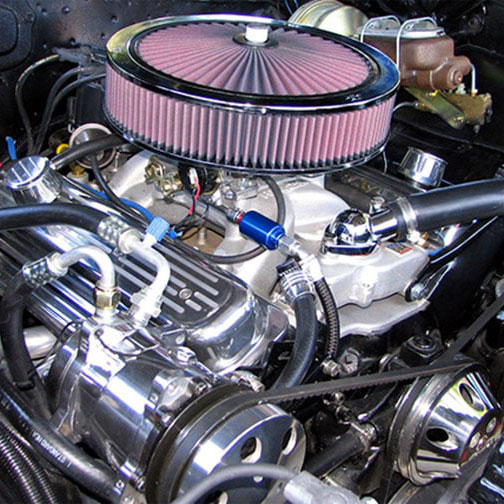
Mechanical Engineering is one of the broadest engineering disciplines and uses principles of motion, energy, and force. An easy way to think of mechanical engineers is, they work with anything that moves, from components to the human body. Mechanical Engineers research, design, develop, manufacture, build, maintain and test mechanical and thermal products, sensors, and devices.
Mechanical engineers design almost everything you would consider to be a machine, from jet airplanes to coffee pots to bicycles. Mechanical engineering applies the fundamental principles of mechanics and thermosciences to design. You can thank mechanical engineers for thrilling roller coaster rides like the Top Thrill Dragster. But mechanical engineering is not limited to just machines. It also influences products such as shoes, light bulbs, and even doors. There are mechanical engineering job opportunities in areas of air conditioning and refrigeration, automotive, manufacturing, welding, and robotics. Other careers cross over into other Engineering disciplines, working on everything from artificial organs to massive manufacturing machines.
Top Industries
- Manufacturing (General/Industrial Equipment)
- Automotive and Transportation Equipment Manufacturing
- Engineering Services (Consulting & Design Firms)
- Aerospace and Defense
- Heating, Ventilation, and Air Conditioning (HVAC) and Building Systems
- Energy (Oil & Gas, Utilities, and Renewables)
- Consumer Products and Appliances
- Government (Federal, State, and Local – incl. NASA, DoD, DOE)
- Construction and Building Systems Engineering
- Medical Devices and Healthcare Equipment
- Robotics and Automation
- Semiconductors and Electronics Manufacturing
- Shipbuilding and Marine Engineering
- Chemical and Process Industries (including food and beverage)
- Material and Metallurgical Industries (including plastics and composites)
- Railroad and Mass Transit Systems
- Academic and Research Institutions
- Agricultural and Off-Highway Equipment
- Patent Law and Intellectual Property Services
- Aviation and Airlines (Maintenance, Overhaul, Systems)
Common Careers
- Product Development Engineer
- Manufacturing Process Engineer
- Thermal Systems Engineer
- Automotive Systems Engineer
- Aerospace Mechanical Engineer
- Robotics Engineer
- Biomechanical Engineer
- HVAC Design Engineer
- Renewable Energy Engineer
- Structural Analysis Engineer
- Mechatronics Engineer
- Additive Manufacturing Engineer
- Materials and Process Engineer
- Automation Controls Engineer
- Systems Integration Engineer
- Patent Examiner – Mechanical Engineering
- Technical Sales Engineer
- Mechanical Engineering Product Manager
- Forensic Mechanical Engineer
- Mechanical Engineering Consultant
Visit Mechanical Engineering - Careers Center for more information.
Mechanical Engineering Department
Michigan State University
Engineering Building
428 S. Shaw Lane, Room 2555
East Lansing, Michigan 48824-1226
Phone: (517) 355-5131
Technology Engineering
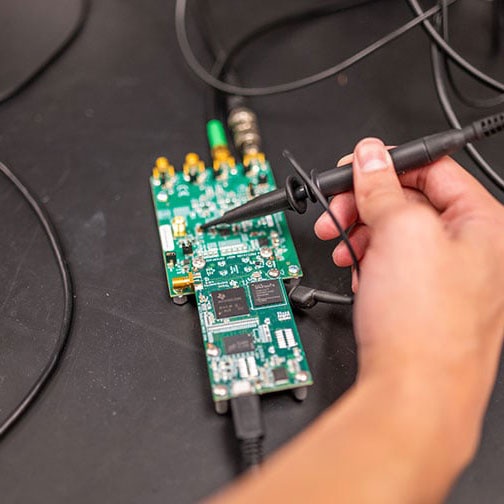
Technology Engineering is an engineering discipline that integrates mechanical, electrical, and computer engineering with computer science. These engineers excel in developing modern products featuring moving mechanical parts, electronic circuits, computer chips, and motion sensors interconnected through computer code. They are responsible for designing, constructing, testing, and analyzing these many-faceted systems.
Technology Engineering offers a unique blend of engineering and computer science tailored to address modern engineering challenges. Many products that we use today include physical or mechanical parts as well as electrical or electronic parts such as smartphones, automobiles, and drones. Technology Engineers can design, troubleshoot and secure these complex systems with broad skills in engineering, coding, and cybersecurity. Currently, industries hire separate teams of traditional engineering types (such as mechanical, industrial, and electrical) along with computer scientists, which can pose communication challenges across development teams. Technology Engineering bridges the gap.
Top Industries
- Autonomous Mobility
- Cybersecurity
- Automotive Manufacturing
- Biomedical Devices
- Agricultural Innovation
- Aerospace Engineering
- Computer Device Development
Common Careers
- Mechatronics Engineer
- Software Integration Engineer
- Embedded Systems Engineer
- Robotics or Automation Engineer
- Data Engineer
- Test Engineer
- Manufacturing Engineer
- Engineering Project Manager
- Quality Assurance Engineer
- Design Engineer
- Cybersecurity Engineer
Visit Technology Engineering - Careers Center for more information.
Technology Engineering
Michigan State University
Undergraduate Studies Office
219 Wilson Road, C101
East Lansing, MI 48823