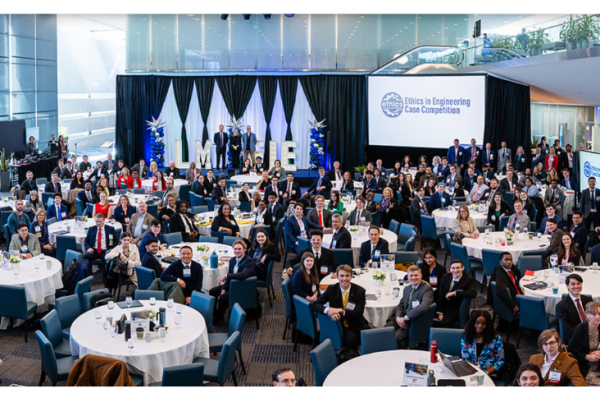
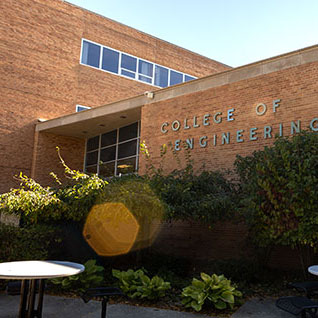
Michigan State University is the nation’s premier land-grant university and one of the top research universities in the world. The College of Engineering is among the university’s founding disciplines and one of the largest academic units. Degrees granted by the college are sought-after and valued in the marketplace, with more than 6,800 students, 341 faculty, and collaborative partners in industry and government working together to deliver the technology talent and innovation needed to drive the economy of Michigan and beyond.
Card Section
Spartan Engineers by the Numbers
Featured News

Building for the future of space and semiconductors
Space is a tough place for electronics. High-energy radiation can damage the semiconductor devices that spacecraft rely on, creating a major challenge as missions venture farther from Earth
Read Full ArticleLatest News

National chemical engineering honors: three years and counting
Michigan State University again earned national recognitions in the American Institute of Chemical Engineers (AIChE) Student Design Contest, earning first-place honors for the third consecutive year.
Megan Herman took top honors and will receive the A. McLaren White Award for best overall individual design. Mia Vollkommer won the first-place award in 2025 and Lauren Petrie won in 2024.

Student view: Building skills behind the screen
When I first came to Michigan State University from India, I was excited to study computer science and experience college life in a new country. I had always been interested in technology and building things, but I was still figuring out what I wanted to do within computer science.

Research Spotlight: Quantum-powered drug discovery and disease research leads to faster, cheaper advances
The most important chemical reaction in human biology happens on a cellular level to release energy so your body can move, repair and sustain itself. On average, this process happens 1,021 times every second. It’s called hydrolysis of adenosine triphosphate (ATP) and, despite its common occurrence, scientists don’t fully understand how it works.