
MSU College of Engineering Media and Public Relations page

Autonomous vehicles promise to radically change the way people and goods travel. However, AVs won’t reach their full potential through engineering alone. The greatest breakthroughs will come from interdisciplinary teams solving complex challenges together. Michigan State University serves as a hub where experts across fields collaborate to advance mobility innovation.
“Interdisciplinary research isn’t just a catchphrase for us,” said Judd Herzer, MSU Mobility director. “Our approach is distinctive because our campuswide network of engineers, business leaders, legal scholars and social scientists work together from the outset. This ensures new technologies are technically possible as well as scalable, economically viable, safe, trusted and ready for deployment by stakeholders in the real world.”
Meet five Michigan State University researchers — three in engineering, one in business and one in law — whose expertise in data collection, generative AI and policy analysis is delivering tangible mobility solutions.
Making autonomous vehicles safer through connectivity and control
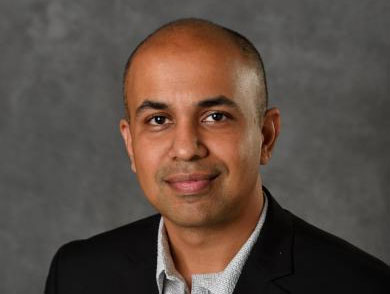
AVs already have sophisticated systems that collect data and perceive their environment. The next challenge is interpreting that information. Shaunak Bopardikar, associate professor in the Department of Electrical and Computer Engineering, uses simulated autonomous racing competitions to explore how self-driving vehicles make coordinated decisions based on what they know about each other.
This work is notable because instead of combining multiple goals into a single score using weighted averages, Bopardikar developed a new method that keeps each goal separate during decision-making. This allows the algorithm to find solutions where each participant has a clear best choice and no one can improve their outcome at another’s expense.
“Imagine a self-driving vehicle trying to reach its destination quickly while maintaining a safe distance from other vehicles,” Bopardikar said. “Existing methods combine these goals into a single score. Our approach treats safety as a requirement rather than a preference, allowing us to test AVs closer to their performance limits while reducing collision risk.”
Read Bopardikar’s paper on the research.
Improving AV performance in uncertain environments
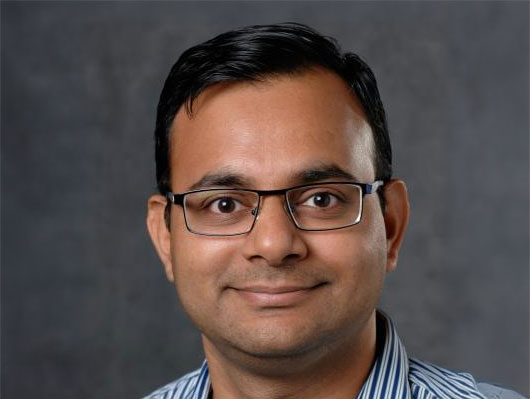
One of the biggest challenges for AVs is operating safely in uncertain environments. Weather, unexpected events like accidents or wildlife crossing roads and human involvement call for technology that is adaptive, resilient and human-centered. Vaibhav Srivastava, associate professor in the Department of Electrical and Computer Engineering, addresses these challenges in three areas: drone and aerial mobility, human-supervised autonomous systems and predictive control methods.
“We’ve developed control and decision-making methods that allow UAVs, or uncrewed aerial vehicles, to operate reliably in challenging and unexpected conditions,” said Srivastava. This work includes advances with multirotor drones that can track moving targets, compensate for wind, model uncertainty and land on moving platforms. The technology can also detect actuator failures during flight in real time, immediately make a correction by reversing the direction of the rotor opposite the failed actuator, and return the UAV to stable flight.
Srivastava notes that human behavior is another source of uncertainty in mobility systems. “People will remain part of future mobility systems by supervising fleets, reviewing sensor data and collaborating with autonomous vehicles.” To account for this human factor, he develops mathematical models that help autonomous systems determine when and how to act.
“Our systems consider a person’s trust, workload and likely behavior to decide when to act independently and when to ask for help,” explained Srivastava. “That reduces interruptions and improves teamwork between people and autonomous systems.”
The third area of Srivastava’s research focuses on data-driven predictive control methods that help automated vehicles make safer driving decisions, including preventing rollovers. “The goal of this work is to design controllers that can use data from the vehicle to make safe decisions even when an exact model of the vehicle or driving condition is unavailable,” he said. “Real vehicles operate under constantly changing conditions. Data-driven controllers can adapt to those changes while maintaining safety.”
Across each area of study, Srivastava is making autonomous systems more adaptable, improving safety and reliability in uncertain environments.
Read more about Srivastava’s work and watch videos at D-Cypher Lab.
Integrating systems for autonomous mobility
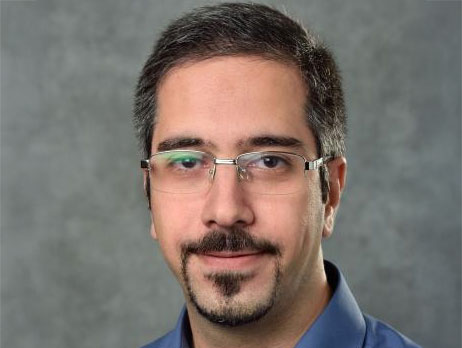
A critical element of successful AV operations is integrating vehicle technology, communications and infrastructure. Ali Zockaie, associate professor in the Department of Civil and Environmental Engineering, investigates how AVs interact with existing transportation networks alongside human-driven vehicles.
One limitation to expanding AV use has been a lack of system-wide data. Earlier studies have examined individual components of a road system, such as a single intersection, without looking at the entire network. They also didn’t fully account for different types of drivers and how vehicles interact with each other.
“Our simulation tool lets us test traffic strategies across an entire transportation network before they are deployed in the real world,” Zockaie said.
The model uses Chicago’s large-scale network, including roads, highways, bridges and tunnels. Layered on this infrastructure, the simulation tool accounts for human-driven vehicles as well as AVs and connected vehicles. A connected vehicle, or CV, uses communication technology to exchange information with other vehicles, infrastructure and networks to improve safety and efficiency.
The simulation tool developed by Zockaie and his team provides detailed transportation data, allowing researchers to estimate emissions and their costs, calculate AV and CV technology expenses, measure travel times and predict extra miles traveled when AVs lead to more trips or longer trips. The data can help local and federal transportation agencies as well as vehicle manufacturers and ride-sharing services build systems that improve safety and mobility while reducing congestion and emissions.
Read the paper detailing Zockaie’s work.
Supporting human judgment to improve communication
Advances in mobility go beyond technology, requiring new approaches in human activities. At MSU, researchers are exploring these challenges through a generative AI tool for vehicle sales training and an ethical framework for mobility technology.
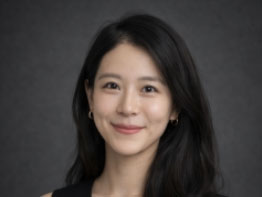
Siqi Pei, assistant professor in the Department of Marketing at the Broad College of Business, developed a generative AI–enabled coaching system to support sales consultants across a nationwide automotive retail network.
“The AI doesn’t replace the salesperson,” said Pei. “It works as a ‘hidden coach’ helping sales consultants better understand customer concerns and identify effective next steps.”
With customer permission, conversations between a customer and sales consultant are recorded. Afterward, AI analyzes the interaction and summarizes the customer’s needs, preferences and concerns. It then generates recommendations for the salesperson’s follow-up interactions.
“The system helps sales consultants reframe customer concerns,” Pei said. “Questions about price become conversations about total cost of ownership, while concerns about ranges shift to commuting habits and charging options, and hesitation about unfamiliar intelligent vehicle features can be reframed around safety, convenience or family use.”
Pei’s work demonstrates a different way to think about AI. “Rather than replacing people, AI can support human judgment, improve communication and make expertise easier to share across an organization,” she explained.
While designed for automotive dealers, Pei’s generative AI coaching system could also help train staff in other high-stakes customer-facing settings.
Visit Pei’s website to learn more.
Keeping people at the center of mobility innovation
AV technology is not just about vehicles. It’s also about protecting the people who use them and the data they generate. Jennifer Carter-Johnson, associate professor at the College of Law, is reframing the conversation to go broader than, “How do we protect people’s data?” She asks, “How do we protect people’s autonomy, dignity and ability to move through society without pervasive surveillance?”
“Autonomous vehicles are more than transportation technologies,” Carter-Johnson said. “They are continuous data collection systems capable of revealing how people move, make decisions and live their lives.” She notes that AVs use cameras, sensors, biometric monitoring, GPS tracking and machine-learning algorithms to create detailed records of people’s activities and movements.
“These records may reveal highly sensitive information about a person’s health, religious practices, political affiliations, employment activities, social relationships and other aspects of personal identity,” she explained.
Carter-Johnson calls for government and industry partners to prioritize “informational freedom of movement” — the ability to travel, associate and participate in society without generating unnecessary digital records of their lives. She argues this principle should become central to AV governance.
“As autonomous vehicle technology grows, its impact will expand to be as ubiquitous as social media. How we regulate that data and access to the technology should be underpinned by ethical reasoning,” said Carter-Johnson.
Read more about Carter-Johnson’s work.
Michigan State University’s mobility researchers are shaping the future of autonomous transportation through a multidisciplinary approach that integrates technology, real-time data, safety, ethics, public policy and trust. Their work spans the entire transportation ecosystem — from personal vehicles, bike lanes and walking paths to transit, freight, rail, maritime and aviation systems — to create safer, more equitable mobility solutions that benefit everyone.
Discover more Aug. 11 at the MSU Research Foundation Mobility Summit.
Written by Maureen Perideaux.
Story courtesy of MSUToday.