Skip to main content

Engineering

    • Academic Departments
    • Admissions
    • Directory
    • Events
    • Majors, Degrees and Programs
    • Meet with Advisor
    • News
    • Research
Michigan State University Homepage

MSU Menu

  • Current Students
  • Future Students
  • Directory
  • Give

College of Engineering

  • About
    • Dean’s Welcome
    • Mission, Vision and Strategic Plan
    • Community of Respect and Innovation
    • Inclusive Excellence
    • Academic Departments
    • Faculty and Staff Directory
    • Leadership
    • Division of Engineering Computing Services (DECS)
    • Donor Recognition
    • Outreach and Engagement
    • Corporate and Foundation Relations
    • History of the College
    • Maps and Parking
    • Ways to Give
    a wide range of multi-cultural students standing in a lab in front and behind two blue machines during a ESSA event

    Fostering inclusive excellence is an active and ongoing process

    Explore Inclusive Excellence
  • Academics
    • Majors, Degrees and Programs
    • Undergraduate Studies
    • Graduate Studies
    • Other Programs
    • First-Year Engineering CoRe Experience
    • Academic Departments
    • Future Students
    • Current Students
    • Transfer Students
    • K-12 Resources
    • Student Groups
    Front of the Engineering Building

    Our world-class academic team spans eight departments and two interdisciplinary programs

    Explore Academic Departments
  • Admissions
    • Undergraduate Admissions
    • Graduate Admissions
    • Scholarships and Financial Resources
    • Visit College
    An advisor and a student meet at an office table.

    Learn about admissions and application processes for our world-class degree programs

    Explore Admissions
  • Research
    • Research Priorities
    • Research Centers and Institutes
    • Undergraduate Research
    • Research News
    Four students wearing safety glasses collaborate on an engineering project with wires and tools.

    Our world-class faculty and students engineer a healthier, safer and more sustainable world

    Explore News
  • Careers
    • The Center for Spartan Engineering
    • Recruit Spartans
    • College Employment
    A recruiter at a booth laughs while shaking hands with an attendee at a career fair.

    MSU engineering students maximize early opportunities in the workplace and obtain competitive placements upon graduation

    Visit The Center for Spartan Engineering
  • Alumni
    • Alumni Board
    • Alumni Awards
    • Get Involved
    • Update Your Information
    Individuals holding a Give Green Day sign

    Many options for giving to the college are available

    Give Now
  • Give
    • Ways to Give
    • Funding Priorities
    • Annual Giving
    • All University Campaign
    • Create an Endowment
    • Donor Recognition
    • Decoding Generosity
    • Endowed Professorships
  • News and Events
    • News
    • Events
    • Spartan Engineering E-News
    • Media and Public Relations
    • Volunteering
    Sparty posing

    Sign up to receive the quarterly Spartan Engineering E-News packed with updates within the college

    Subscribe to E-News
  • Faculty/Staff Intranet

Beautiful science: Spartan research creates art

Breadcrumb

  1. Home
  2. News
Aug 6, 2026
Copied to clipboard
A colony at the Pollinator Performance Center
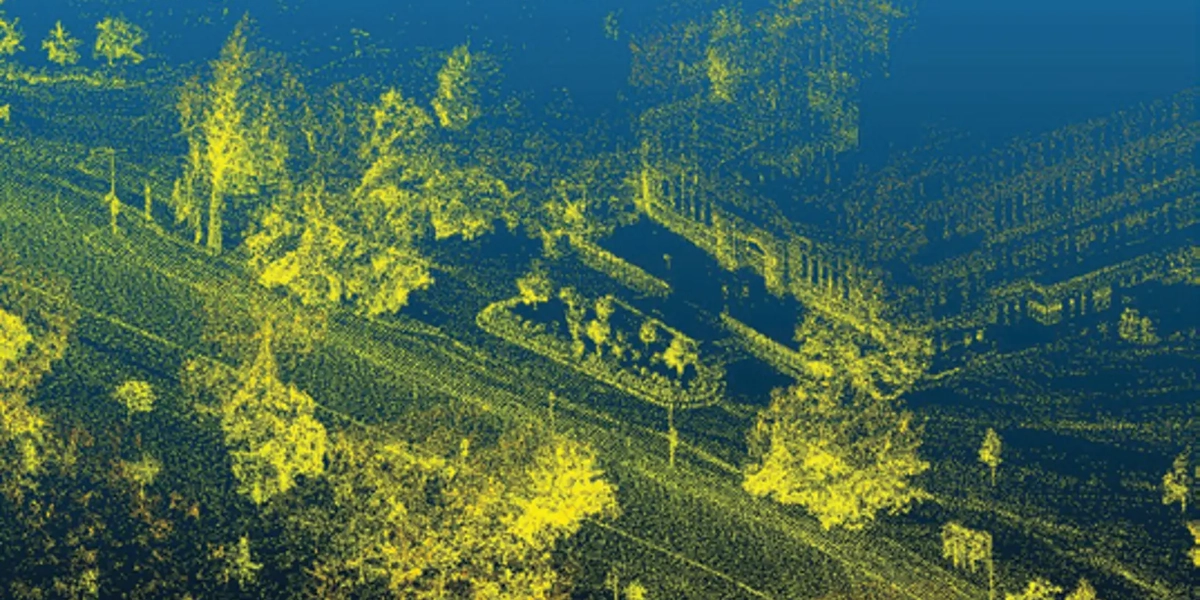
A 30D map of MSU's campus
A 3-D map of MSU's campus. Image courtesy of Connected and Autonomous Networked Vehicles for Active Safety group

“I am among those who think that science has great beauty.” That sentiment from Nobel Prize–winning scientist and trailblazer Marie Curie comes to life every day in the work of Michigan State University researchers who develop breakthroughs and technologies that create a better world.

Sometimes, that research leads to one more thing: striking, unexpected art. From naturally occurring patterns made by honeybees to microscopic images of gut neurons, here is a glimpse into the beauty revealed by MSU research.

Lidar, or light detection and ranging, is a laser scanning technology that maps out areas of interest, creating surreal replicas of roads, structures and nature. Self-driving cars use the technology to guide vehicles. Researchers in MSU’s Connected and Autonomous Networked Vehicles for Active Safety group in the College of Engineering use lidar alongside other radars and sensors to map 3D testing environments.

The technology is also being used by MSU’s forestry department to create digital twins of forests that could allow forest managers to test different management strategies in a simulation before deploying them in the real world.

A fungus among the waste

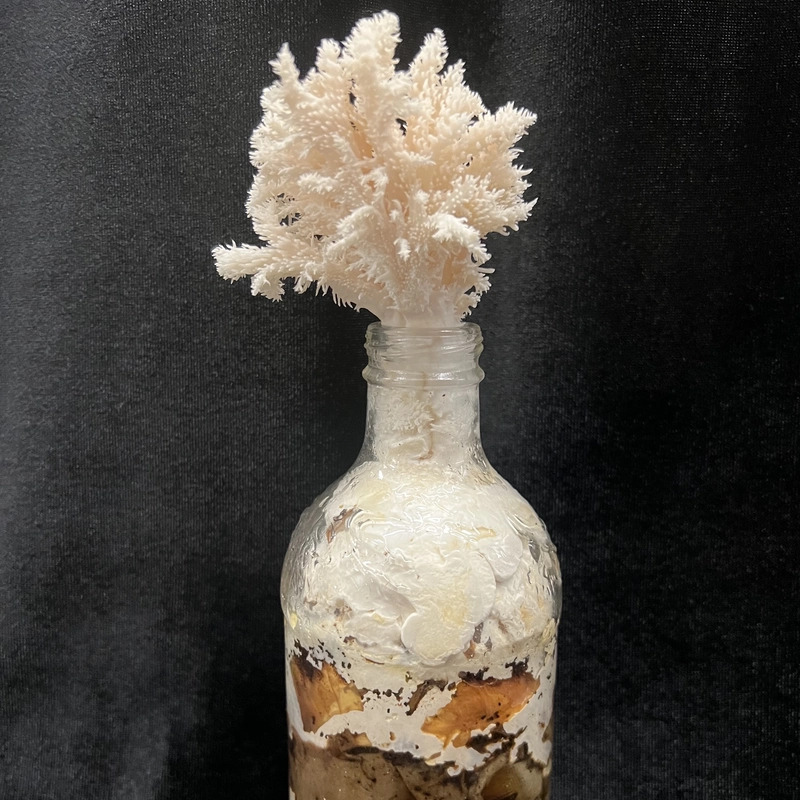
An edible fungus forms in food waste
An edible fungus forms in food waste. Photo courtesy of Marc Friedman, Plant, Soil and Microbial Sciences, Bonito Lab

Resembling a cross between a coral reef and cauliflower, this white plume is actually an edible mushroom in the genus Hericium. Research in the Bonito lab in the Department of Plant, Soil and Microbial Sciences, explores the symbiotic interactions between fungi, bacteria and plants.

The image, which won an Ecology, Evolution and Behavior Art in Science Prize, shows edible fungi used to decompose food waste in aerobic environments, reducing methane emissions while creating food.

Perfect patterns

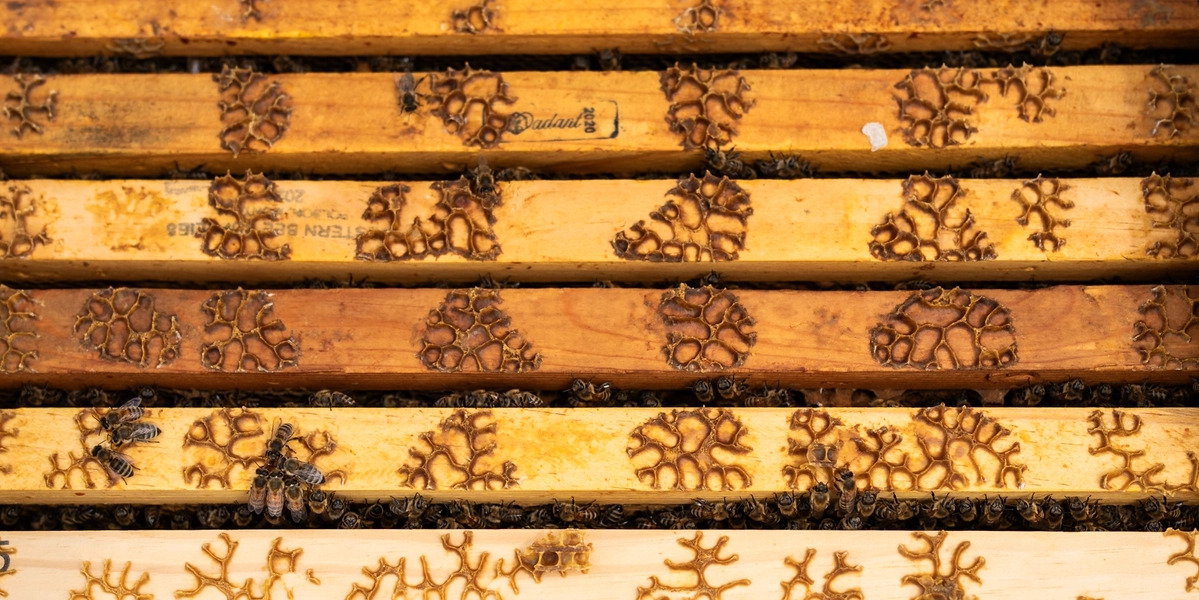
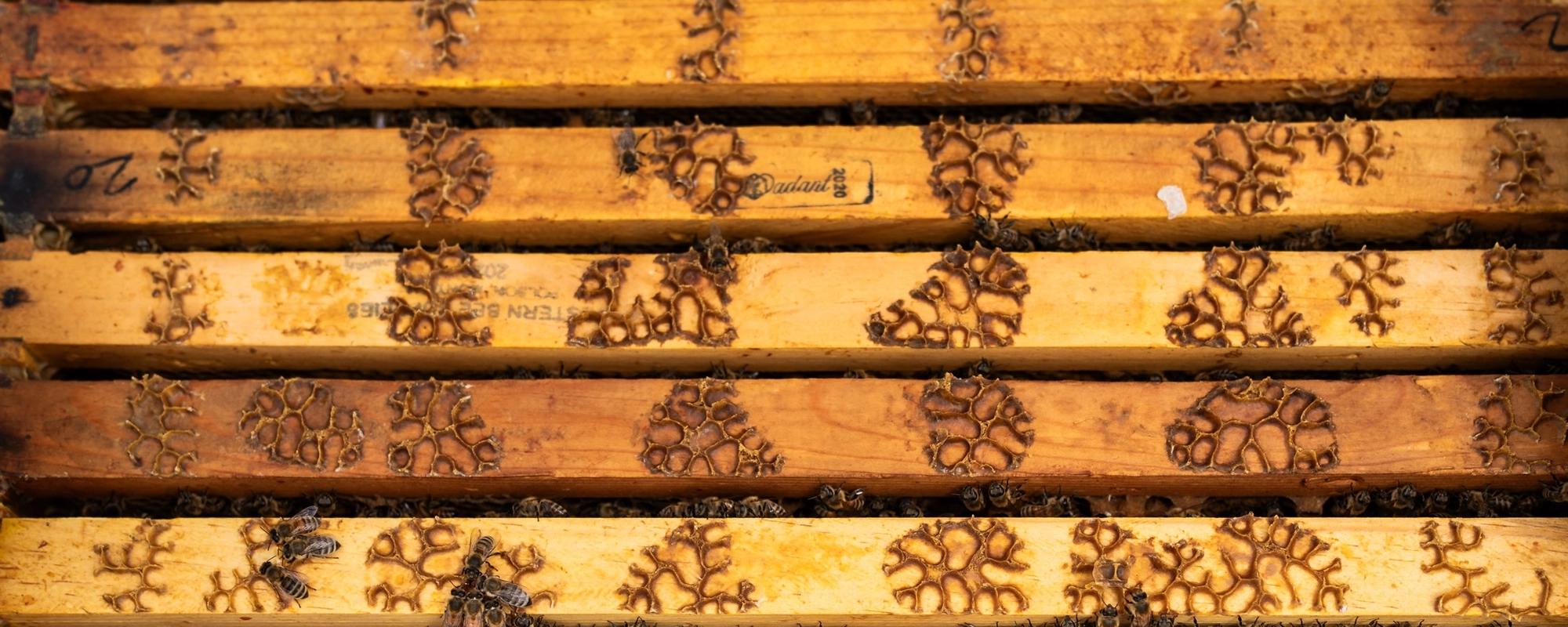
A colony at the Pollinator Performance Center
A colony at the Pollinator Performance Center. Photo by Nick Schrader

At the Pollinator Performance Center on campus, researchers work to safeguard the health of honeybees and other pollinators. Meghan Milbrath, an associate professor in the Department of Entomology and an interdisciplinary researcher and MSU Extension specialist, and her team also work on projects to determine best practices for parasite management and evaluation of new products.

Plus, her team researches potential health benefits of propolis, which is a sticky, glue-like substance made by bees to seal and protect their hives as seen in these honeycomb-like patterns. One of Milbrath’s projects is looking at whether propolis can be used as an alternative to antibiotics in turkey feeds.

Watching gut neurons in real time

A colony at the Pollinator Performance Center
A colony at the Pollinator Performance Center. Photo by Nick Schrader

Like a glowing constellation of neon webs and purple dots, this image reveals the microscopic landscape of a zebrafish gut. MSU researchers in the College of Natural Science recently developed a powerful new research tool that allows them to remove gut neurons in zebrafish and watch them in real time. Now, scientists can investigate one of regenerative biology’s biggest questions: Why can zebrafish regenerate damaged gut nerves while humans largely cannot? The findings could have implications for digestive disorders, inflammatory diseases, congenital conditions involving the loss of gut nerves and other diseases.

Building materials go green

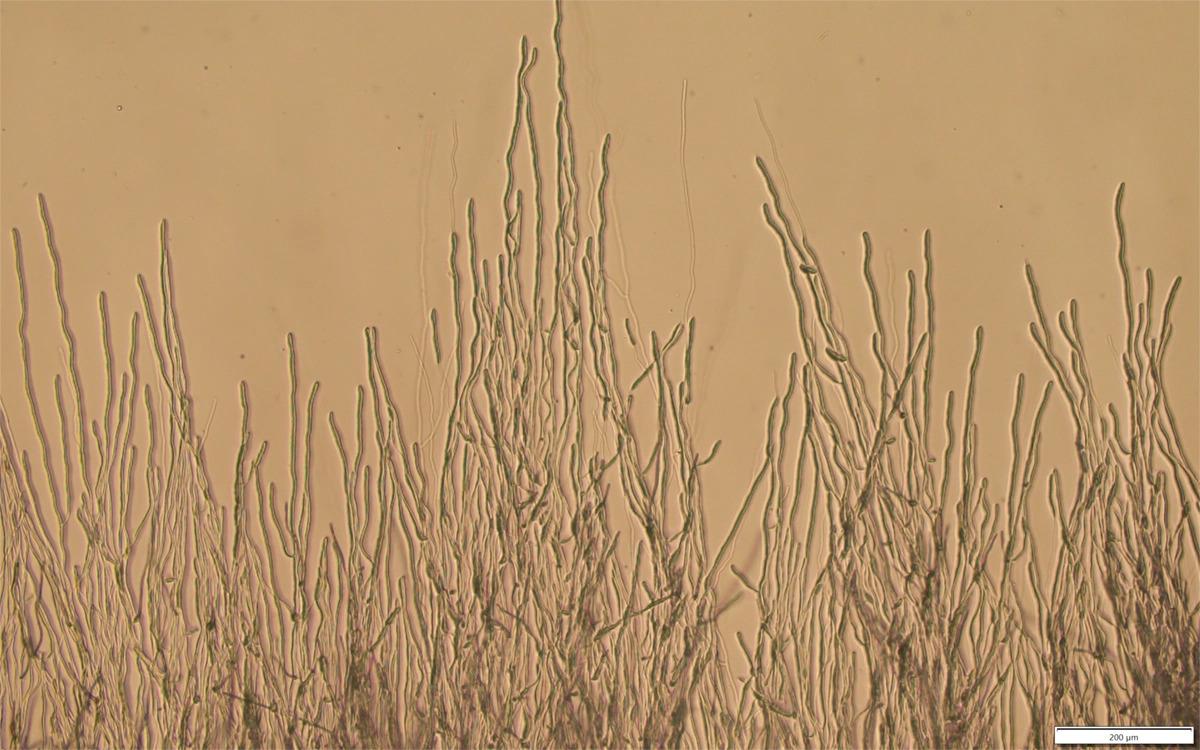
Microscope image shows a close-up of biomaterials made by microbes
Microscope image shows a close-up of biomaterials made by microbes. Image courtesy of Jinxing Li

What resembles tan strands of grass and weeds is actually a magnified image of biomaterials crafted by microbes — tiny living forms too small to see without a microscope. A team led by Jinxing Li, a Red Cedar Distinguished Assistant Professor in the College of Engineering and the Institute for Quantitative Health Science and Engineering, is pioneering microbes with the aim of developing more sustainable building materials. These living structures could one day repair themselves and capture carbon dioxide from the atmosphere.

Hidden night lives

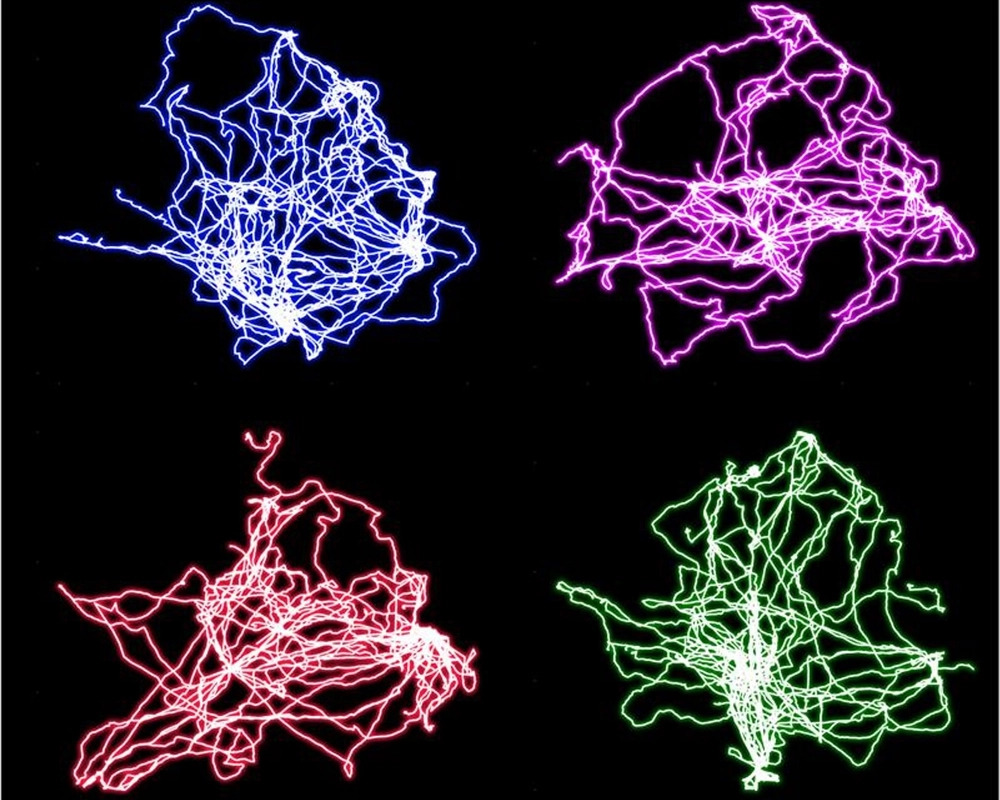
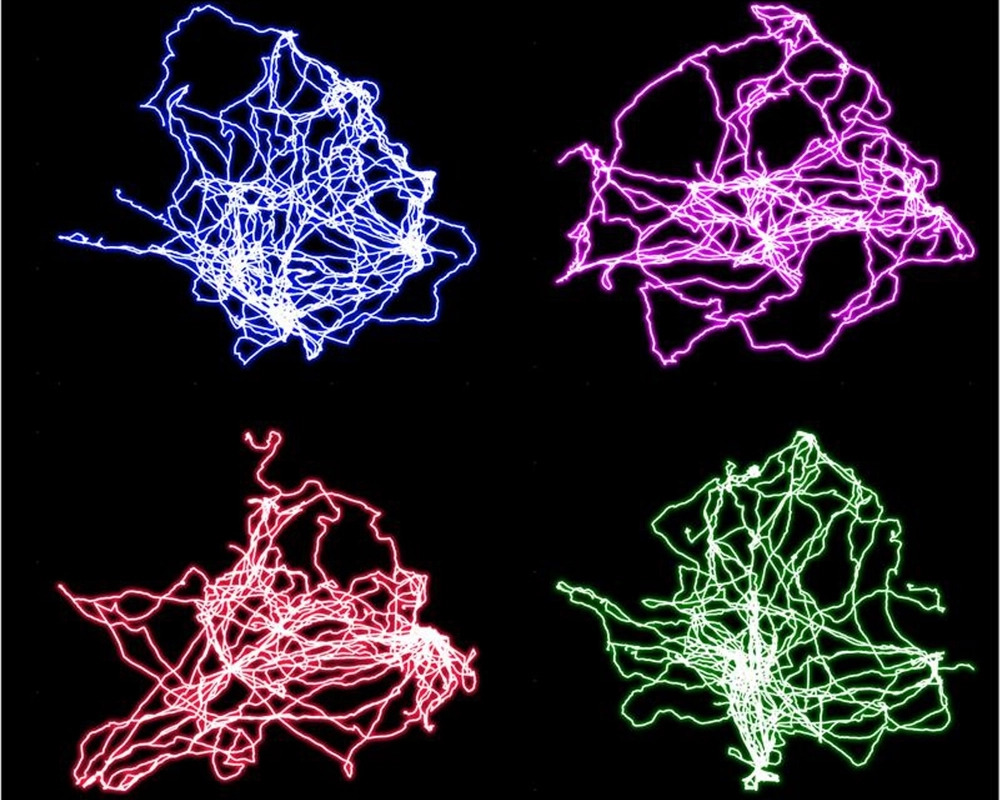
GPS paths of spotted hyenas
GPS paths of spotted hyenas. Image courtesy of Jana Woerner

These neon squiggles may resemble the movements of a sparkler being waved in the air. In reality, they represent the paths of spotted hyenas hunting, socializing and caring for their cubs across a single night in the Maasai Mara National Reserve in Kenya. Doctoral candidate Jana Woerner in the departments of Integrative Biology and Ecology, Evolution and Behavior, tracked the hyenas using GPS collars as part of her work with the Mara Hyena Project, which has studied the behavioral ecology of spotted hyenas in the Maasai Mara since 1988.

Science doesn’t just answer our biggest questions; it transforms how we see and experience the world around us. These examples represent just a few areas of research at MSU that have revealed breathtaking visuals — a welcome reminder to look just a bit closer.

MSU College of Engineering Media and Public Relations page
Faculty and Staff in the News
Jinxing Li
Read More News
Michigan State University Homepage

Academic Departments

  • Applied Engineering Sciences
  • Biomedical Engineering
  • Biosystems and Agricultural Engineering
  • Chemical Engineering and Materials Science
  • Civil and Environmental Engineering
  • Computational Mathematics, Science and Engineering
  • Computer Science and Engineering
  • Electrical and Computer Engineering
  • Mechanical Engineering
  • Technology Engineering

Education

  • Advising
  • Academic Calendar
  • Desire2Learn
  • Disability Resources
  • Supportive Services
  • Learning Resources
  • Scholarships and Financial Resources

Working At MSU

  • EBS Login
  • Engineering Intranet
  • Human Resources
  • Job Postings

Other Links

  • The Center for Spartan Engineering
  • Computing Services (DECS)
  • Inclusive Excellence
  • College Fast Facts
  • Media and Public Relations
  • First-year Engineering CoRe Experience
  • Future Engineers
  • Shop.msu.edu
  • Women in Engineering

Contact us

(517) 355-5113

Address

Engineering Building
428 S. Shaw Lane 

East Lansing, MI 48824-1226

  • Releases and Statements
  • Admissions
  • Subscribe to E-News
For website inquires or problems, email: websupport@egr.msu.edu

Follow Us

If you're having accessibility issues, please let us know.

Know More: Campus Safety Information and Resources
Transparency Reporting: Budget & Salary/Compensation
Michigan State University

Footer Links

  • Contact Information
  • |
  • Site Map
  • |
  • Privacy Statement
  • |
  • Site Accessibility

Contact Information

  • Call MSU: (517) 355-1855
  • |
  • Visit: msu.edu
  • |
  • Notice of Non-Discrimination
  • SPARTANS WILL.
  • |
  • © Michigan State University