
MSU College of Engineering Media and Public Relations page
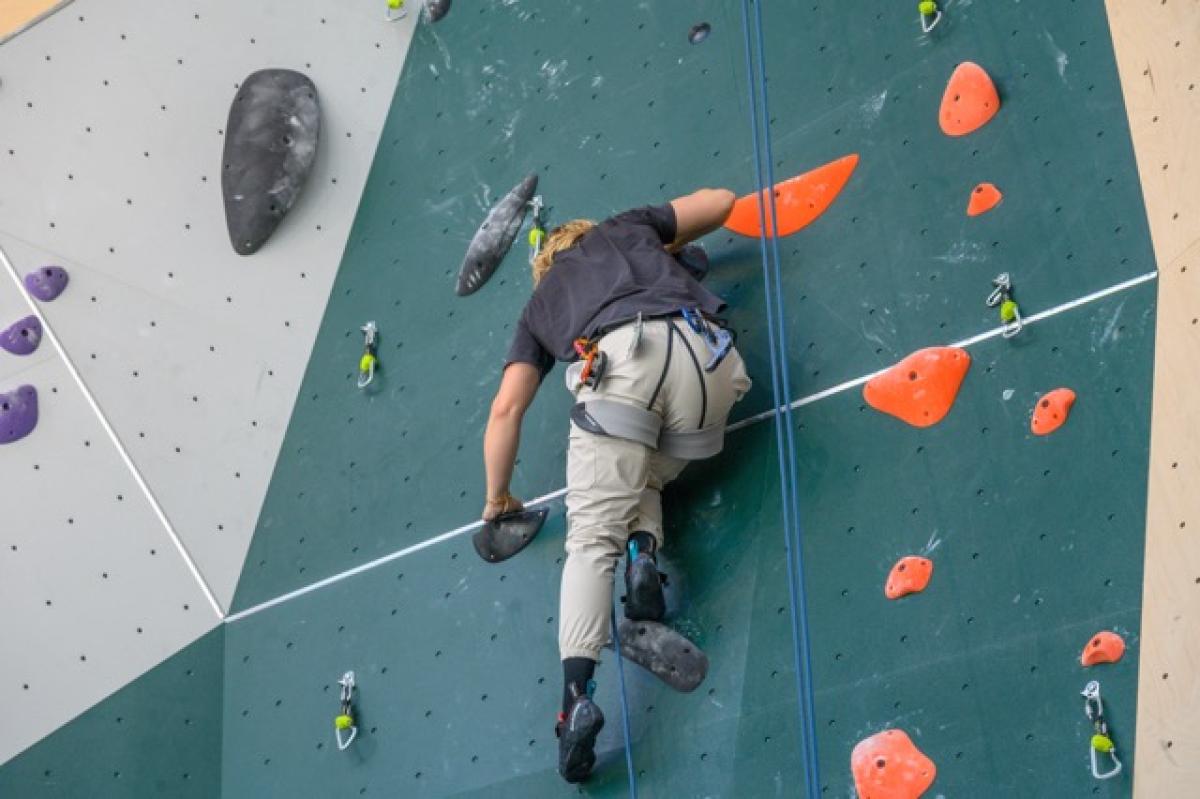
When Linh Thao Nguyen first tried rock climbing, she was stepping into unfamiliar territory.
Nguyen said she had never participated in a sport before. Much of her time at Michigan State University had been focused on academics, but climbing gave her a physical challenge that felt surprisingly familiar.
She approaches a climbing route much like a computer science problem: understand what is being asked, test a solution, identify what failed and keep adjusting until something works.
Nguyen, an Honors College student, earned her bachelor’s degree in computer science from MSU in May 2026 is now pursuing a master’s degree in computer science at MSU. Her interests in artificial intelligence, deepfake security and content authentication have also led her to work in the Secure and Intelligent Things Lab with Qiben Yan, associate professor in the Department of Computer Science and Engineering. Nguyen eventually plans to pursue a doctorate.
Climbing quickly became more than recreation. Nguyen began talking with other climbers, learning techniques and meeting engineering students outside her own program. She has made new friends through climbing and now invites others to join her.
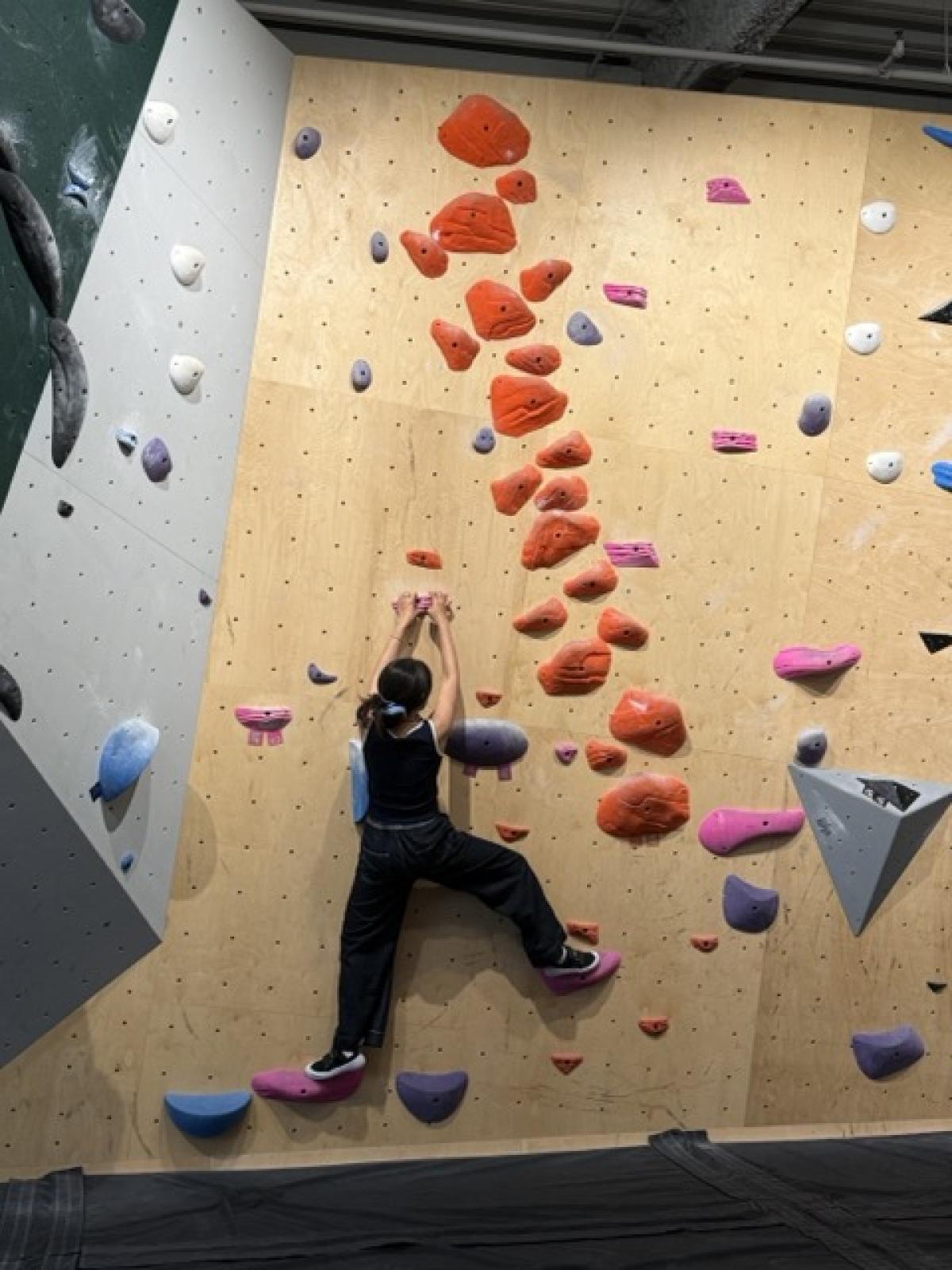
That combination of challenge and connection is increasingly visible at MSU’s Student Recreation and Wellness Center, which includes the 47-foot Spartan Summit for roped climbing and a 15-foot bouldering wall.
A problem with more than one answer
In bouldering, routes are often called “problems.” Height, strength, balance, flexibility and technique can lead different climbers toward different solutions.
That appeals to Andrew Gariepy, a senior in mechanical engineering and president of the MSU Climbing Club.
“Engineers love solving problems that at first seem insurmountable, and climbing is the epitome of this mindset,” Gariepy said.
Gariepy said about half of the club’s executive board members are pursuing engineering degrees.
Students are not the only Spartan Engineers reaching for the next hold and might find themselves running into faculty members their too.
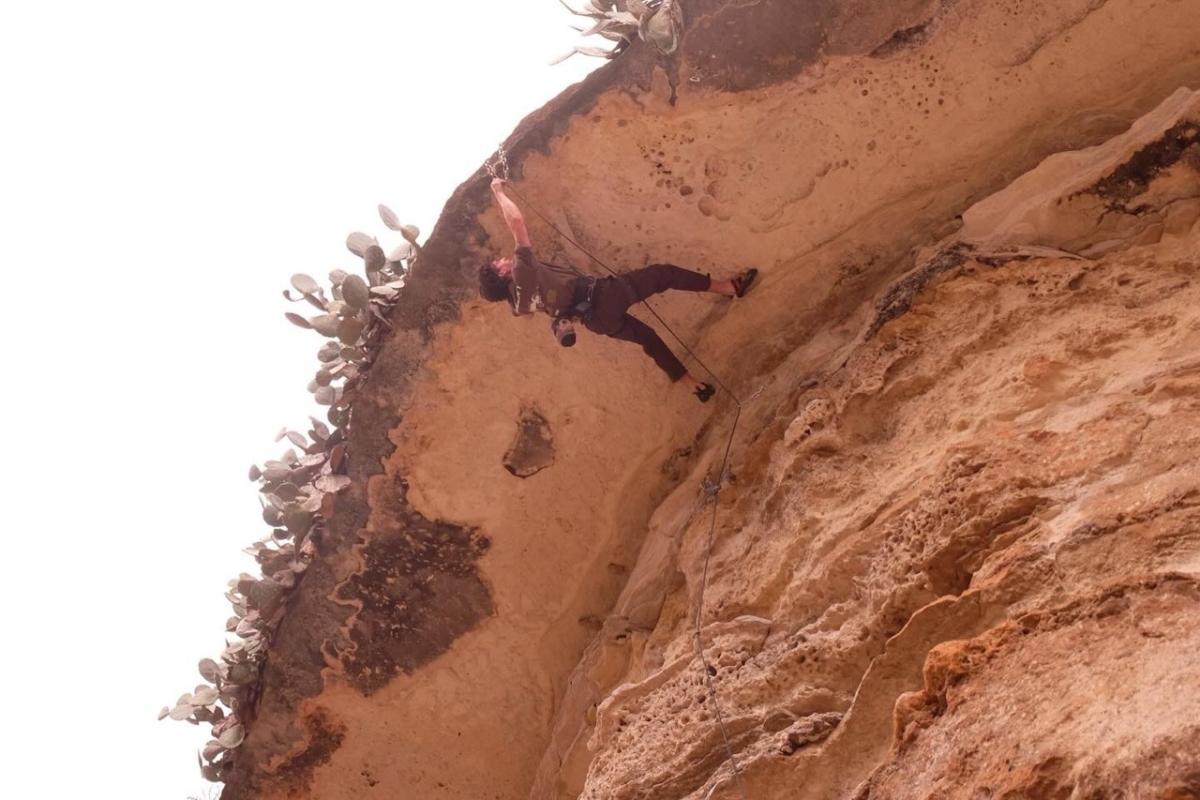
Alexandra Zevalkink, who holds the C. Robert and Kathryn M. Weir Endowed Professorship in MSU’s Department of Chemical Engineering and Materials Science, sees parallels between climbing and engineering.
“Climbing appeals to engineers because every route is a problem that can be approached in several ways,” Zevalkink said. “You test an idea, learn from what did not work and try again, usually with other people offering ideas and encouragement.”
Zevalkink, who started bouldering as a child, said climbing also teaches persistence by giving students repeated opportunities to struggle, adjust and eventually succeed.
Outside the lab
For Mengsen Zhang, climbing offers another benefit.
Zhang, an assistant professor in MSU’s Department of Computational Mathematics, Science and Engineering, has climbed on and off for about five years. She said the sport has been important to her well-being and has influenced how she thinks about failure and growth.

“I think engineers spend so much time indoors,” Zhang said. “Rock climbing can really take you outside of your lab and your mind.”
Zhang has also brought members of her research group together for climbing outings, creating opportunities to connect outside their normal research environment.
“Go for it,” Zhang said when asked what she would tell students considering climbing. “Climbing is a snapshot of life.”
Community on the wall
Climbing may look like an individual sport, but the culture around the wall is collaborative. Climbers compare approaches, suggest footholds and encourage people they may have only just met.
MSU Engineering alumnus Auden Garrard helped establish the MSU Climbing Club while studying computer science at MSU. He later served on the club’s board and provided student feedback as MSU planned its new climbing wall.
Garrard earned bachelor’s and master’s degrees in computer science from MSU and is now pursuing a doctorate in computer science at the University of Alabama, focusing on multi-objective optimization.
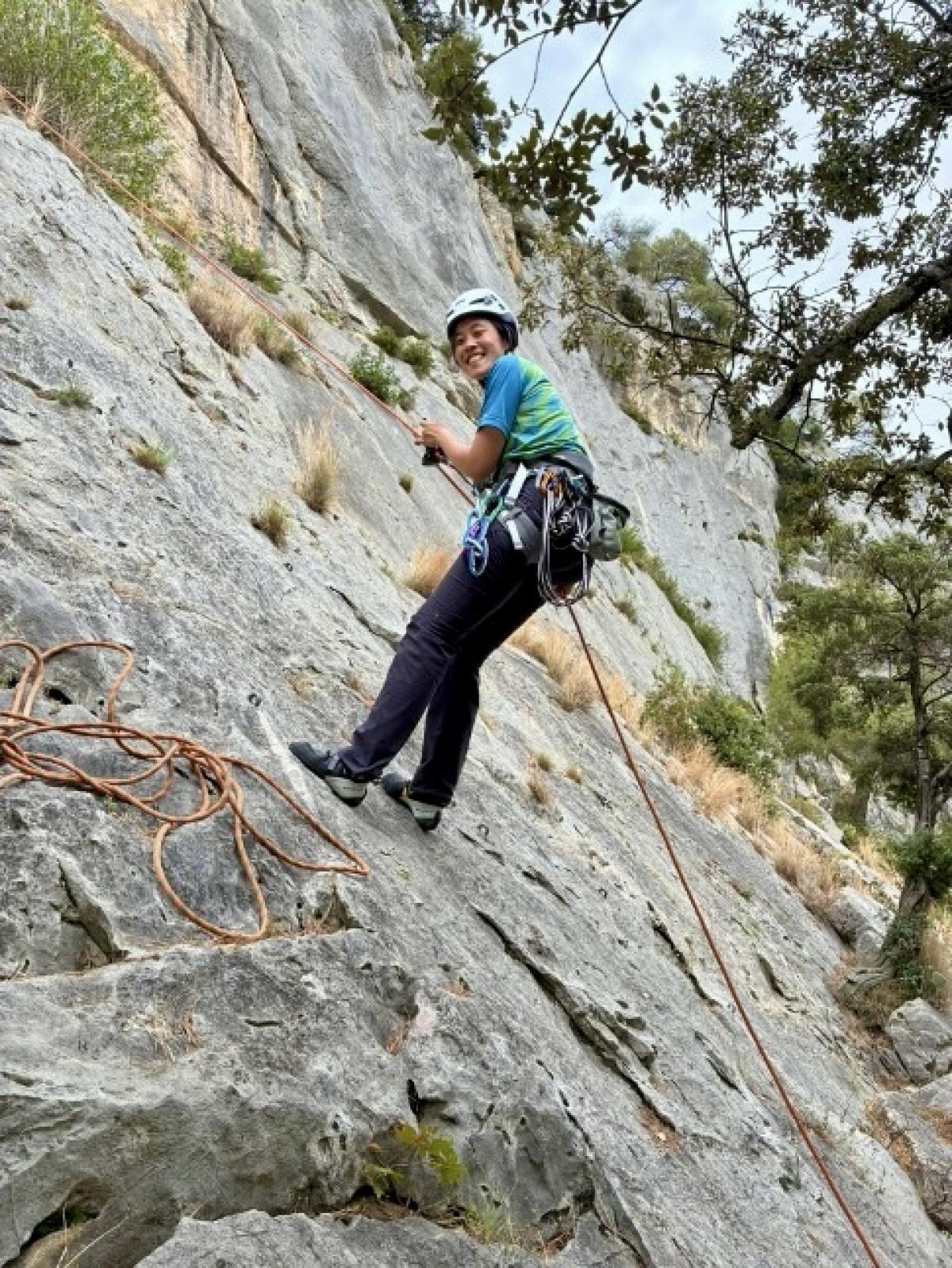
“The biggest thing climbing has given me is resilience: learning that it’s okay to fail,” Garrard said. “You just need to adjust your approach a little, and you’ll still be able to reach your goals.”
Beyond the classroom
The climbing wall is not an engineering classroom, but many of the habits practiced there are familiar: confronting an unfamiliar challenge, communicating with others, accepting feedback and adapting when an approach does not work.
Those experiences reflect a broader approach to student success at the MSU College of Engineering. Along with academics and research, students can build connections through student organizations, career experiences, leadership opportunities and communities centered on shared interests.
Those connections can matter in unexpected ways. A conversation with someone from another major can introduce a different perspective. A shared interest can become a friendship, a professional connection or even the beginning of a new idea.
For Nguyen, one of those connections happened on a climbing wall.
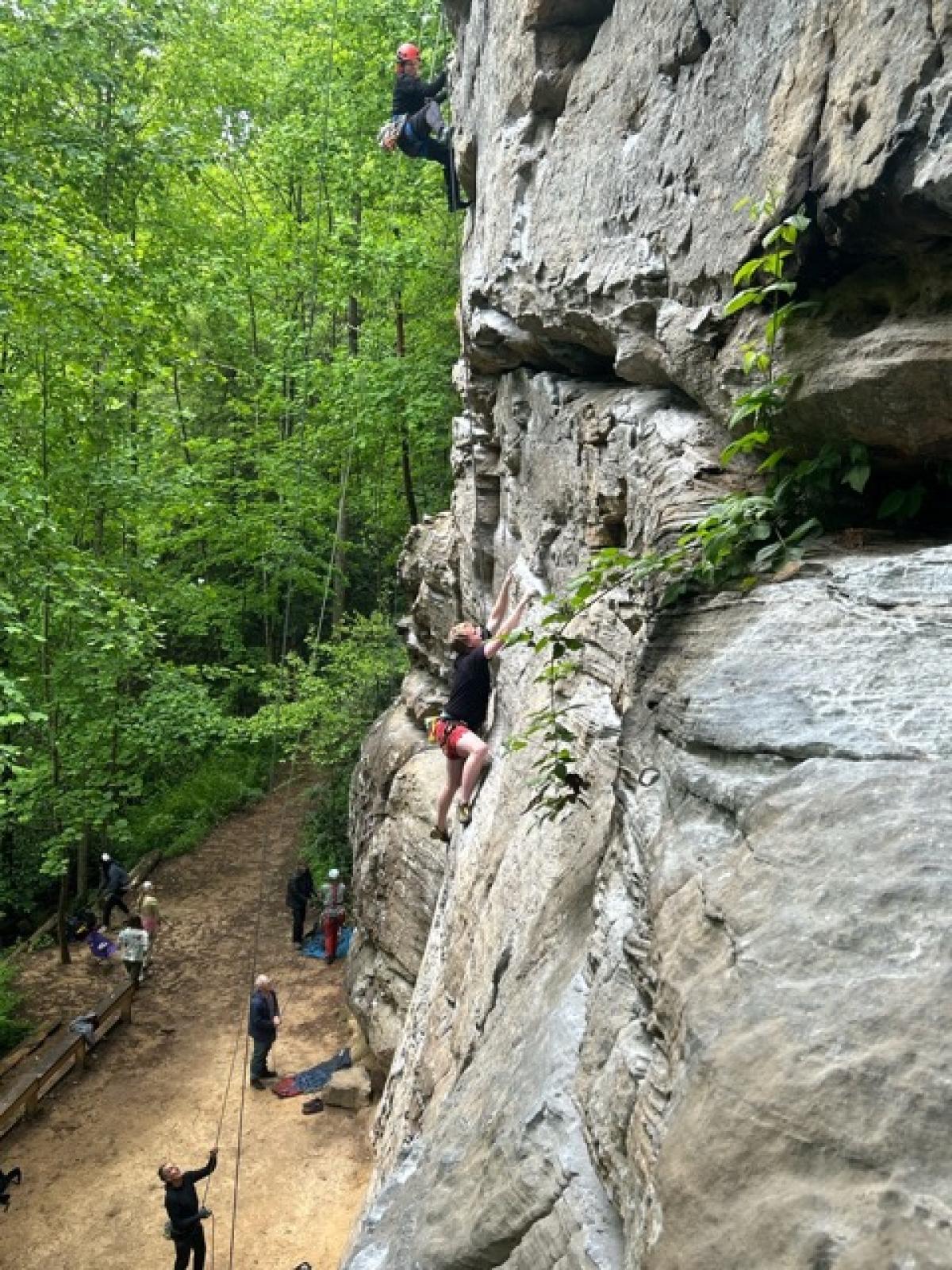
She found a new sport, a new community and another place to bring the curiosity and persistence she already applies to computer science and research.
On the wall, progress happens one hold at a time.
For Spartan Engineers, climbing has become one more place to build the confidence, resilience and connections that can help prepare them for what comes next.
Find your community at MSU
Students looking to get involved beyond the classroom can explore MSU student groups , with opportunities centered on academic programs, competition teams, professional development, service and shared interests.
Students can also learn more about climbing at the Student Recreation and Wellness Center and opportunities to get involved with the MSU Climbing Club.