


The Michigan State University College of Engineering celebrated the life and legacy of Patton Allison on Oct. 15, 2026, with the inaugural Patton Allison Memorial Lecture, bringing people from across MSU and beyond together around the curiosity, technical excellence and generosity that defined his work as a teacher, researcher and mentor.
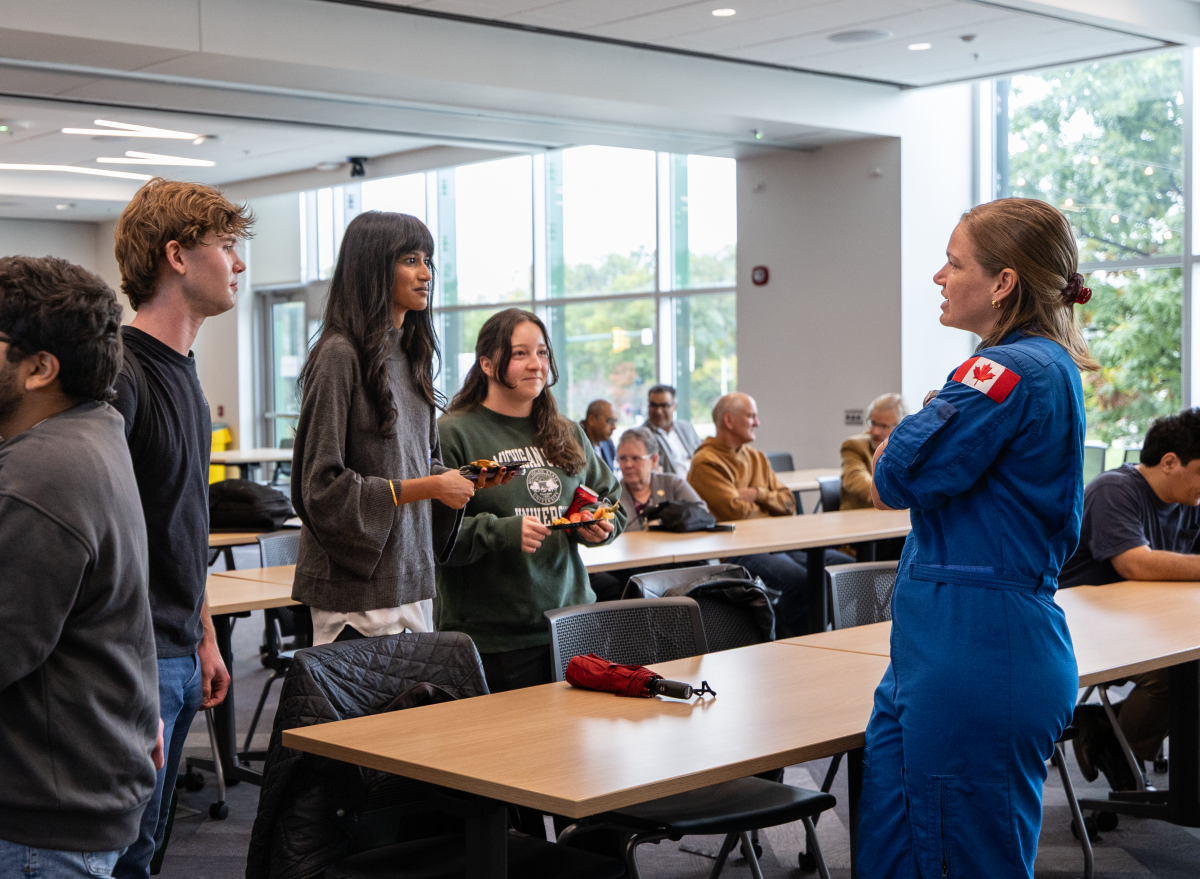
Students, faculty, colleagues, family and friends gathered at the MSU Multicultural Center, marking the beginning of an annual lecture series honoring Allison's contributions to MSU and his lasting influence on the engineering community.
The inaugural lecture featured Jenni Gibbons, Ph.D., an astronaut with the Canadian Space Agency, who shared her experiences preparing for human spaceflight, including the rigorous process of astronaut training, mission preparation and serving as a backup crew member for Artemis II, NASA's first crewed mission to travel around the Moon in more than 50 years.
From the classroom to the Moon
Gibbons' presentation offered attendees an inside look at the opportunities, responsibilities and challenges involved in human spaceflight.
She earned an honours bachelor's degree in mechanical engineering from McGill University and a doctorate in engineering from Jesus College at the University of Cambridge before joining the Canadian Space Agency in 2017.
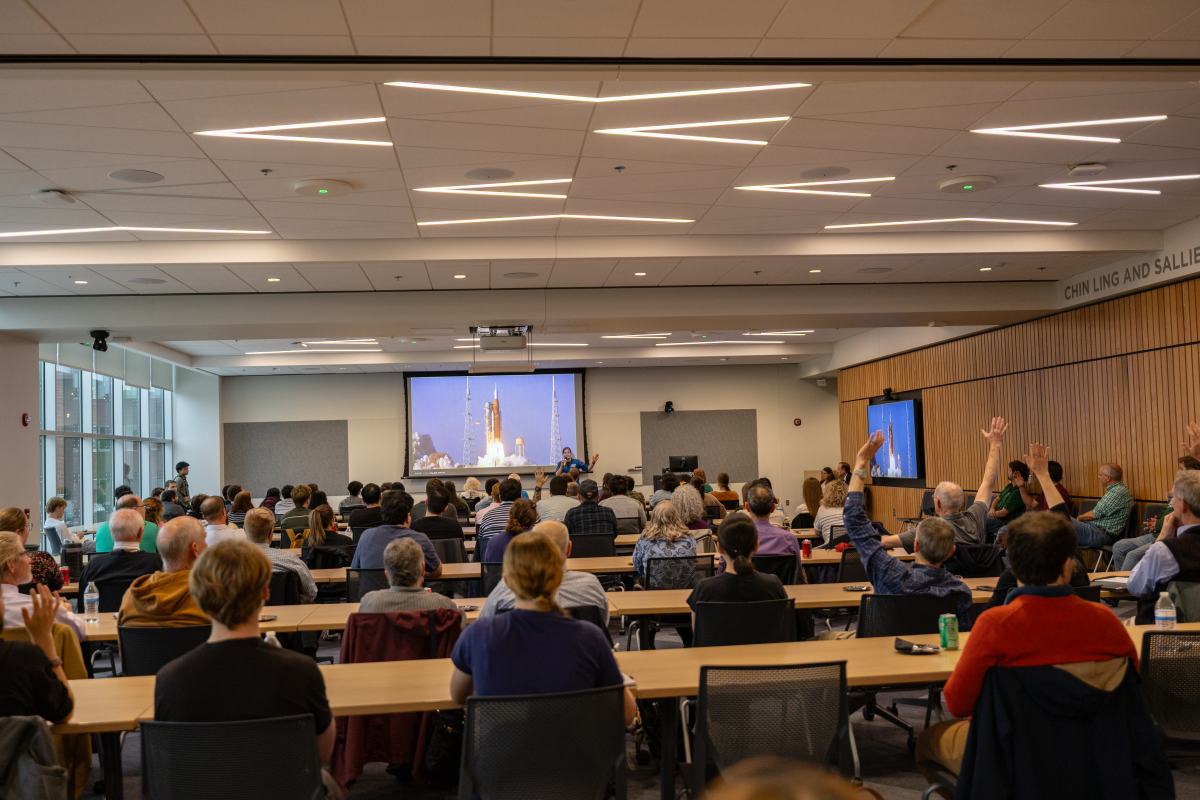
As a Canadian astronaut, she has trained for the technical, physical and operational demands of human spaceflight and served as the backup crew member for Canadian astronaut Jeremy Hansen on Artemis II. During the 2026 mission, Gibbons also helped prepare the Orion spacecraft for launch and served as a capsule communicator, providing a critical communications link between Mission Control and the astronauts traveling around the Moon.
At MSU, Gibbons discussed the mission's major milestones, from launch preparations and the lunar flyby to the crew's return to Earth. She explained how Orion's maneuverability was tested in Earth orbit, how the spacecraft was sent toward the Moon and how observations gathered during the lunar flyby contributed to scientific research.
Drawing on her firsthand experience, Gibbons also described the coordination required inside Mission Control, where teams monitored spacecraft systems and maintained communication with the crew throughout the mission.
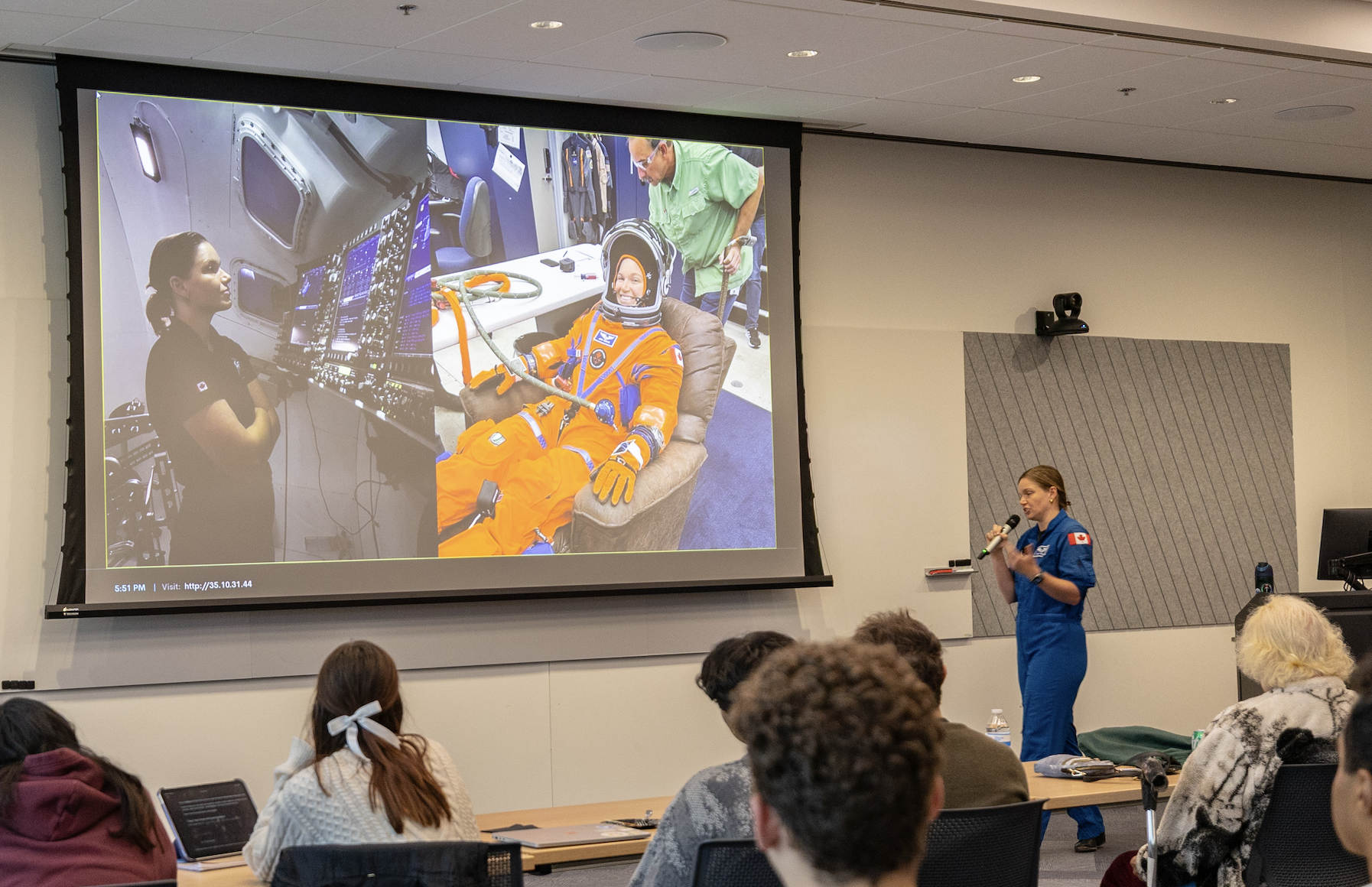
She offered a behind-the-scenes look at the extensive training required for future lunar exploration, including spacecraft simulations, field geology exercises and preparation for operating in challenging environments.
“We practice every phase of flight, everything that can possibly go wrong,” Gibbons said, emphasizing the extensive preparation and technical precision required for human spaceflight.
Beyond the technical demands, Gibbons encouraged students to pursue subjects that genuinely interest them, develop strong teamwork skills and remain open to unexpected career opportunities.
Her message resonated with students in attendance.
Madison Osterberg, a third-year student studying chemical engineering and kinesiology, said the lecture helped her imagine opportunities to contribute to future space exploration.
"It was very engaging to learn about potential opportunities in engineering for future technology on the lunar surface, and I would be very interested to be able to work with that someday," Osterberg said.
Laith Assaf, a fourth-year computer science student, was particularly struck by the personal qualities Gibbons brought to her presentation.
"I could feel so much passion and emotion from her," Assaf said, reflecting on Gibbons' curiosity and appreciation for the people around her.
Carrying Patton Allison's legacy forward
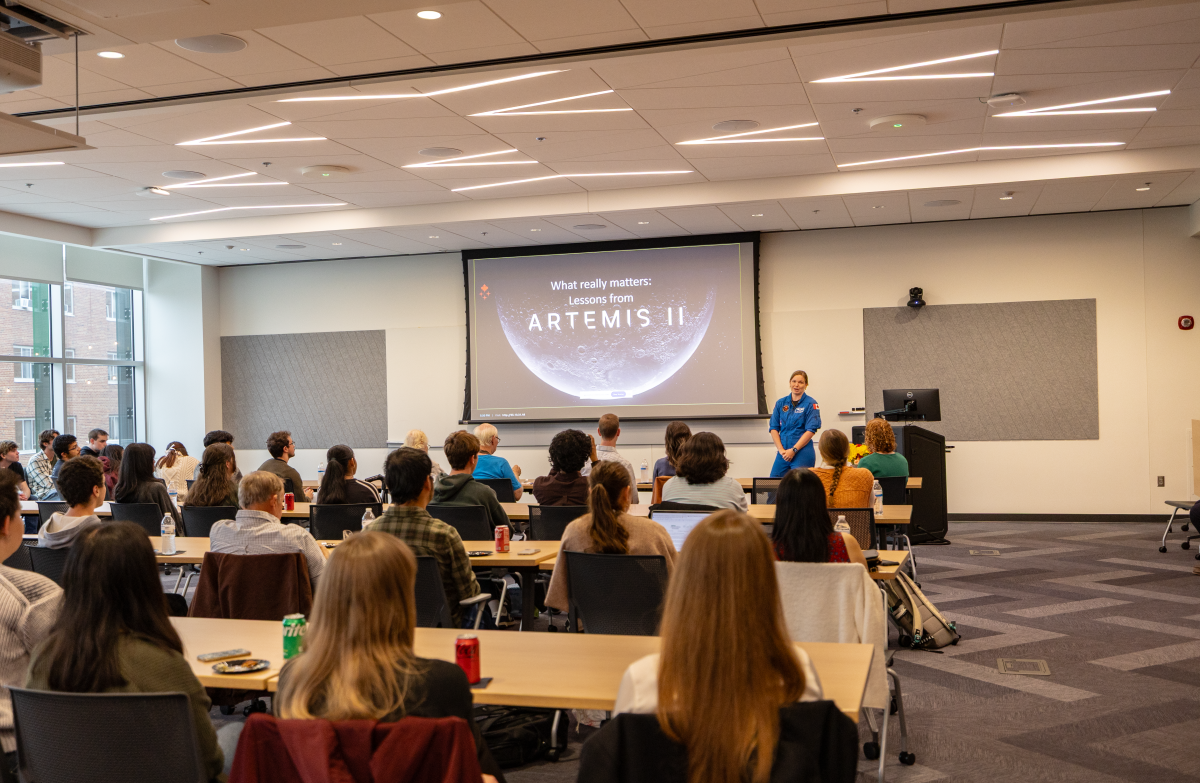
For Gibbons, the occasion also carried a personal connection. She delivered the inaugural lecture in memory of a former colleague and close friend who had supported her during her journey toward becoming an astronaut.
Gibbons recalled how her husband, Chris, Patton and his wife, Colleen, helped her prepare for the astronaut recruitment process, talking through decisions, offering encouragement and celebrating milestones together.
"So, Patton's been pretty closely tied to this journey for me," Gibbons said.
Allison joined MSU in 2017 as an assistant professor of mechanical engineering and became known for his commitment to both engineering research and student success.
He led research in combustion science and propulsion in MSU's Advanced Diagnostics and Combustion Lab and played an important role in the college's aerospace engineering community.
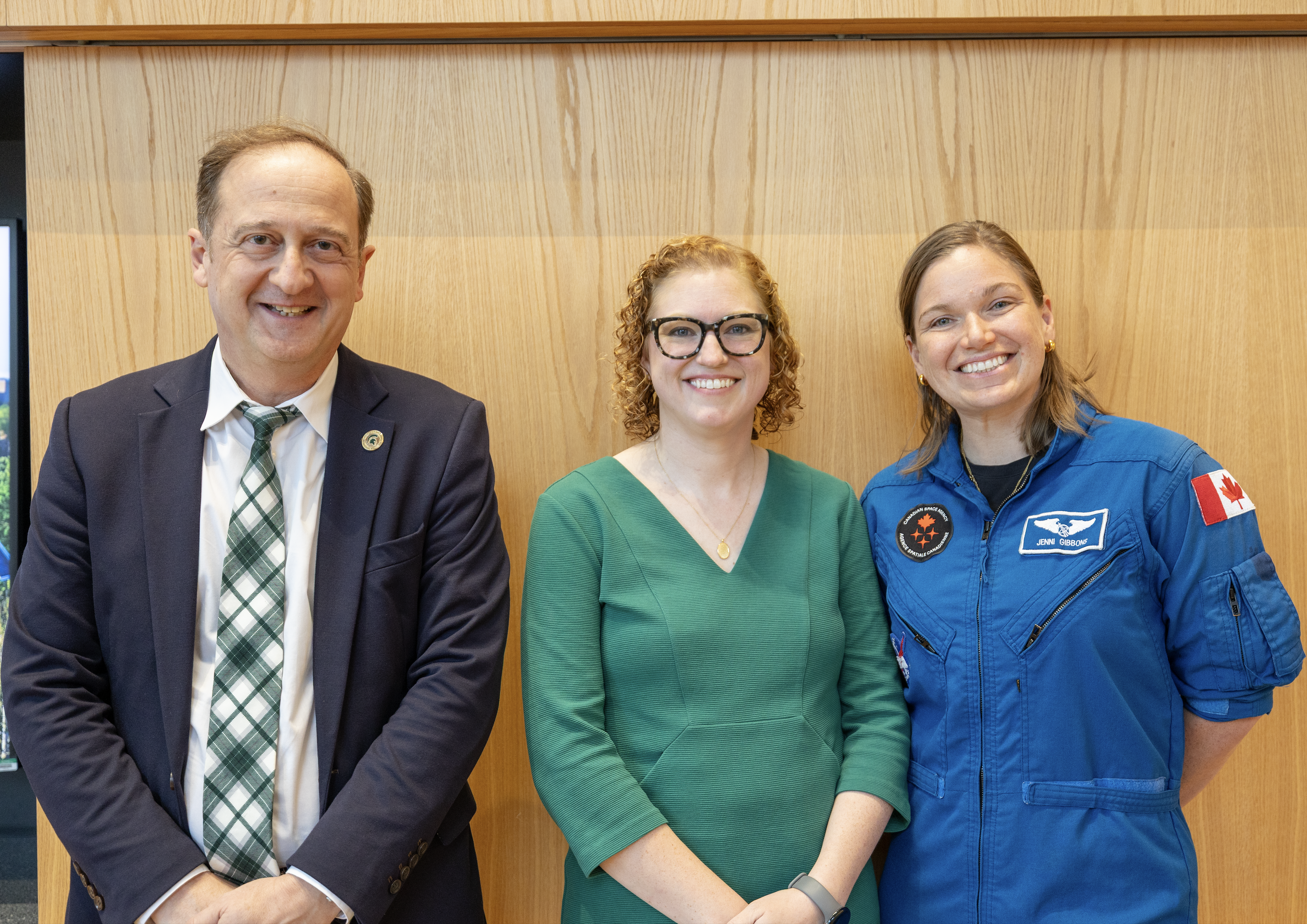
But colleagues and students also remember Allison for the energy he brought to teaching and mentorship.
A two-time recipient of the Withrow Teaching Excellence Award in Mechanical Engineering, Allison was described by student nominators as "knowledgeable and passionate" and as "a driving force behind the popularity of the college's undergraduate concentration in aerospace engineering."
He also served as a faculty adviser to the American Institute of Aeronautics and Astronautics MSU Michigan Section and the Michigan State Rocketry Club and was an active supporter of the Society of Hispanic Professional Engineers.
Through those roles, Allison helped create opportunities for students to explore engineering beyond the classroom and encouraged them to think ambitiously about where their education could take them.
John Papapolymerou, dean of the College of Engineering, emphasized Allison's commitment to creating environments where students felt encouraged to take risks, ask questions and imagine bigger futures for themselves.
That commitment to people and mentorship was also central to Gibbons' tribute.
Drawing from her experience supporting Artemis II, Gibbons described the extraordinary teamwork behind human spaceflight while emphasizing the importance of the relationships formed along the way.
"But one thing that we can do every day, and what I want to stress, is the importance of the relationships that you are forming right now," Gibbons told attendees, encouraging students to recognize the lasting influence of their peers, mentors and colleagues.
She encouraged attendees to honor the people who shape their lives by continuing to explore, learn and share their knowledge with others.
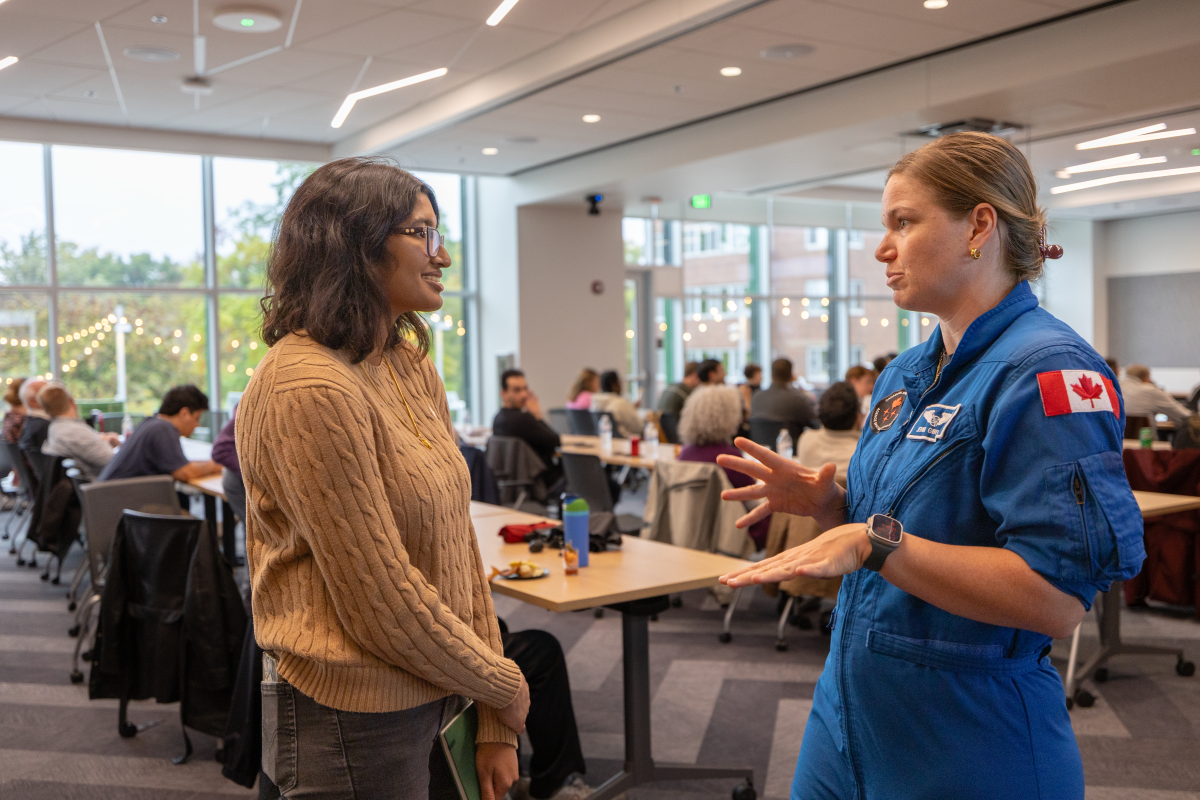
For Colleen Stuart, Allison's wife, having Gibbons deliver the inaugural lecture was especially meaningful because of their longstanding friendship and shared experiences.
"It's so special because Jenni is a dear friend," Stuart said. “Bringing her to MSU was a full-circle moment for me. She witnessed Patton’s curiosity, generosity and humanity firsthand while working side by side as post-doctoral researchers at Cambridge. Now, she brings that same enthusiasm with people around the world.”
Stuart also emphasized how the lecture could help students envision opportunities beyond the classroom.
"Patton had a gift for explaining complex concepts, connecting ideas and making engineering more accessible and tangible. Inviting experts to campus gives students a chance to see what is possible and to recognize that they are capable of pursuing it," Stuart said. "If they put in the work, they can go work at NASA or go be a professor or follow whatever path inspires them."
That connection between advanced engineering and student opportunity was central to Allison's own work at MSU.
In 2018, he helped bring NASA astronaut Michael Foale to campus for a conversation with students and faculty about life on Earth and in space. The event reflected Allison's ability to make ambitious technical ideas approachable and to connect students directly with people working at the frontiers of exploration.
The Patton Allison Memorial Lecture was established in 2026 to carry forward the qualities that shaped his life and career: intellectual curiosity, technical excellence, generosity of spirit and a deep commitment to inspiring the next generation.
Alika Sharma, a fourth-year computer engineering student, said Gibbons’ personal tribute to Allison added another dimension to the evening.
"Having someone who not only had a personal connection with them but also engaged with their memory was really meaningful to today," Sharma said.
The lecture will return in 2027, continuing Allison's tradition of connecting students with experts in aerospace engineering and other disciplines while honoring a Spartan Engineer whose influence lives on through the people he inspired.
Written by Austin J. Witt
MSU College of Engineering Media and Public Relations page