


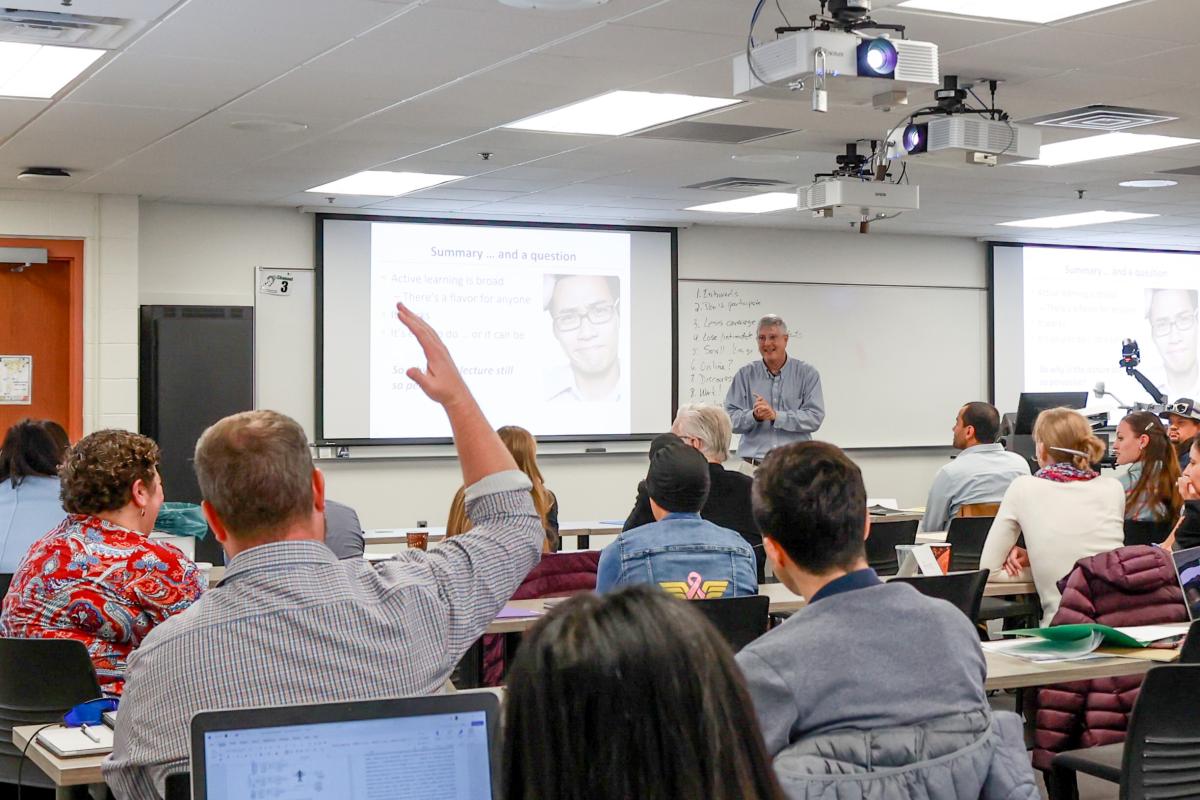
Approximately 50 Michigan State University College of Engineering faculty and graduate students gathered Oct. 27 for a daylong workshop exploring research-based teaching strategies that support active student participation and problem-solving.

The workshop was part of the college's ongoing commitment to providing professional development opportunities for educators and providing excellent learning environments for students.
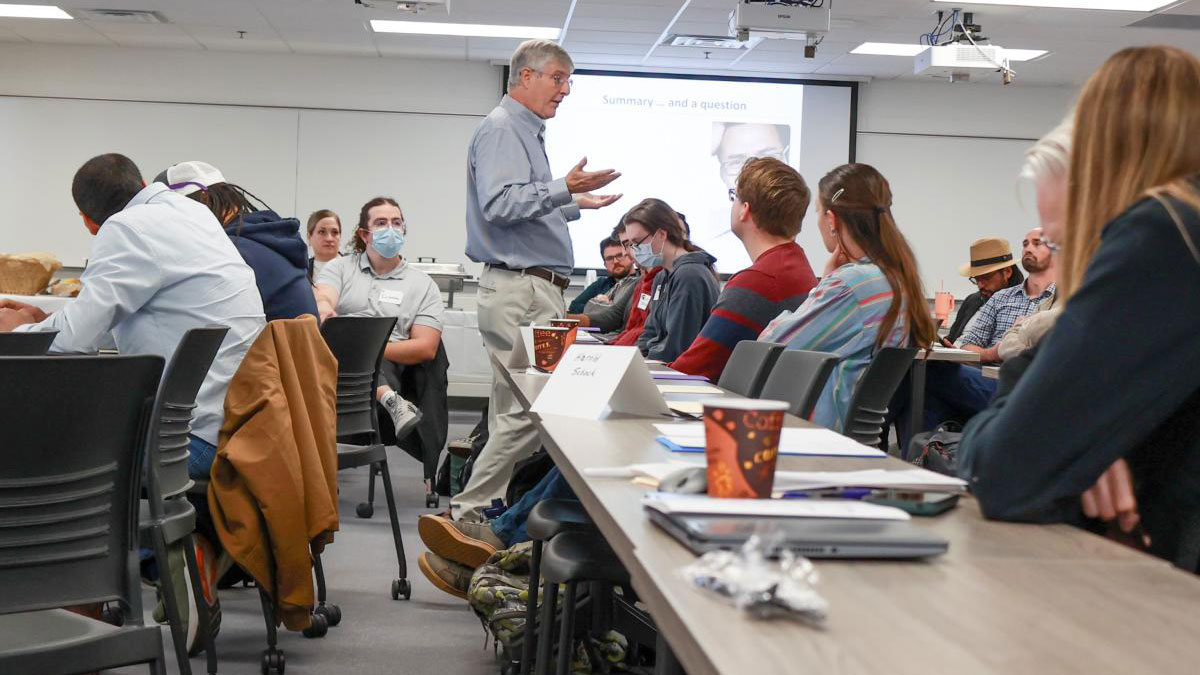
The workshop focused on active learning and inductive teaching, providing opportunities for faculty and graduate students to explore approaches they can incorporate into their existing teaching practices. It was facilitated by Mike Prince, a professor of chemical engineering at Bucknell University and facilitator for the National Effective Teaching Institute (NETI).
S. Patrick Walton, associate dean for academic programs in the MSU College of Engineering, said the workshop provided an opportunity for educators to explore research-based approaches that encourage students to participate actively in their education.
"Effective engineering education requires more than delivering information. We want students to actively engage with concepts, think critically, and develop confidence to solve complex problems. By providing our educators with opportunities to explore research-based strategies that support students' learning, we're investing in the long-term success of our students," Walton said.
Exploring student-centered teaching strategies

The workshop explored active learning, which encourages students to engage directly with course material, and inductive teaching, which uses examples and problems to help students develop an understanding of broader concepts.
Participants discussed techniques that encourage classroom participation, including having students work together to explore questions before sharing their responses.
Angela Chen, an assistant professor of chemical engineering and materials science, said she appreciated the practical examples and plans to incorporate several strategies into her courses.
"I also liked how he provided examples of simple active learning strategies that could improve engagement without requiring a lot of setup or time commitment," Chen said.
“Pairing up and informing the students that they would be called upon was really helpful,” Chen said. “Using name plates is also a great way to learn the student names.”
For Arman Khoshnevis, a doctoral candidate in mechanical engineering, the workshop provided an opportunity to explore additional approaches to student engagement in his role as a teaching assistant.
“My most valuable takeaway was recognizing that implementing active and inductive learning is a gradual process,” Khoshnevis said.
Supporting long-term student success
Looking ahead, Walton said future workshops will explore additional learning strategies, including ways to make teamwork more effective for engineering students.
Written by Austin J. Witt
Photos by Abigail Wicklund
MSU College of Engineering Media and Public Relations page