

A Michigan State University student team brought an aircraft inspection concept to NASA Langley Research Center this spring after being selected as one of eight finalists in NASA’s 2026 Gateways to Blue Skies Competition.
The Finalist recognition included a $9,000 prize and advancement to Phase 2 of the competition, which included a final design review at the 2026 Gateways to Blue Skis Forum at NASA Langley Research Center in Hampton, Virginia.
The team’s project, Surface Evaluation Network for Tethered Inspection and Nondestructive Evaluation, or SENTINEL, was developed for the competition’s 2026 theme, “RepAir: Advancing Aircraft Maintenance.” The challenge asked student teams to develop aviation maintenance concepts that could be implemented by 2035 or sooner to improve efficiency, safety or costs for the industry.
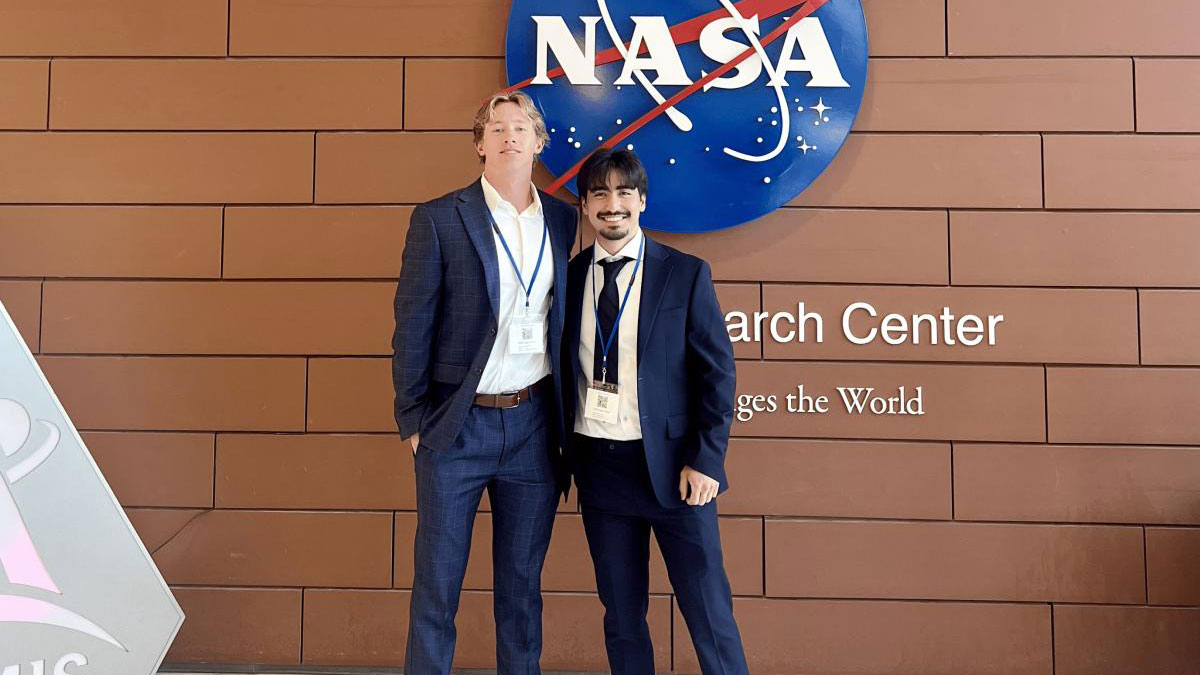
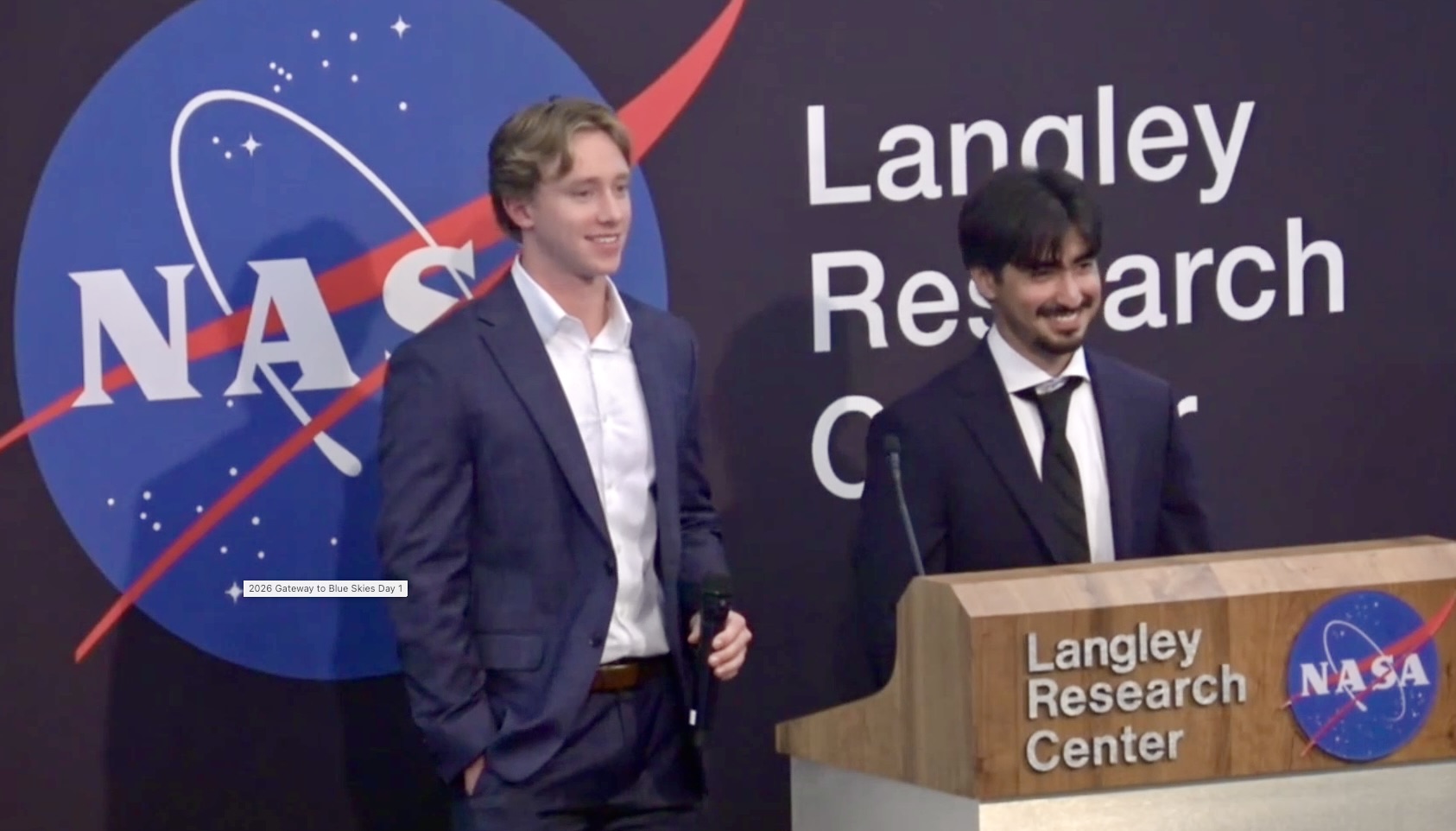
SENTINEL is designed to automate nondestructive aircraft inspection by combining the mobility of a drone with a perching mechanism that helps stabilize scanning.
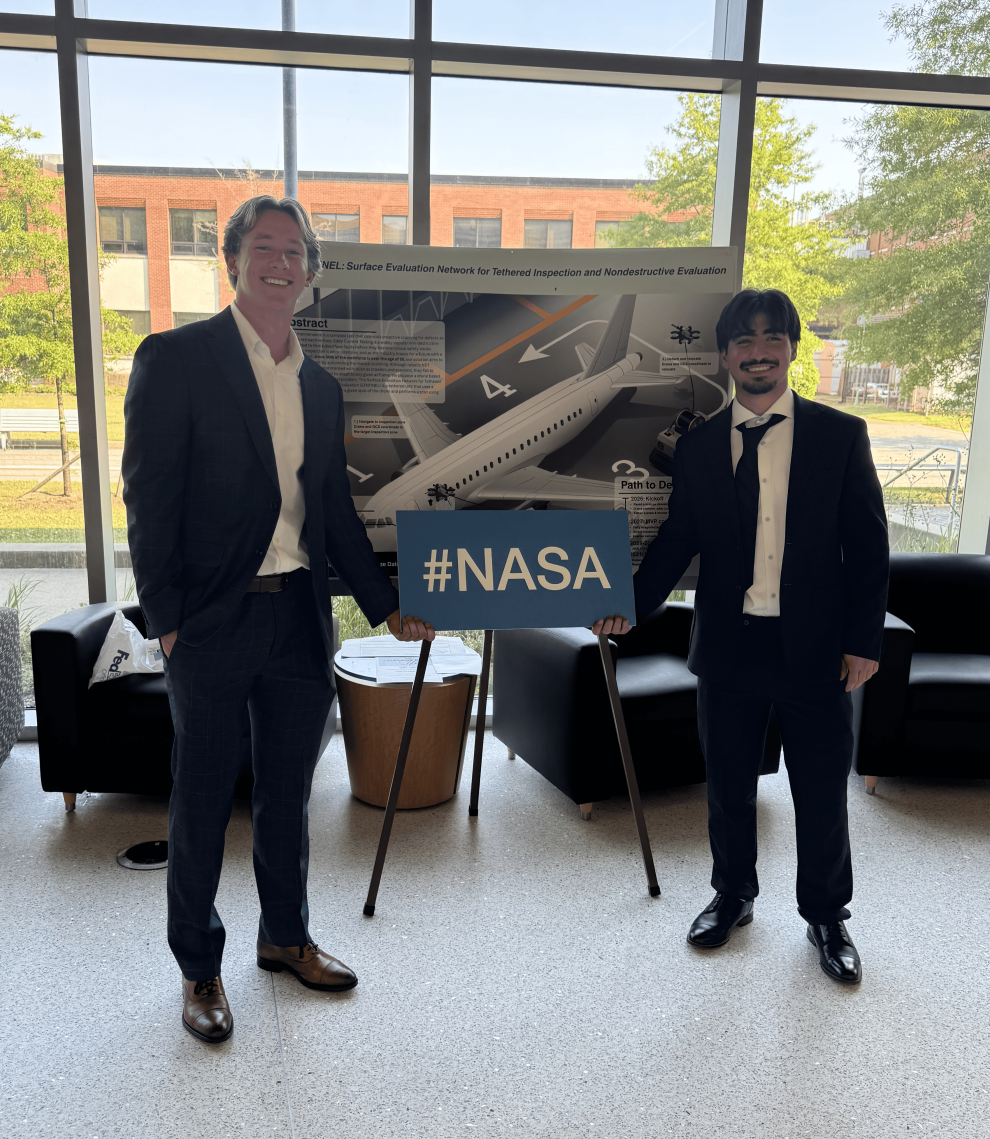
“SENTINEL is a system that automates non-destructive inspection of aircraft,” said Abdulelah Mulla, a junior in computer science and the student lead for the MSU team. “SENTINEL balances speed by using the high mobility of a drone, and stability for scanning by using a perching mechanism.”
The MSU project was advised by Vaibhav Srivastava, a faculty member in the Department of Electrical and Computer Engineering.
As finalists, the team advanced to the 2026 Gateways to Blue Skies Forum, held May 18-19 at NASA Langley in Hampton, Virginia. Finalist teams presented their concepts to NASA and industry experts after submitting proposal materials and videos summarizing their ideas.
For Mulla, being selected as a finalist marked another milestone in his undergraduate experience with NASA-related research and competition.
“Ever since I joined this team, I wanted to win a third NASA prize,” Mulla said. “Being a part of this finalist team and achieving that proves to me that it wasn’t just luck that got us this far. It truly means everything to me.”
The team hopes to continue developing the project and publish the work at a conference.
The Gateways to Blue Skies Competition is led through NASA’s Aeronautics Research Mission Directorate and managed by the National Institute of Aerospace on behalf of NASA. The 2026 competition focused on student ideas for aircraft maintenance and repair operations.
More information about MSU’s SENTINEL project, the 2026 finalists and the final award recipients is available on the Gateways to Blue Skies 2026 finalists and awards page.
Written by Austin Witt.
MSU College of Engineering Media and Public Relations page