
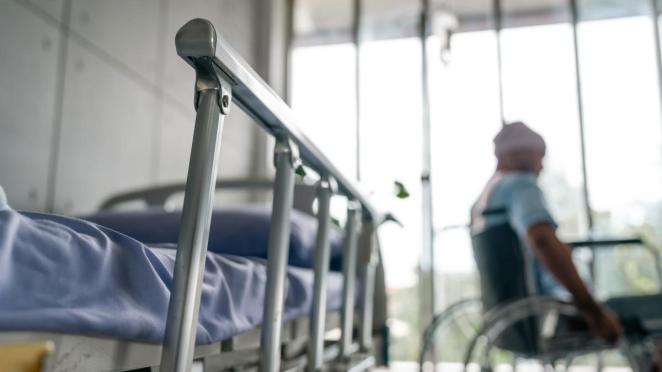
People with limited mobility are at risk for pressure injuries (PI). PI are painful, costly, and unfortunately, common. They affect 2.5 million US patients annually and lead to infections that cause more than 60,000 deaths and $26.8B in costs to US hospitals. Plus, injuries sustained by caregivers who reposition patients to avoid PI can impose a heavy toll, leading to lasting pain and the potential for ending careers.
Tamara Reid Bush, Associate Dean for Inclusive Excellence and Red Cedar Distinguished Professor in the Department of Mechanical Engineering at Michigan State, helped develop a new chair with a “sixth sense” that automatically adjusts five cushioned segments to redistribute pressure and restore blood flow between body regions.
The Sit Sense chair ensures that no single body region is loaded for an extended period, and it works automatically. Using an algorithm, Sit Sense cycles through the loading and unloading of different body regions to reposition patients using five independently moving, electronically controlled seat and back supports.
To reduce the likelihood of PI in patients who spend extended periods in bed, chairs, or wheelchairs, caregivers frequently reposition them. It’s a difficult task that requires pushing and pulling rather than purely lifting against gravity, which puts caregivers themselves at risk of injury. When PI occur in a facility, insurance will not cover treatment. The average hospital spends $10 million each year to treat pressure sores alone.

Sit Sense offers a practical approach to reducing PI while easing the physical demands placed on caregivers, improving patient outcomes, and reducing the costs associated with preventable complications.
To learn more about Reid Bush’s work, visit:
- 2025 Invention of the Year Award for Sit Sense [Video]
- Tamara Reid Bush faculty page [Website]
- Bush Lab [Website]
- Sit Sense [Website]
- Coefficient of Friction Between Pant Fabrics and Seat Covers: An In-Vivo Experimental Study [Article]
- Informing Choices for Vehicle Pick-Up and Drop-Off Zones for Persons with Mobility Disabilities–Existing Challenges and Future Needs [Article]
- Shifting Loads as a Result of Chair Articulations and Associated Perfusion Responses in the Context of Pressure Injuries: an Investigation with Able-Bodied Individuals [Article]
- Tissue matters: In-vivo tissue properties of persons with spinal cord injuries to inform clinical models for pressure ulcer prevention [Article]
- Evaluating the biomechanics of an in-between posture to create a multi-posture environment [Article]
- Development and Evaluation of Upper Extremity Movement Quality Outcome Measures for Individuals With Functional Movement Disorder [Article]
- Understanding needs and challenges with regard to pick-up and drop-off zones for persons with mobility disabilities: assessments via real-life street scenarios [Article]
MSU College of Engineering Media and Public Relations page