
Twenty-six incoming engineering students arrived at the Michigan State University College of Engineering on July 5 to begin the 2026 Engineering and Science Success Academy (ESSA) program.
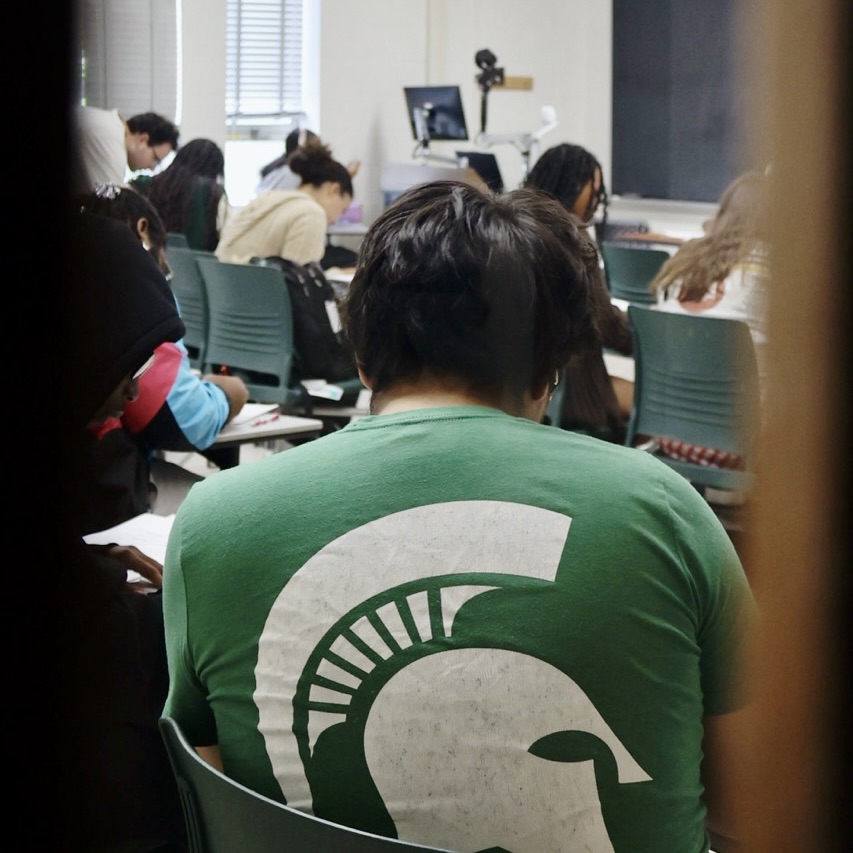
The four-week residential program has been helping incoming students transition from high school to college life for nearly 20 years.
ESSA Program Coordinator and Inclusive Excellence Program Assistant Jonny Fabro said ESSA has welcomed nearly 500 participants since 2007. The program offers preparatory courses, educational field trips, and a variety of community-building opportunities.
"This program has a wonderful history,” Fabro said. “ESSA gives them a head start on their academic and professional success in STEM fields. That’s where many high-paying engineering and technology jobs await.”
Fabro explained how the program works.
Each admitted first-year engineering student at MSU takes a math placement test. College data show that the result of that test is the single biggest indicator of a student’s ability to graduate with an engineering degree.
ESSA was developed to improve outcomes for students who would benefit from additional support in math. Incoming students are connected to resources and staff for tutoring, advising, academic coaching and college readiness skills, such as presentation and interviewing skills.
Participants attend daily classes in math, chemistry, biology, and computer science. This year’s activities included visits and tours with corporate sponsors.
“ESSA students have a chance to brush up on their math skills throughout their four weeks on campus and at the end, retake their math placement exam. The goal is to increase their score and place them into a math course closer, or directly into, Calculus I (MTH 132). This can potentially save students and their supporters' tuition costs and help keep them on track to graduation.
“ESSA is a high-reward program,” he continued. “Qualitative data shows that most students who participate in the program leave with a better understanding of how higher education classroom settings operate, knowledge of the help and resources that the college and the university provide, and a sense of belonging and community before their official start to their Spartan journeys.”
Quantitative data show that, on average, 80% of participants increased their math placement scores and moved into higher-level prerequisite courses. In some cases, students placed directly into Calculus I or higher.
Results from th 2025 cohort illustrate those gains:
- Of the students who began in Math 103A, 83% increased their math placement exam scores. Of that group, 71% advanced two course levels and 29% were eligible to advance three course levels by the end of the program.
- Among students who began in Math 124, 66% advanced one course level.
- Among students who began below Math 103, 50% advanced one course level and 50% advanced three course levels.
“Students can hit the ground running when they arrive on campus in the fall,” Fabro said. “It decreases delays for both admission into the College of Engineering and ultimately graduation.”
Corporate support
Corporate sponsorships are also an important part of ESSA. Marathon Petroleum Corp., a longtime supporter of the program, has provided funding, student engagement opportunities and pathways to co-op experiences.
“Marathon Petroleum is proud to sponsor the MSU Engineering and Science Success Academy (ESSA) and support talented engineering students committed to excellence, collaboration and community engagement.” said Edward P. Fox of Marathon Petroleum. “Michigan State University prepares well-rounded engineers with strong technical knowledge, effective communication skills and the ability to work successfully as part of a team.
"Through our sponsorship and co-op opportunities within our operations, we help students strengthen their professional and technical skills while exploring pathways to meaningful careers after graduation. Our collaboration with ESSA is an investment in emerging engineers and a stronger, more innovative workforce for the future.”
For this year’s participants, the four-week program provided an early opportunity to strengthen academic skills, connect with the Engineering community and prepare for the start of their first semester at MSU.
Written by Patricia Mroczek.
MSU College of Engineering Media and Public Relations page