



My interest in quantum computing started for a pretty simple reason: The mathematical symbols looked really cool and complicated.
At the time, I did not know what most of them meant. But I wanted to.
The more I learned, the more fascinated I became by the way quantum computing brings together computer science, mathematics and physics to tackle problems that can be extremely difficult to solve.
That curiosity eventually led me to the research group of Professor Ryan LaRose’s, through the Honors Research Scholar program. Since then, I have had the opportunity to work on problems at the intersection of computer science, mathematics, physics and chemistry.
My most recent project started with a deceptively simple question: Can we reproduce recent large-scale quantum computations with classical computers?
That question is part of a much broader effort to understand what researchers call quantum advantage, where and when a quantum computer can outperform the best-known classical approaches for a computational task. It is one of the central questions researchers have been exploring in quantum information science. As increasingly sophisticated quantum experiments have been developed, researchers have also found new ways to simulate some of those experiments using classical computers. Each advance helps redefine where the boundary between quantum and classical computing currently lies.
Researchers from IBM, RIKEN and collaborating institutions recently used an IBM quantum computer to run a circuit containing 77 qubits and more than 10,000 quantum gates, then used the Fugaku supercomputer to help process the results. Their research, published in Science Advances as “Chemistry beyond the scale of exact diagonalization on a quantum-centric supercomputer”, focused on calculating the energy of an iron-sulfur cluster, a molecular structure found in proteins involved in biological processes such as photosynthesis and cellular respiration.
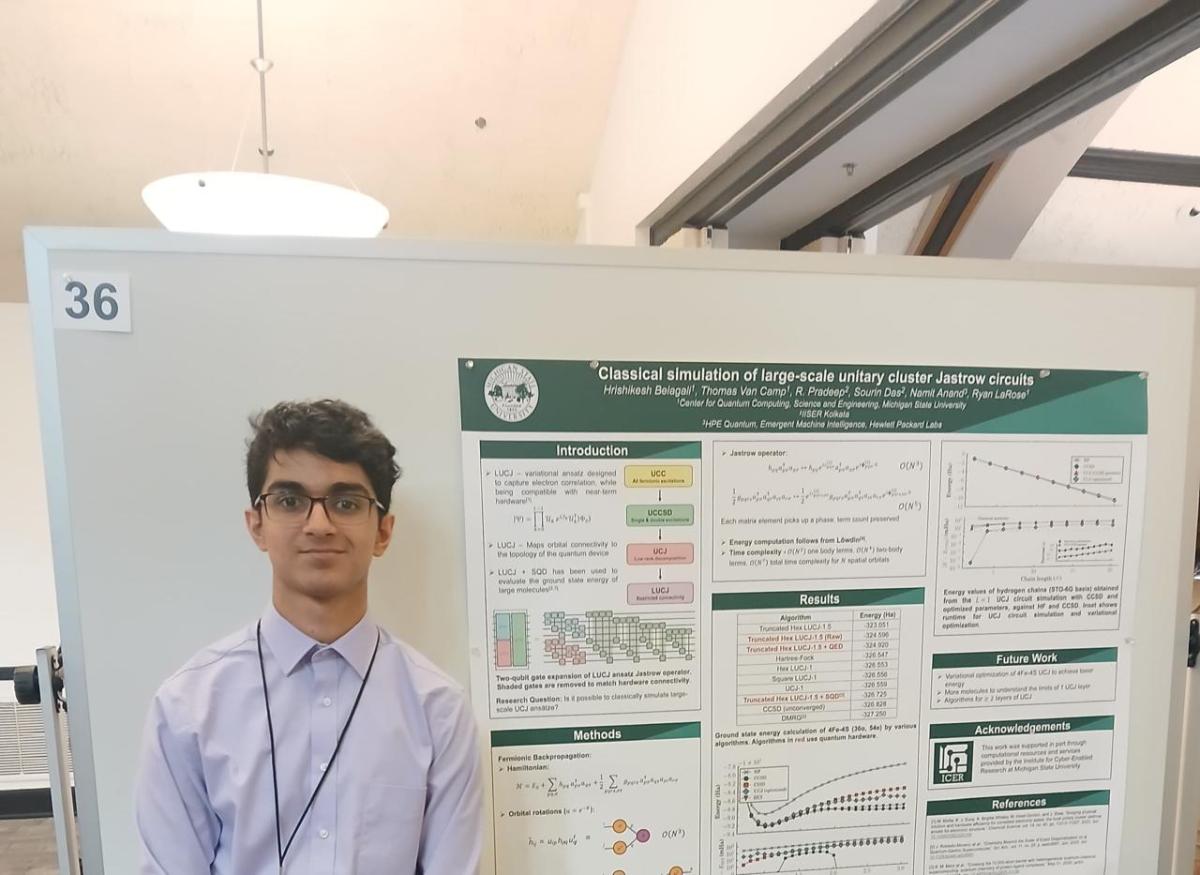
Our team wanted to know whether a new classical approach could efficiently reproduce the energy calculations from that experiment and what the answer might tell us about the current boundary of quantum advantage.
In our work, we developed a new classical algorithm that can efficiently compute these energies. In fact, using the algorithm developed through our research, we were able to compute the energy for the single-layer quantum circuit in less than a minute on a standard MacBook Pro.
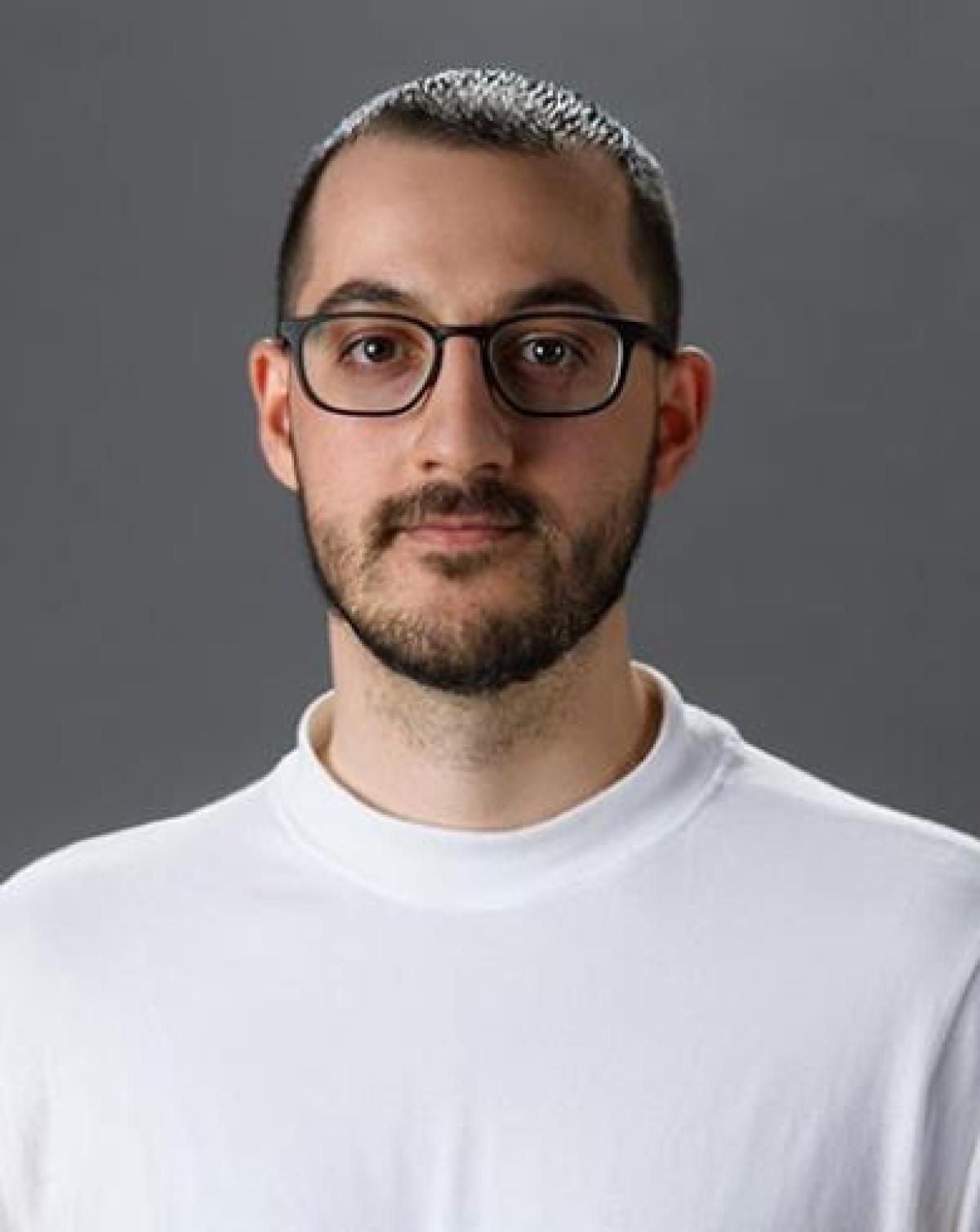
LaRose sees the result as part of a much larger effort to understand where the quantum advantage boundary currently stands. That boundary is not fixed: improvements in quantum hardware can move it in one direction, while advances in classical algorithms can move it in another.
A large part of my role involved contributing to the theoretical development of the algorithm, improving its implementation, and running numerical experiments. The algorithm can require thousands of iterations for larger problems, so making each one faster can dramatically reduce the total time needed to solve a problem.
I developed an implementation of the algorithm that uses graphics processing units, or GPUs, the same type of hardware widely used for artificial intelligence. As we improved the algorithm and its code, we were able to make those calculations increasingly fast.
At one point, an energy calculation took about seven seconds using an NVIDIA GH200 Grace Hopper node at MSU.
Through continued improvements to the algorithm and its implementation, we have since brought that calculation down to about one-tenth of a second.
That speed matters because evaluating the energy is not something we do only once. The calculation may need to be repeated thousands of times as we search for better parameters.
One of my favorite moments came when we used our classical method to optimize the circuit parameters and obtained a lower energy value than the one reported in the original experiment.
I called my parents as soon as I saw it.
I was very excited. It felt great to see our hard work pay off, especially because we were working on such a recent problem.
At the same time, I think it is important to be careful about what that result means.
For me, the most interesting part is not simply which method produced the lower number. It is what results like this can teach us about how classical and quantum approaches can be used most effectively.
Our work does not mean classical computers can simply replace quantum computers. The two approaches reach the energy calculation in different ways. The original experiment used a quantum computer to generate samples that were then processed using classical high-performance computing. Our method takes a different route and computes the energy directly without generating those same samples. Newer, larger-scale quantum experiments have also since produced lower energy values.
There are important limits to what our method currently does. Our algorithm applies to the single-layer circuits we studied. Future experiments could use deeper circuits, or use information generated by quantum computers in different ways that our classical method cannot reproduce.
To me, that makes the boundary between quantum and classical computing even more interesting. Each new result helps researchers better understand where classical methods remain effective, where quantum approaches may offer advantages and where the two can complement each other.
Quantum and classical computers may ultimately be most powerful when they work together. For example, our classical approach can help identify improved circuit parameters that could then be used in quantum experiments. Classical hardware can also assist with pre- and post-processing, while quantum computers can focus on parts of a problem where their capabilities may offer an advantage.
That boundary between classical and quantum computing is something I want to keep exploring.
Research like this can help narrow the search for quantum advantage by showing where classical methods remain highly capable and where researchers may need to explore new quantum approaches. At the same time, the classical methods developed through that process could potentially help improve quantum algorithms themselves.
For LaRose, that interaction between classical and quantum computing is an important part of the research.
“At the end of the day, if we're able to solve important scientific problems faster and more accurately, it doesn't matter whether it's quantum, classical, or both,” LaRose said.
The response to our work also showed me how quickly research can move.
About a day after we posted our paper, “ Efficient classical simulation of large-scale unitary cluster Jastrow circuits ”, as a preprint, a lead developer of IBM’s quantum circuit software contacted our group.
He asked whether we would be interested in incorporating our algorithm into IBM’s software.
I was incredibly excited when Professor LaRose told me.
I am now working on that implementation while continuing to look for ways to improve the algorithm’s runtime and memory usage. The implementation is also being discussed through the project’s IBM software project on GitHub.
This project was not my first experience with quantum computing research at MSU.
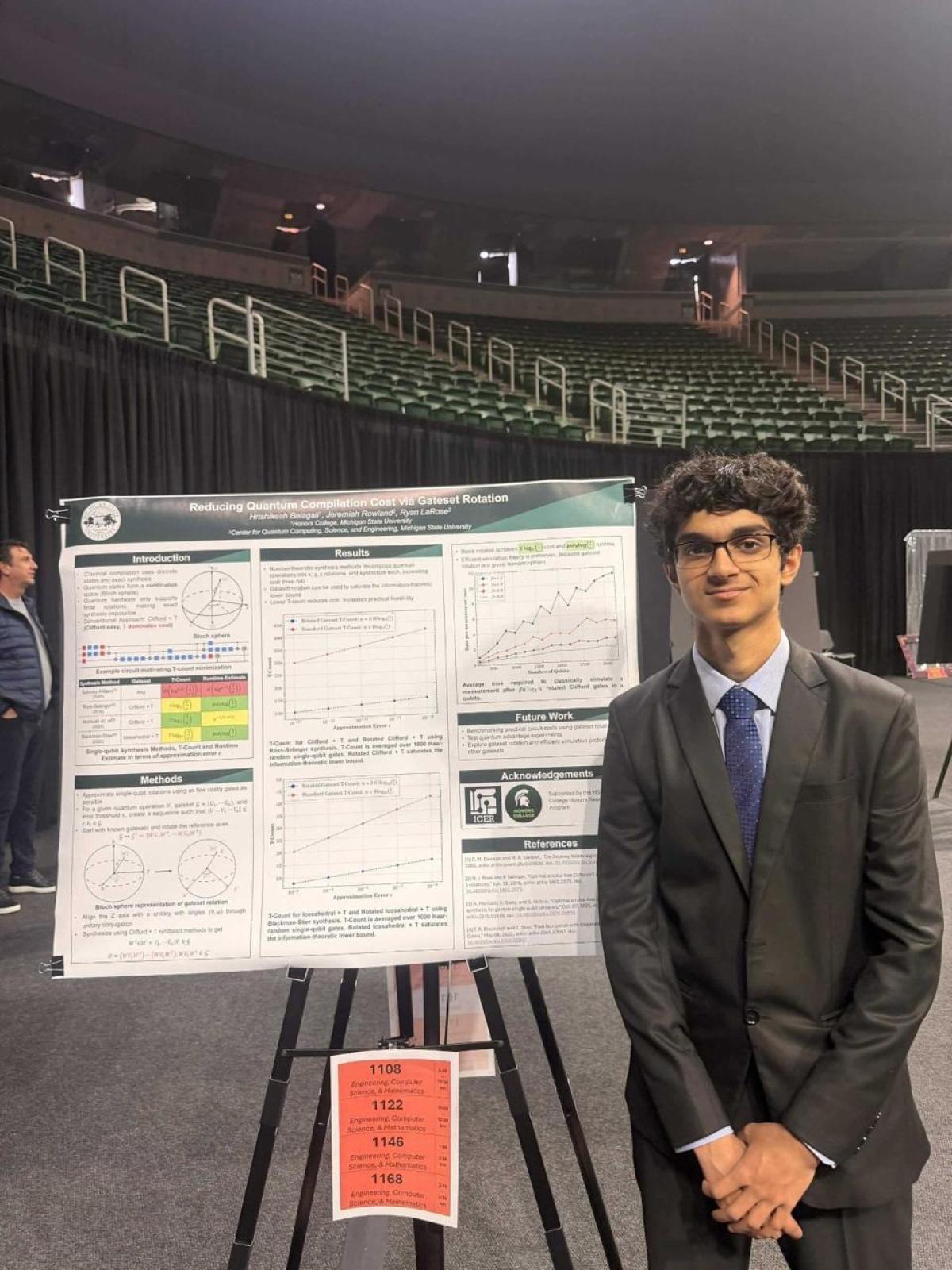
My previous research focused on fault-tolerant quantum compilation. In simple terms, a compiler translates instructions into operations a computer can actually execute. My project explored whether mathematical tools could make that process more efficient for quantum computers.
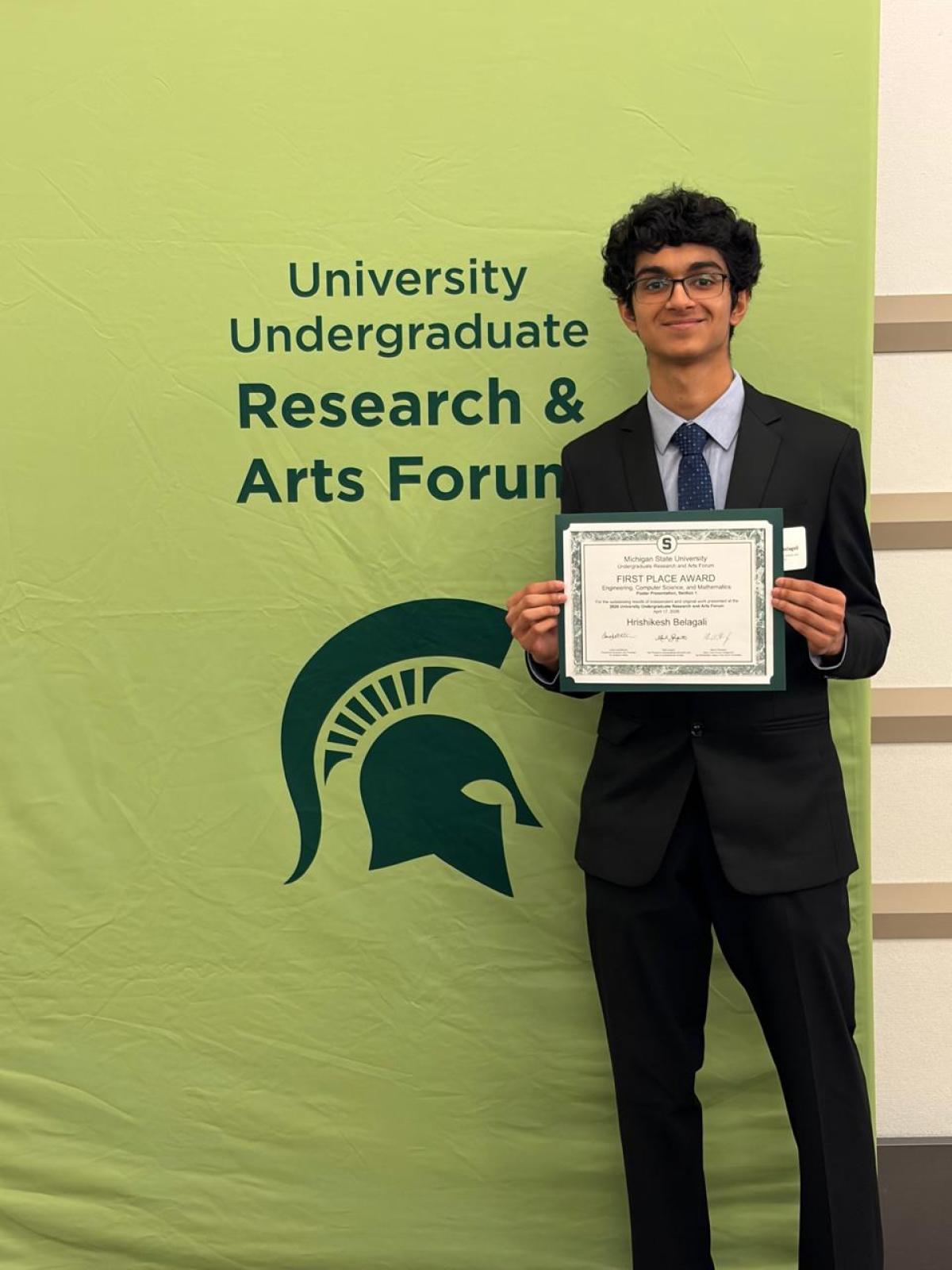
I presented that work at MSU’s University Undergraduate Research and Arts Forum, or UURAF, where I received first place in the Engineering, Computer Science and Mathematics division.
Undergraduate research has taught me much more than the technical side of quantum computing. Through experiences like UURAF and other research conferences, I have learned how to communicate in a professional setting, present scientific data to different audiences and think about how to approach research problems.
I am especially grateful for the opportunity to experience cutting-edge quantum research as an undergraduate.
When I think about what I am most proud of from this project, it is not only that we made the calculations faster or produced a result we were excited about. It is that we started with an open problem and built something that helped us understand it differently.
That experience has also made my next step clearer.
This fall, I am applying to Ph.D. programs focused on quantum algorithms. I want to continue doing research and exploring the boundary between what classical and quantum computers can do.
When I first became interested in quantum computing, I was mostly intrigued by symbols I did not understand.
Now, those same kinds of equations are part of the research problems I get to work on every day.
There is still an enormous amount I do not know about quantum computing.
For me, that is exactly what makes it so interesting.
Written by Hrishikesh “Hrishi” Belagali, a third-year computer science student in the MSU College of Engineering and a student in the Honors College
MSU College of Engineering Media and Public Relations page