
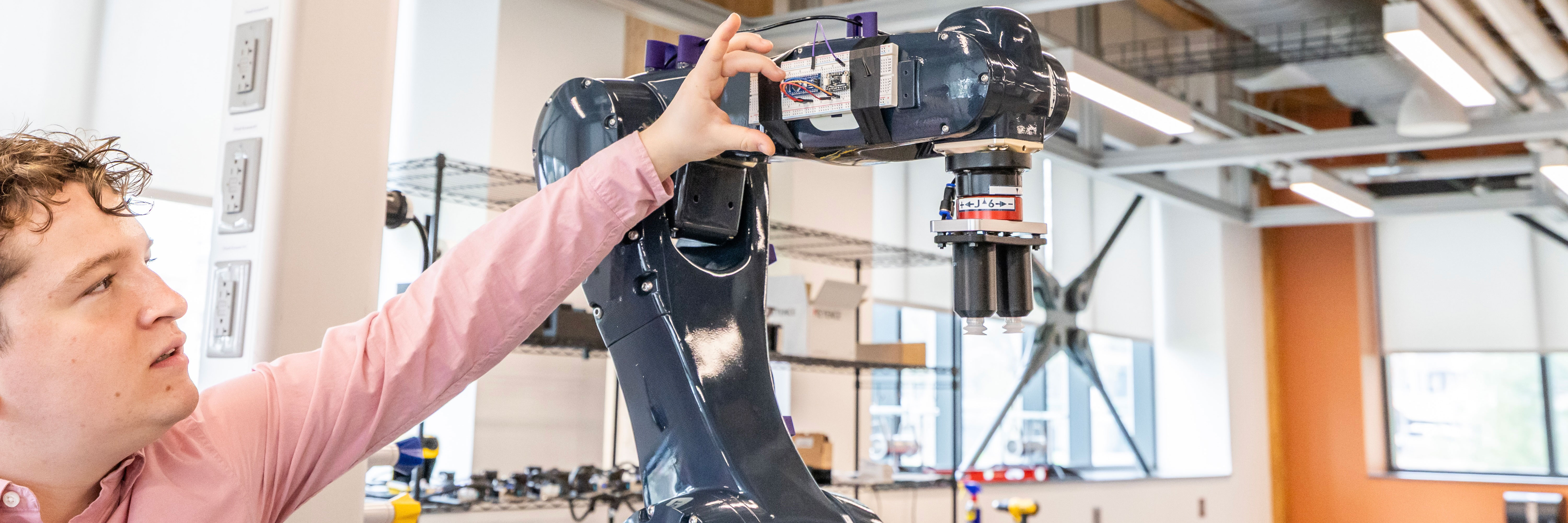
A robotic arm moving the letters “MSU” across a display table was more than a class project.
It was a look at the kind of engineering work Michigan State University Technology Engineering students are preparing to do in industry: building systems, integrating sensors, writing code, troubleshooting hardware, managing constraints and explaining technical work to others.
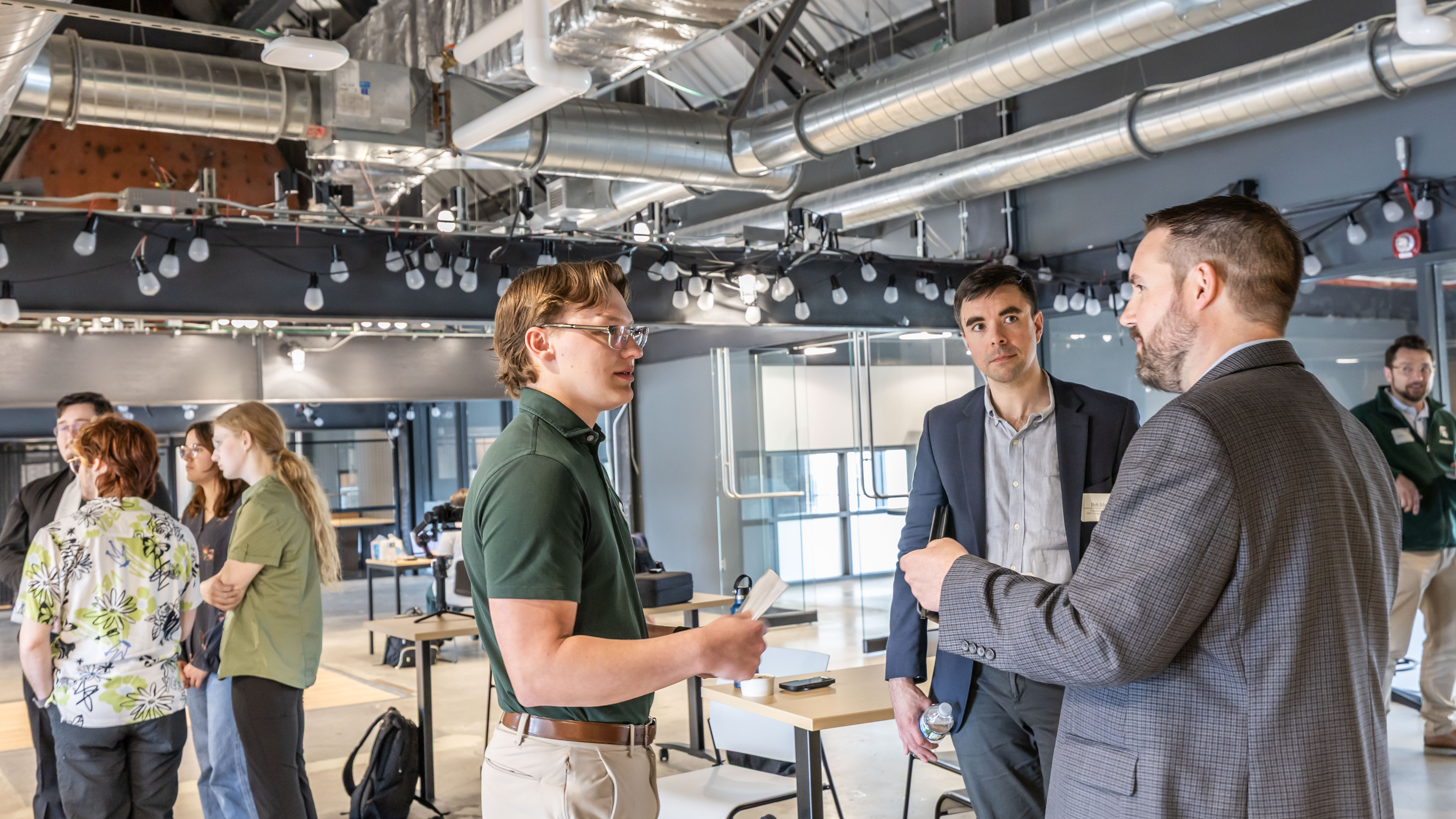
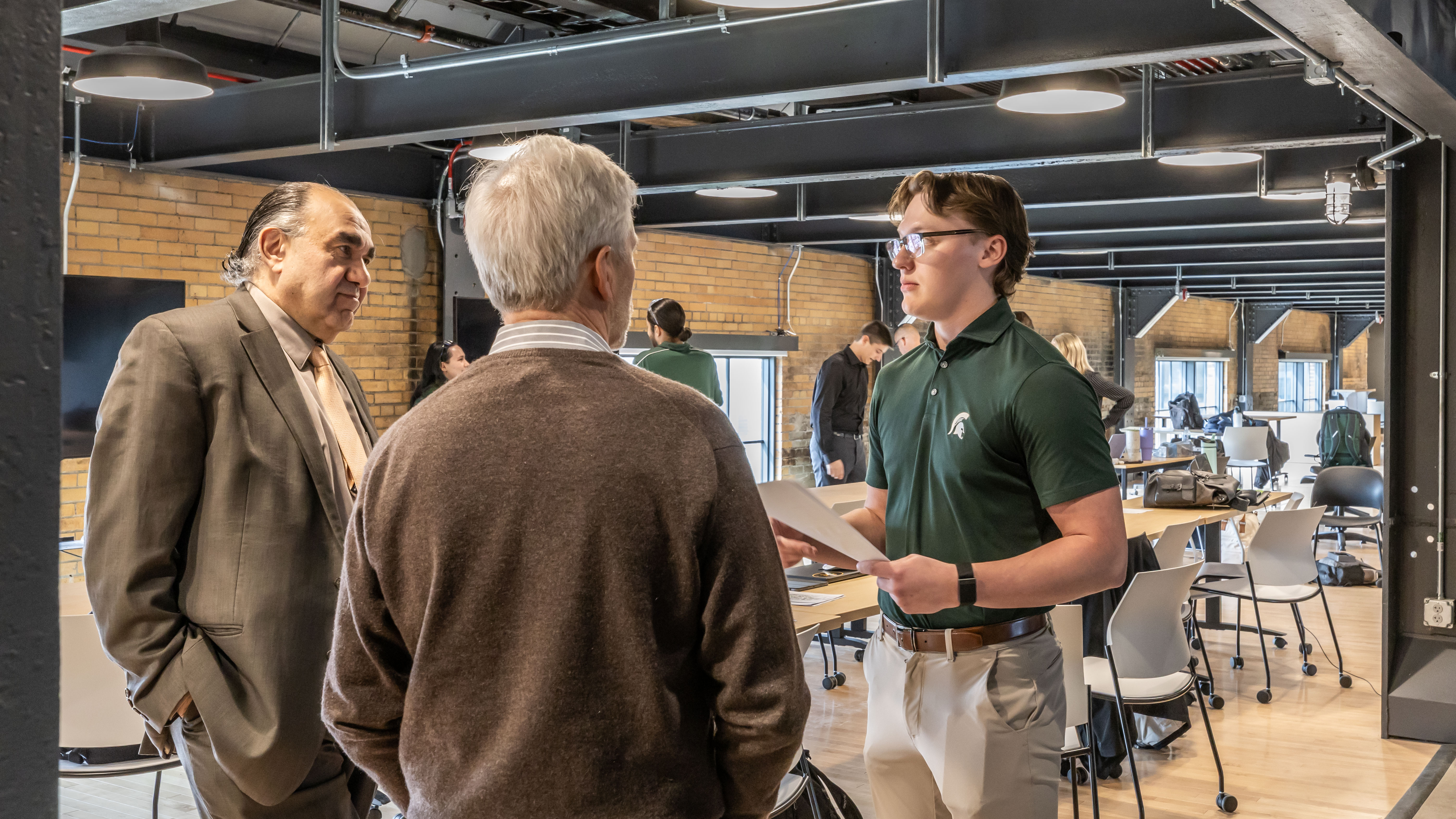
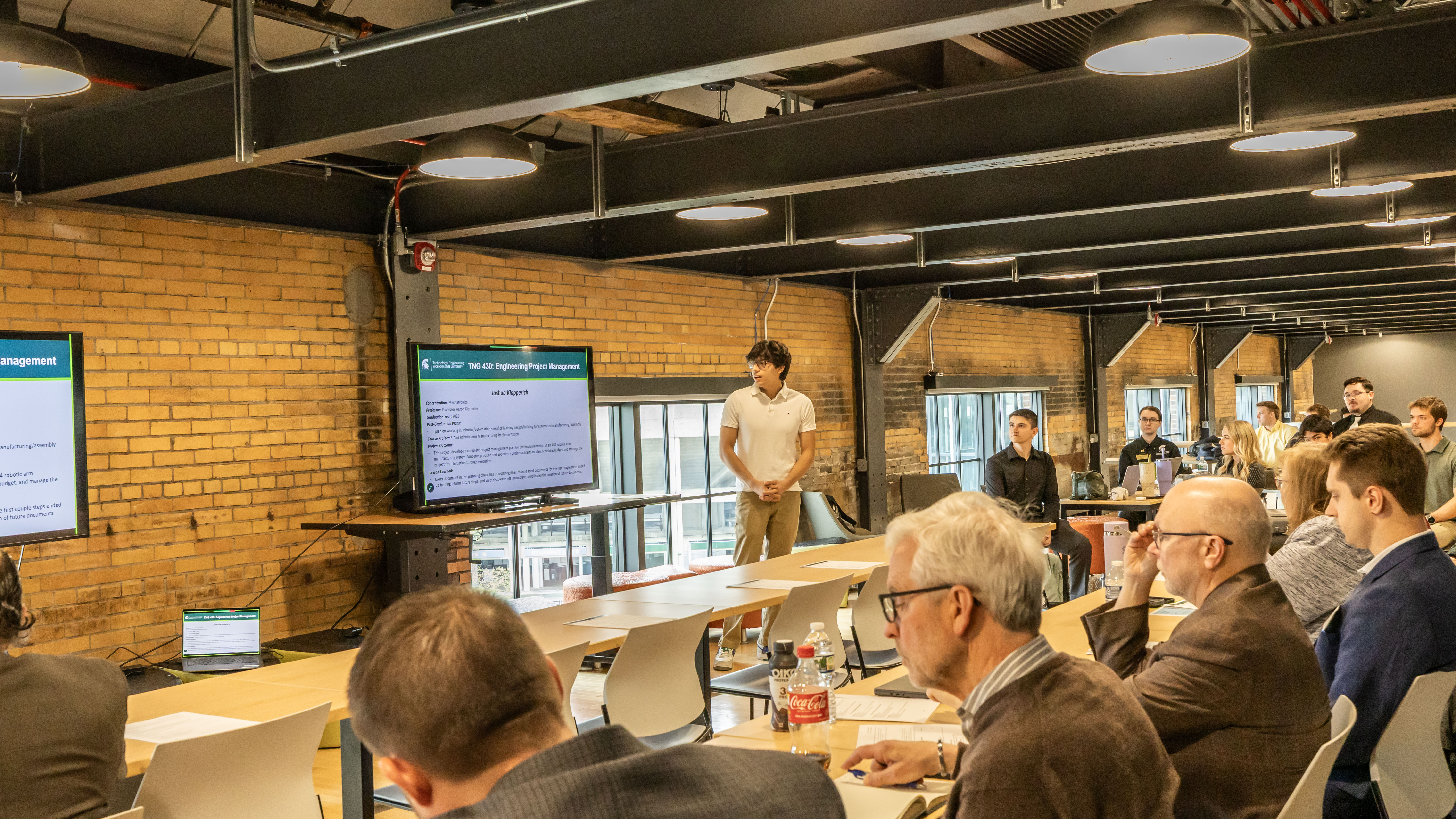
Students in the College of Engineering’s Technology Engineering degree program, known as TechE, showcased their work during an April 21 Industry Advisory Board meeting and student meet-and-greet. Industry professionals, faculty and students gathered to tour lab spaces, hear program updates and see projects involving robotics, mechatronics, CNC machining, cybersecurity, electronics, sensors and project management.
For advisory board members, the projects connected directly to current industry needs.
“During the meeting, we reviewed a project showcasing a robotic system picking up a component, conveying it, marking it in transit, installing a fastener and racking the finished part,” said Heather Dashner, core launch manager and lean manager at Ford Motor Co. “This sequence directly mirrors the advanced automation projects our engineering teams are executing today.”
Dashner said the practical nature of the work stood out.
“Seeing this level of practical application firsthand makes it clear that these graduates can seamlessly integrate into our current workstreams with virtually no ramp-up time,” she said.
The event highlighted TechE’s larger purpose: preparing students for careers in fields where hardware, software, mechatronics, automation and cybersecurity increasingly overlap.
At a glance
- The Bachelor of Science in Technology Engineering launched at MSU in 2024. The program was developed with extensive input from industry.
- Students learn across technical areas. Coursework and projects include robotics, automation, electronics, embedded systems, sensors, computer-aided design, computer-aided manufacturing, prototyping, project management and hardware cybersecurity.
- The program connects to career pathways. TechE prepares students for fields such as robotics, mechatronics, manufacturing, embedded systems, cybersecurity, aerospace, autonomous mobility, biomedical devices and smart agricultural systems.
- New learning labs are planned. Renovations approved by the MSU Board of Trustees will create Technology Engineering Learning Labs to support hands-on instruction in electronics, robotics, automation, computer-aided manufacturing, prototyping, hardware security and senior capstone design.
Built for connected systems
TechE is one of the College of Engineering’s newest undergraduate degree programs. It integrates mechanical, electrical and computer engineering with computer science to prepare students for engineering work involving connected hardware, software and physical systems.
Students can pursue pathways in mechatronics, embedded cybersecurity, semiconductors or the Smart Agricultural Systems minor. The program includes work in circuits, coding, data science, computer-aided design, prototyping, project management, embedded systems and cybersecurity.
That mix is intentional. Modern engineering work often requires people who can understand how physical systems, code and data work together. A manufacturing system may require robotics, sensors, software, and cybersecurity. A vehicle may depend on embedded systems, communications, data and hardware security.
Jay Judkowitz, head of AMR product development at OTTO by Rockwell Automation and a member of the Technology Engineering Industry Advisory Board, said that breadth is essential as industrial automation continues to evolve.
“Industrial automation technology is expanding and integrating at a dizzying pace,” Judkowitz said. “All automation projects are integrated hardware and software.”
Judkowitz said modern industrial systems increasingly bring together automation, hardware, software, cloud-connected systems, data analytics, artificial intelligence and cybersecurity. That makes it important for engineers to understand how those pieces work together, not only how to work within one specialty.
“TechE is uniquely designed to teach this way of thinking,” Judkowitz said.
Industry at the center
The Industry Advisory Board helps TechE stay connected to employer needs. Board members advise the program on curriculum and resources, while mentoring students and connecting them with the industries they may enter after graduation.
For students, the April 21 event provided a chance to meet professionals and explain their work. For industry partners, it offered a closer look at students who are building technical skills, communication skills and applied project experience.
Student demonstrations included robotic arm systems, CNC-machined components, electronic games, cybersecurity models, encryption work, sensors and circuit-based builds. Together, the projects showed how the program connects classroom concepts to engineering applications that students may encounter in internships and careers.
Dashner said programs like TechE are valuable because modern production environments require engineers who can work beyond traditional boundaries.
“As advanced manufacturing technologies continue to reshape the industry, the demand for multidisciplinary engineering talent has never been higher,” Dashner said. “Modern production environments require engineers to look beyond traditional boundaries, possessing a versatile skillset that integrates mechanical design, electrical systems and software programming.”
A growing program with new spaces ahead
TechE’s growth is also taking shape through new learning spaces.
The MSU Board of Trustees approved renovations in February to create modern instructional laboratory space for TechE. The future Technology Engineering Learning Labs are planned to support hands-on instruction in electronics and embedded systems, robotics and automation, computer-aided manufacturing, prototyping, hardware security and senior capstone design.
The new spaces will support a degree program built with input from industry partners and centered on experiential learning.
Together, the advisory board meeting, student demonstrations and planned learning labs point to the larger story of TechE: a growing MSU Engineering degree program designed for students who want to understand how systems work, make them work better and prepare for careers in industries that need hands-on engineers at the intersection of hardware and software.
Read more about TechE on MSU’s College of Engineering Technology Engineering (TechE) page.
Written by Austin Witt.
MSU College of Engineering Media and Public Relations page