
A robotic arm moving the letters “MSU” across a display table was more than a demonstration.
For students in Michigan State University’s Technology Engineering degree program, known as TechE, it was one example of how classroom concepts become engineering practice.
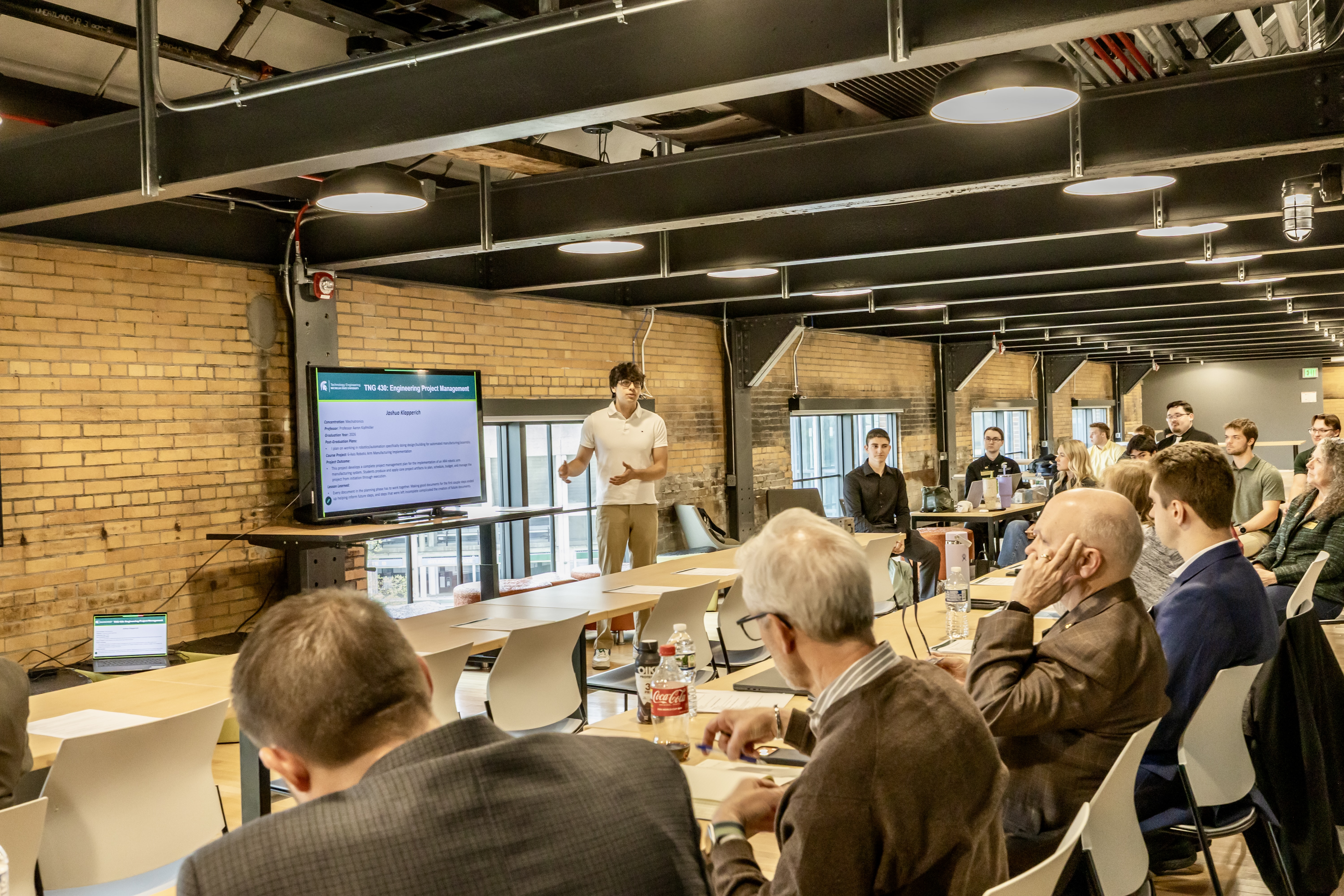
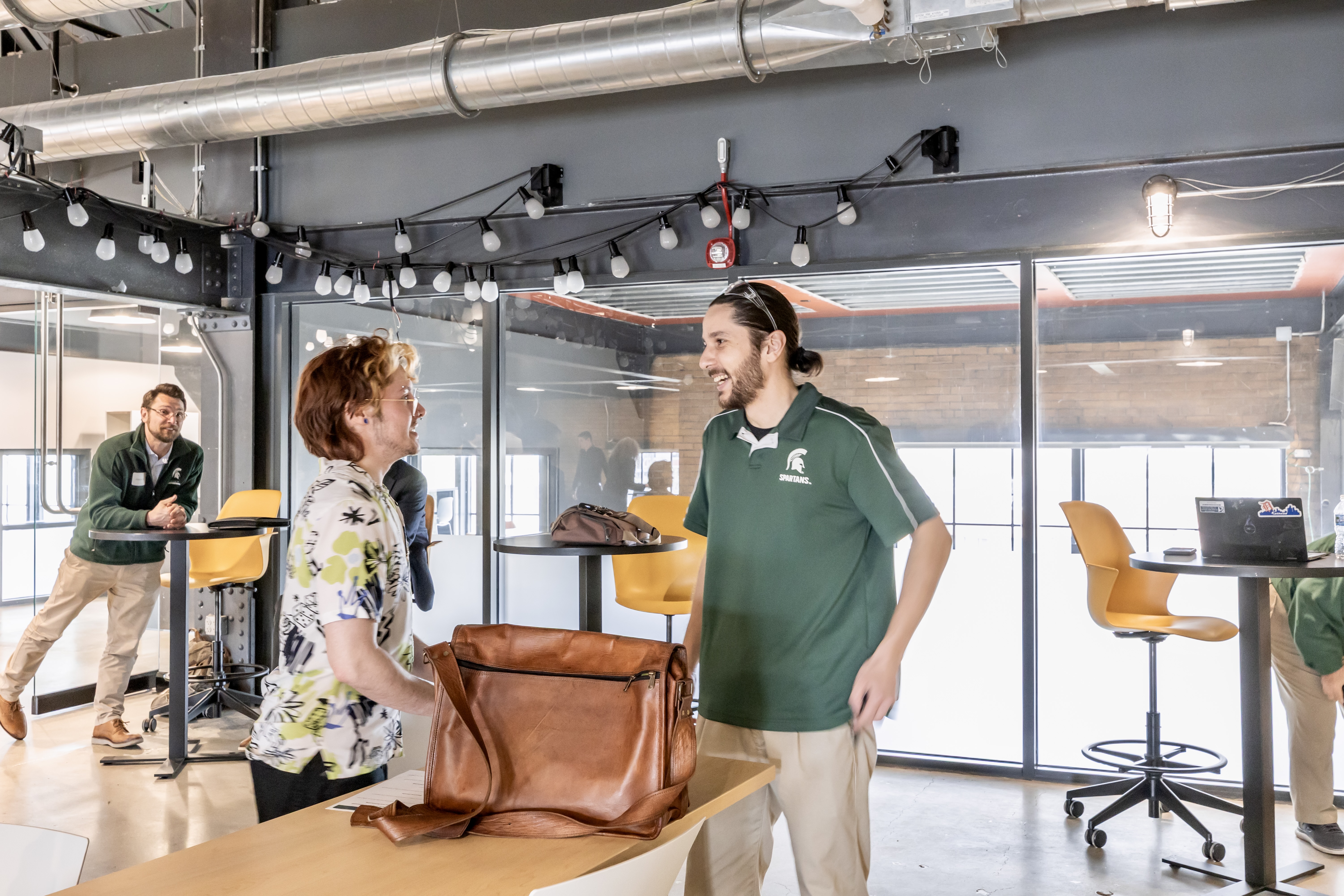
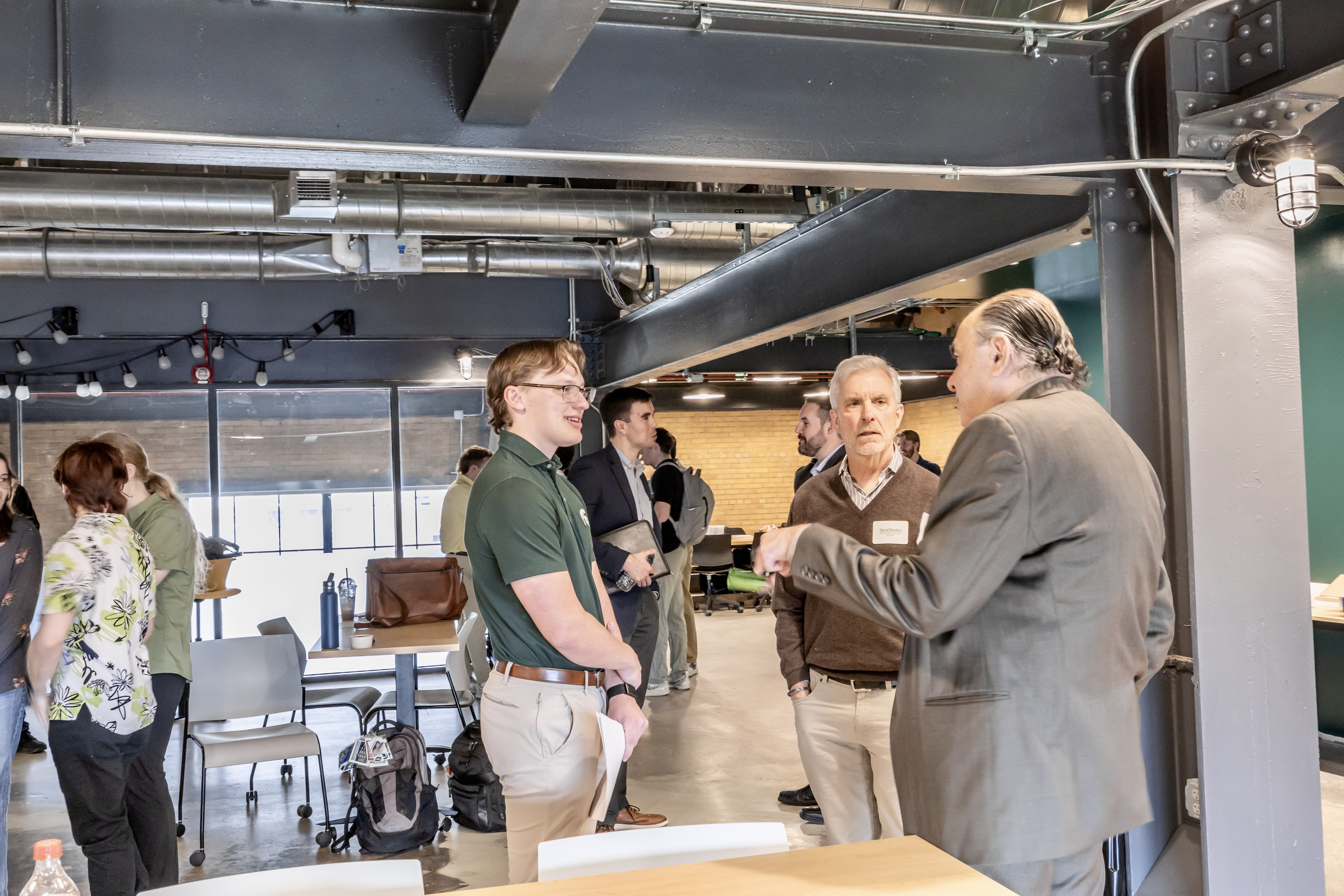
During the April 21 student and industry meet-and-greet, TechE students presented projects to Industry Advisory Board members, who advise the program and help connect students with the industries they may enter after graduation.
TechE students learn to work across hardware, software and physical systems through projects involving mechatronics, robotics, automation, sensors, circuits, computer-aided design, computer-aided manufacturing, embedded systems and cybersecurity.
Learning by building
Skylar Gorham, a Technology Engineering student concentrating in mechatronics, presented work on a six-axis robotic arm.
Gorham, who is from Portland, Michigan, and is projected to graduate in December 2026, said the arm uses motors, sensors and coding to grab items with a servo gripper and place them in a specific spot, giving him experience with systems used in factory, assembly and manufacturing settings.
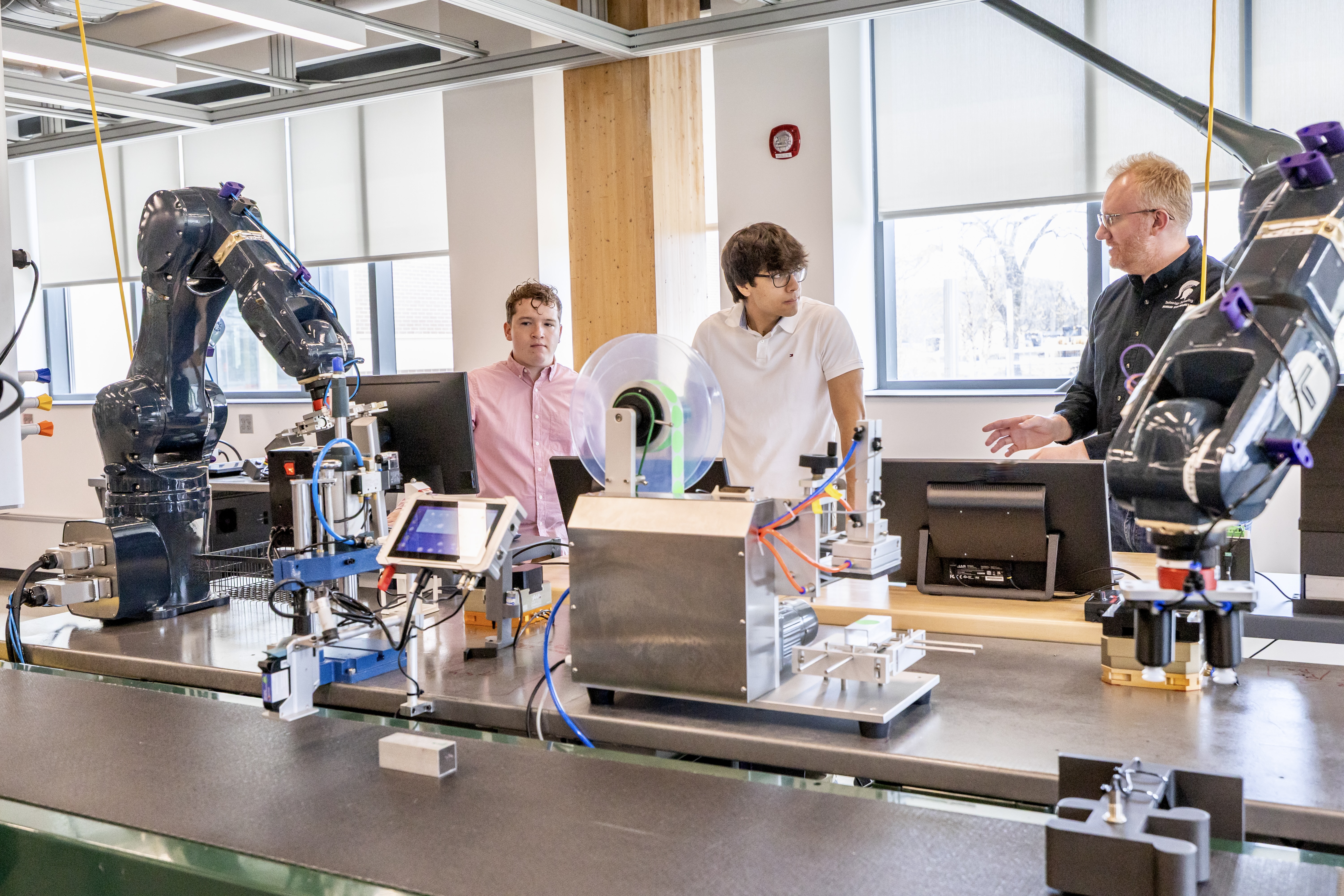
The project also taught Gorham how 3D-printed parts, tolerances and missing components can affect assembly and timelines. He said TechE projects regularly bring together design, coding and circuits, giving students repeated opportunities to strengthen skills across technical areas.
“Theory and fundamental classes are extremely important as well, but having hands-on work to put the theory and book study to practice will always be better than just one or the other,” Gorham said.
Robotics, sensors and project management
Joshua Klapperich, a Technology Engineering student concentrating in mechatronics, presented a robot display project using a six-axis robotic arm and integrated sensors.
Klapperich, who is from Elgin, Illinois, and is projected to graduate in fall 2026, said the robot used a vacuum gripper to move the letters “MSU” onto a display table before returning them to a tray. Sensors helped confirm the letters were in place and stopped the program if something went wrong.
The project involved planning, design, mechanical assembly, wiring, sensor integration, documentation and project management. It also taught Klapperich that sensors need to be considered early in the design process, rather than added after a system is already built.
“The most important skills to an employer from this project would be the integration of multiple engineering disciplines including project management, design, mechanical assembly, wiring and programming,” Klapperich said. “This shows a well-roundedness unique to the Technology Engineering program.”
Precision manufacturing and embedded cybersecurity
Brenna Kark, a Technology Engineering student concentrating in embedded cybersecurity, presented an interlocking aluminum brick project that connected creativity, manufacturing and precision.
Kark, who is projected to graduate in 2027, described the project as a precision-machined metal version of a familiar interlocking brick, created using industrial manufacturing equipment. Through CNC machining, G-code, machine setup and troubleshooting, she learned how small measurement errors can affect a final product and how design decisions influence manufacturability.
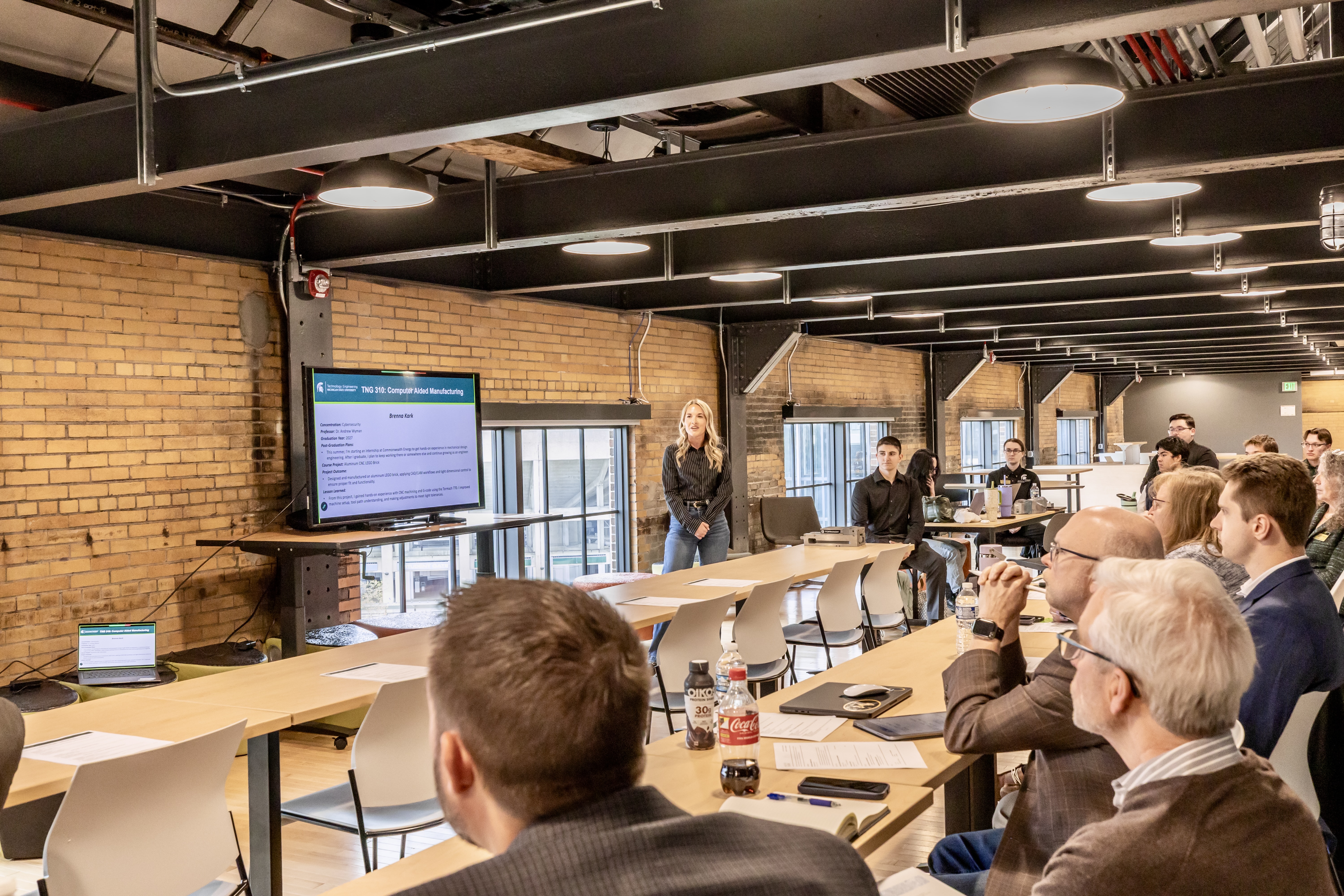
Kark said TechE has helped her connect classroom concepts to practical applications through machining, design and cybersecurity-related work. She said that experience also helped prepare her for an internship at Commonwealth Energy, where she contributes to designing power plants and working on larger-scale engineering projects.
“Employers want candidates who can apply technical knowledge beyond the classroom, communicate effectively and adapt quickly,” Kark said. “Programs like TechE give students practical experience they can showcase through projects, presentations and internships, which helps demonstrate initiative and industry readiness.”
From classroom concepts to career skills
Other projects showed the range of TechE’s curriculum, including prototyping, electrical circuits, computer-aided manufacturing, cybersecurity, engineering project management, robotics and automation.
Joseph Jorgenson, a Technology Engineering student concentrating in mechatronics, said coursework in sensors and signal processing helped prepare him for robotics and automation work. Jorgenson, who is from Lindenhurst, Illinois, and is projected to graduate in fall 2026, also connected his TechE experience to internships with Fraunhofer USA and UL Solutions.
Elizabeth Meier, a Technology Engineering student concentrating in mechatronics, said TechE students gain experience with NX computer-aided design software, 3D printing, resin 3D printing, soldering, wiring and electrical components. She also said the program’s students work closely with faculty and that “we learn from each other.”
Built for what comes next
The Bachelor of Science in Technology Engineering launched at MSU in 2024. The program integrates mechanical, electrical and computer engineering with computer science for engineering work involving connected hardware, software and physical systems.
Together, the student projects tell the larger story of TechE: a growing MSU Engineering degree program built for students preparing for careers in industries that need hands-on engineers at the intersection of hardware and software.
Written by Austin Witt.
MSU College of Engineering Media and Public Relations page