


Spartan Engineers are among the top researchers at Michigan State University for producing commercialization and innovative discoveries. Two new grants, totaling more than $1 million, are adding to MSU’s ability to build the economy and generate jobs for Michigan and the Midwest.
Assuring that software updates are helpful, not harmful
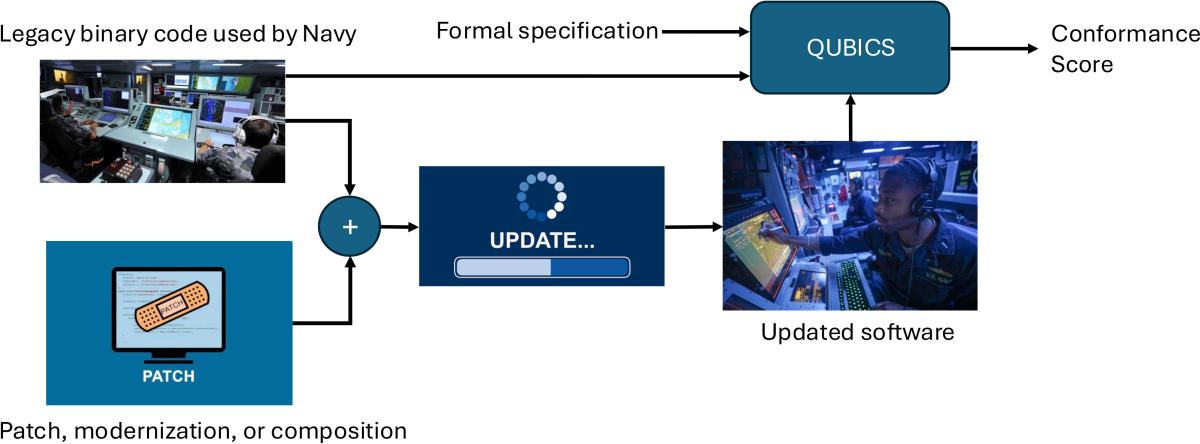
An associate professor in the Department of Computer Science and Engineering is using an $815,000 grant from the U.S. Navy to analyze if software upgrades are disrupting the good behaviors of long-life coding systems.
Borzoo Bonakdarpour and colleagues from the University of Florida are developing robust code analysis tools that examine the effects of software updates, patching, and malware on functional and security applications.
“Addressing a security vulnerability should not come at the cost of the system losing its intended functional properties or required performance,” he explained.
“This project will develop techniques that quantify the similarity of two versions of a software system to ensure that updates did not significantly change the vital functional and security properties.”
The work is being funded by the U.S. Office of Naval Research.
Detecting aging and decay in electrical and nuclear systems
As the country’s electrical infrastructure ages, many industries currently rely on testing methods that can takes years and cost hundreds of thousands of dollars.
Two researchers in the College of Engineering have joined a U.S. Department of Energy (DOE) project focused on developing AI-driven nondestructive evaluation tools for monitoring aging electrical cable insulation in energy systems and nuclear power plants. The goal is to improve safety, reliability, and maintenance of power systems by detecting damage and predicting the remaining degree of useful life.
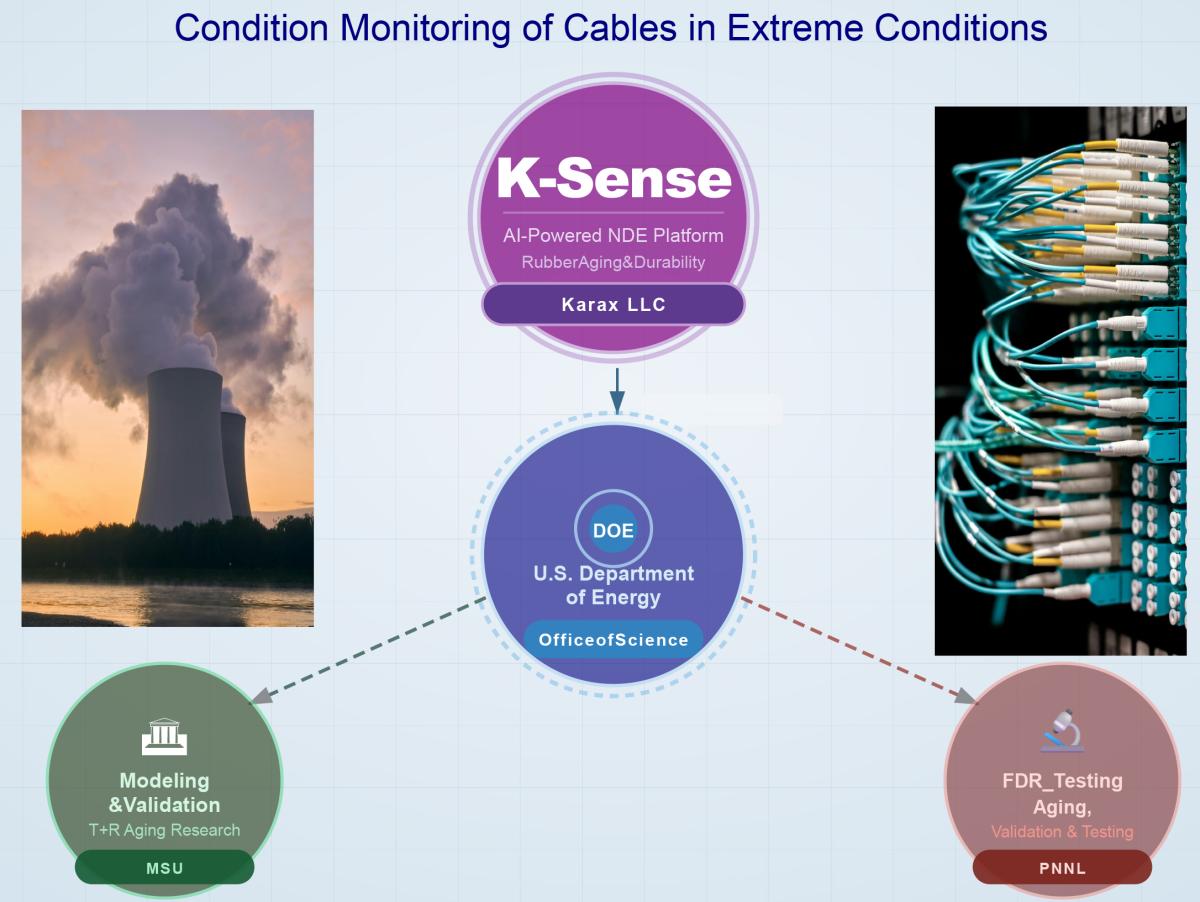
Bahare Kiumarsi, an assistant professor in the Department of Electrical and Computer Engineering, and Roozbeh Dargazany, an associate professor in the Department of Civil and Environmental Engineering, are part of a DOE collaboration led by Karax LLC, and including MSU and Pacific Northwest National Laboratory.
The work is funded with a $206,000 Small Business Innovation Research (SBIR) grant in phase I to commercialize K-Load, a rubber durability predictor software by Karax using frequency domain reflectometry.
Kiumarsi said the creation of new nondestructive evaluation tools will translate material degradation readings without removing samples or de-energizing the cables. “Our goal is to replace a significant portion of the sample removal and testing with a fast analysis of reflectometry signals that provide immediate insights into remaining service life of the components.”
Dargazany noted the approach will help researchers to assess and forecast. “This project is about giving engineers real-time insight into how materials age, so they can make better decisions without waiting years for test results.”
Dargazany also said the newest project builds on more than 15 years of research on polymer aging, degradation modeling, and machine-learned engines at the MSU High Performance Materials Group.
“It specifically extends into work on real-time monitoring and the quality research we do in nondestructive diagnostics at Michigan State,” he added.
Written by Patricia Mroczek.
MSU College of Engineering Media and Public Relations page