Research Spotlight: New fibers bring sunlight deeper, helping algae grow 6X faster
Read ArticleFor decades, algae have been seen as a promising source of sustainable food, animal feed, biofuels and carbon-neutral materials. Compared with traditional crops and livestock, algae grow faster, require less land and freshwater and can directly convert sunlight and carbon dioxide into useful products. However, a major challenge has limited the widespread adoption of algae technologies for large-scale applications: light cannot penetrate deeply into the dense cultures used to grow algae resulting in slowed growth and increased production costs.
Two Spartan Engineers earn top professor honors
Read ArticleTwo faculty members from the Michigan State University College of Engineering have received among the highest honors presented to faculty members at MSU. The awards recognize outstanding faculty members for research that enhances MSU’s intellectual prominence nationally and globally.
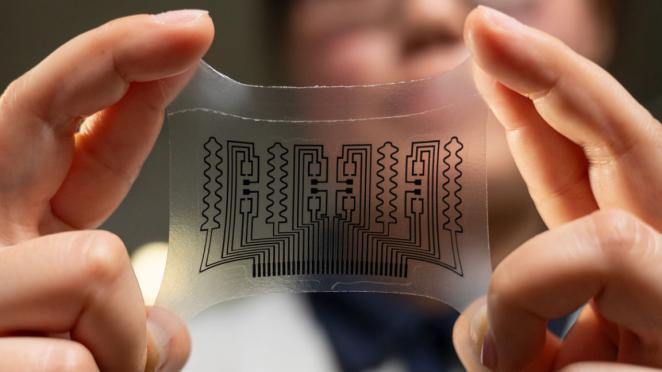
Sensor for seniors: Fixing a hidden flaw in wearable technology
Read ArticleSkin-interfaced wearable health technology has a hidden flaw: Many systems work best on smoother skin, which tends to be on younger bodies — not the older adults who often need them most. This is because aging-related changes in skin, including wrinkles, thinning and dryness, can significantly impact the contact and data quality of wearable devices.
Research Spotlight: Data initiative makes autonomous vehicles safer in all four seasons
Read ArticleIf you’ve ever driven through a whiteout or dense fog you’ve experienced the danger of navigating with low visibility. Autonomous vehicles face the same challenge, especially in places with changing seasons because they were trained to operate in clear weather conditions.
Research Spotlight: Linking blast forces to hidden brain injuries
Read ArticleTraumatic brain injuries from blasts and hard hits are a big problem for soldiers, first responders, and athletes. Doctors can see the damage on scans after the fact, but the moment when a fast hit turns into tiny tears deep inside the brain is still hard to capture.
Research Spotlight: Stretching the power of thermoelectric performance with common materials
Read ArticleThermoelectric materials can turn temperature differences directly into electrical power, with no moving parts and no working fluids. Devices based on these materials already power deep-space missions and provide precise solid-state cooling for sensitive electronics and sensors.
However, today’s thermoelectric materials are often too inefficient, expensive, or reliant on scarce or toxic elements to be used widely for energy recovery or cooling on Earth.
More than $1M to advance evaluation tools for software and power systems
Read ArticleSpartan Engineers are among the top researchers at Michigan State University for producing commercialization and innovative discoveries. Two new grants, totaling more than $1 million, are adding to MSU’s ability to build the economy and generate jobs for Michigan and the Midwest.
MSU AgeAlive Forum Showcases Innovation and Community Engagement
Read ArticleMichigan State University’s AgeAlive Education & Research Forum and Awards Ceremony brought together researchers, community leaders, and aging advocates Thursday, March 26, 2026, to discuss ways to improve the lives of older adults through research, technology, and community engagement. The event is part of MSU’s efforts as a designated Age-Friendly University.
MSU Engineering innovators honored at 2026 Innovation Celebration
Read ArticleFrom apple orchards and biomedical labs to wastewater systems, electric grids and drone training fields, Spartan Engineering innovation was well represented at the 2026 MSU Innovation Celebration. Hosted by the MSU Innovation Center on April 7 at the Henry Center for Executive Development, the annual event recognizes technologies, startups, research partnerships and inventions emerging from Michigan State University.
Research Spotlight: Reducing the hidden risks of heart pumps
Read ArticleFor heart failure patients, left ventricular assist devices (LVADs) keep blood flowing when the main pumping chamber fails. Yet supporting the left side can overload the right, triggering lower survival rates or longer ICU stays.

-
-

Our world-class academic team spans eight departments and two interdisciplinary programs
-

Learn about admissions and application processes for our world-class degree programs
-

Our world-class faculty and students engineer a healthier, safer and more sustainable world
-

MSU engineering students maximize early opportunities in the workplace and obtain competitive placements upon graduation
-
-

Sign up to receive the quarterly Spartan Engineering E-News packed with updates within the college