NSF CAREER Award supports research in tough, transparent biomaterials
Read ArticleXinyue Liu, an assistant professor in the Michigan State University Department of Chemical Engineering and Materials Science, has received a Faculty Early Career Development (CAREER) Award from the U.S. National Science Foundation.
How mini hearts could help transform how we treat heart disease
Read ArticleAitor Aguirre doesn’t describe his work as futuristic. He describes it as necessary. For decades, scientists have relied on animal models to study heart disease, test drugs and understand how the human heart develops and fails. Those models have been invaluable, but they have limits. A mouse heart is not a human heart. Its electrical rhythms are different. Its physiology is different. Some of the most common human heart conditions simply do not unfold the same way in animals.
Research Spotlight: Designing smarter roads to engage driver attention and reduce noise
Read ArticleEvery time we drive, we engage in a complex activity that involves our thinking, physical abilities, vehicle and road conditions. There’s a lot to pay attention to, and sometimes we get distracted.
Research Spotlight: New polymer makes implanted medical devices more visible on X-rays
Read ArticleMedical devices implanted in muscular tissue work wonders to relieve chronic pain, rehabilitate muscles and control prosthetic limbs. However, traditional materials used to make the devices are hard to see on X-rays and CT scans. A new material developed at the MSU Polymer Engineering Lab provides high contrast on medical imaging for intramuscular implants, making implanted devices easier to locate and monitor.
MSU road safety research earns national award
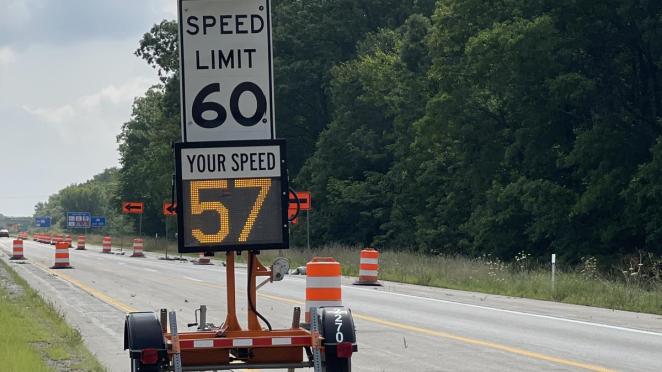
Read ArticleExperts in road safety know that electronic speed feedback signs are helpful in getting drivers to slow down in road construction sites and that can help saves lives. National research recorded 850 fatalities and 42,084 injuries in work zones in 2024.
Research Spotlight: Chair with “sixth sense” prevents bedsores and helps hospitals save millions
Read ArticlePeople with limited mobility are at risk for pressure injuries (PI). PI are painful, costly, and unfortunately, common. They affect 2.5 million US patients annually and lead to infections that cause more than 60,000 deaths and $26.8B in costs to US hospitals. Plus, injuries sustained by caregivers who reposition patients to avoid PI can impose a heavy toll, leading to lasting pain and the potential for ending careers.
Research Spotlight: New fibers bring sunlight deeper, helping algae grow 6X faster
Read ArticleFor decades, algae have been seen as a promising source of sustainable food, animal feed, biofuels and carbon-neutral materials. Compared with traditional crops and livestock, algae grow faster, require less land and freshwater and can directly convert sunlight and carbon dioxide into useful products. However, a major challenge has limited the widespread adoption of algae technologies for large-scale applications: light cannot penetrate deeply into the dense cultures used to grow algae resulting in slowed growth and increased production costs.
Two Spartan Engineers earn top professor honors
Read ArticleTwo faculty members from the Michigan State University College of Engineering have received among the highest honors presented to faculty members at MSU. The awards recognize outstanding faculty members for research that enhances MSU’s intellectual prominence nationally and globally.
Sensor for seniors: Fixing a hidden flaw in wearable technology
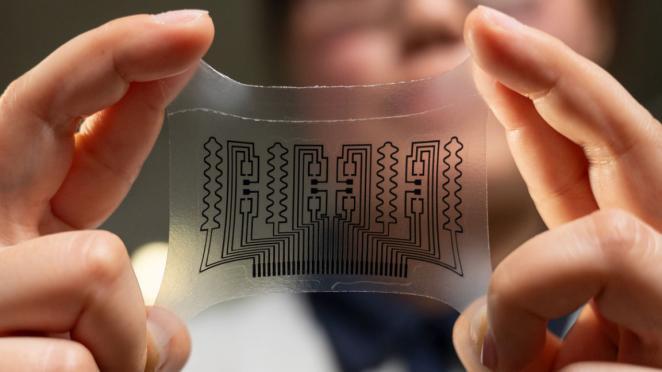
Read ArticleSkin-interfaced wearable health technology has a hidden flaw: Many systems work best on smoother skin, which tends to be on younger bodies — not the older adults who often need them most. This is because aging-related changes in skin, including wrinkles, thinning and dryness, can significantly impact the contact and data quality of wearable devices.
Research Spotlight: Data initiative makes autonomous vehicles safer in all four seasons
Read ArticleIf you’ve ever driven through a whiteout or dense fog you’ve experienced the danger of navigating with low visibility. Autonomous vehicles face the same challenge, especially in places with changing seasons because they were trained to operate in clear weather conditions.

-
-

Our world-class academic team spans eight departments and two interdisciplinary programs
-

Learn about admissions and application processes for our world-class degree programs
-

Our world-class faculty and students engineer a healthier, safer and more sustainable world
-

MSU engineering students maximize early opportunities in the workplace and obtain competitive placements upon graduation
-
-

Sign up to receive the quarterly Spartan Engineering E-News packed with updates within the college