

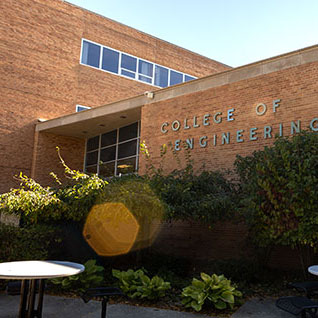
Michigan State University is the nation’s premier land-grant university and one of the top research universities in the world. The College of Engineering is among the university’s founding disciplines and one of the largest academic units. Degrees granted by the college are sought-after and valued in the marketplace, with more than 6,800 students, 341 faculty, and collaborative partners in industry and government working together to deliver the technology talent and innovation needed to drive the economy of Michigan and beyond.
Card Section
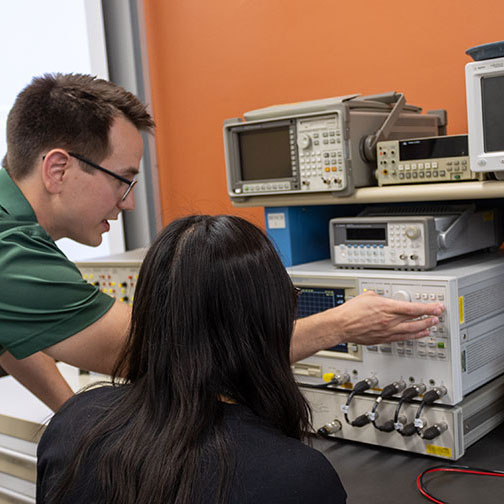

Spartan Engineers by the Numbers
Featured News
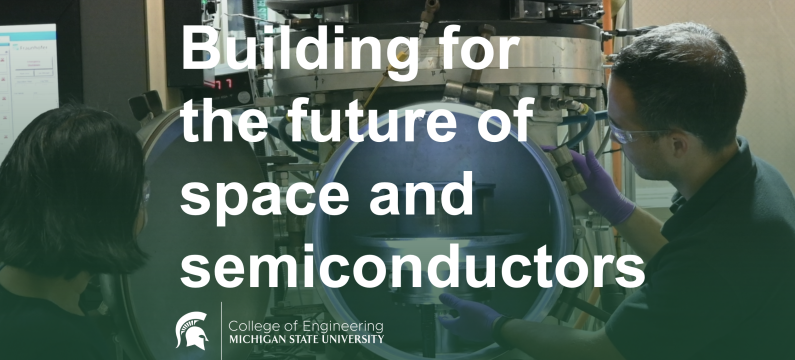
Building for the future of space and semiconductors
Space is a tough place for electronics. High-energy radiation can damage the semiconductor devices that spacecraft rely on, creating a major challenge as missions venture farther from Earth
Read Full ArticleLatest News

13 Engineering faculty honored at 2026 MSU Investiture
Thirteen Michigan State University College of Engineering faculty members were among those honored Sept. 29 during MSU’s 2026 Faculty Investiture and State of the University at the Wharton Center for Performing Arts.

Student View: Challenging the quantum advantage boundary
My interest in quantum computing started for a pretty simple reason: The mathematical symbols looked really cool and complicated.
At the time, I did not know what most of them meant. But I wanted to.

Helping wireless devices find their location without GPS
We expect our phones, cars and other connected technologies to know where they are and to communicate wherever we go. The Global Positioning System, or GPS, helps make that possible, but the satellite signals GPS uses can’t reach everywhere. Inside buildings, underground and among tall buildings, those signals can be blocked or disrupted. Now, Michigan State University researchers have demonstrated how wireless systems can work together without relying on GPS.